
Quick answer: A main sewer line clog is a blockage in the one pipe that carries all of your home’s wastewater out to the city sewer. The clearest sign is more than one drain acting up at the same time, especially the lowest drains in the house. It needs professional clearing, and a camera inspection shows why it happened.
In short: one slow sink is a drain problem. Several slow or gurgling fixtures at once is a main sewer line problem.
Key takeaways
- A main sewer line clog affects the whole house, not one fixture.
- Water backing up into a tub or shower when you flush a toilet is a classic sign.
- In the Phoenix area, grease, tree roots, and sagging or cracked pipe are the usual causes.
- Chemical drain cleaners rarely reach the main line and can damage older pipe.
- Clearing the clog fixes today’s backup. A sewer camera inspection tells you whether it will come back.
What is a main sewer line clog?
Every drain in your home, from sinks and showers to toilets and the washing machine, feeds into branch lines. Those branch lines join one larger pipe, the main sewer line, which runs under your yard to the city sewer in the street or alley.
When that main pipe is blocked, wastewater from the whole house has nowhere to go. It backs up to the lowest opening it can find, which is usually a floor-level shower drain, a tub, or a first-floor toilet.
That is the difference between a main line clog and an ordinary drain clog:
| Single drain clog | Main sewer line clog | |
|---|---|---|
| Fixtures affected | One sink, tub, or toilet | Several fixtures at once |
| Where water backs up | At the clogged fixture | At the lowest drains in the house |
| Typical cause | Hair, soap, food scraps | Grease, roots, sagging or broken pipe |
| Plunger or small snake | Often works | Rarely works |
| Who should fix it | Homeowner or plumber | Sewer professional |
In Phoenix, the pipe from your house to the city main is your responsibility. The City of Phoenix Water Services states that property owners are responsible for cleaning and maintaining the sewer line that runs from the house to the city sewer main, and that the city only repairs service lines inside the public right of way.
What are the signs of a main line clog?
A main sewer line clog usually gives warnings before it causes a full backup. Watch for these:
- More than one drain is slow at the same time. A slow kitchen sink alone is a kitchen problem. A slow sink, a slow tub, and a toilet that is slow to drain all at once points to the main line.
- Water comes up in the shower or tub when you flush. The toilet’s water can’t get out, so it rises at the next lowest opening.
- Gurgling sounds from toilets or drains. Air trapped behind a blockage bubbles back up through the fixtures. Learn more about gurgling drains.
- The washing machine makes a nearby toilet or floor drain overflow. A washer dumps a lot of water fast, which is often the first thing to overwhelm a partly blocked main line.
- Sewage smell inside the house or near the cleanout. Standing wastewater in the line lets sewer gas escape.
- Water or sewage around the sewer cleanout. The cleanout is the capped pipe, usually near the foundation or in the front yard, that gives access to the main line. If it’s wet or overflowing, the blockage is past that point.
If you see two or more of these at once, stop running water. Avoid laundry, dishwashers, and showers until the line is cleared, so wastewater doesn’t back up into the house.
What causes a main sewer line clog in Phoenix homes?
The City of Phoenix names grease and tree roots as the two main causes of sewer problems it sees. Valley homes also have a few causes tied to local soil and pipe age.
Grease and food waste
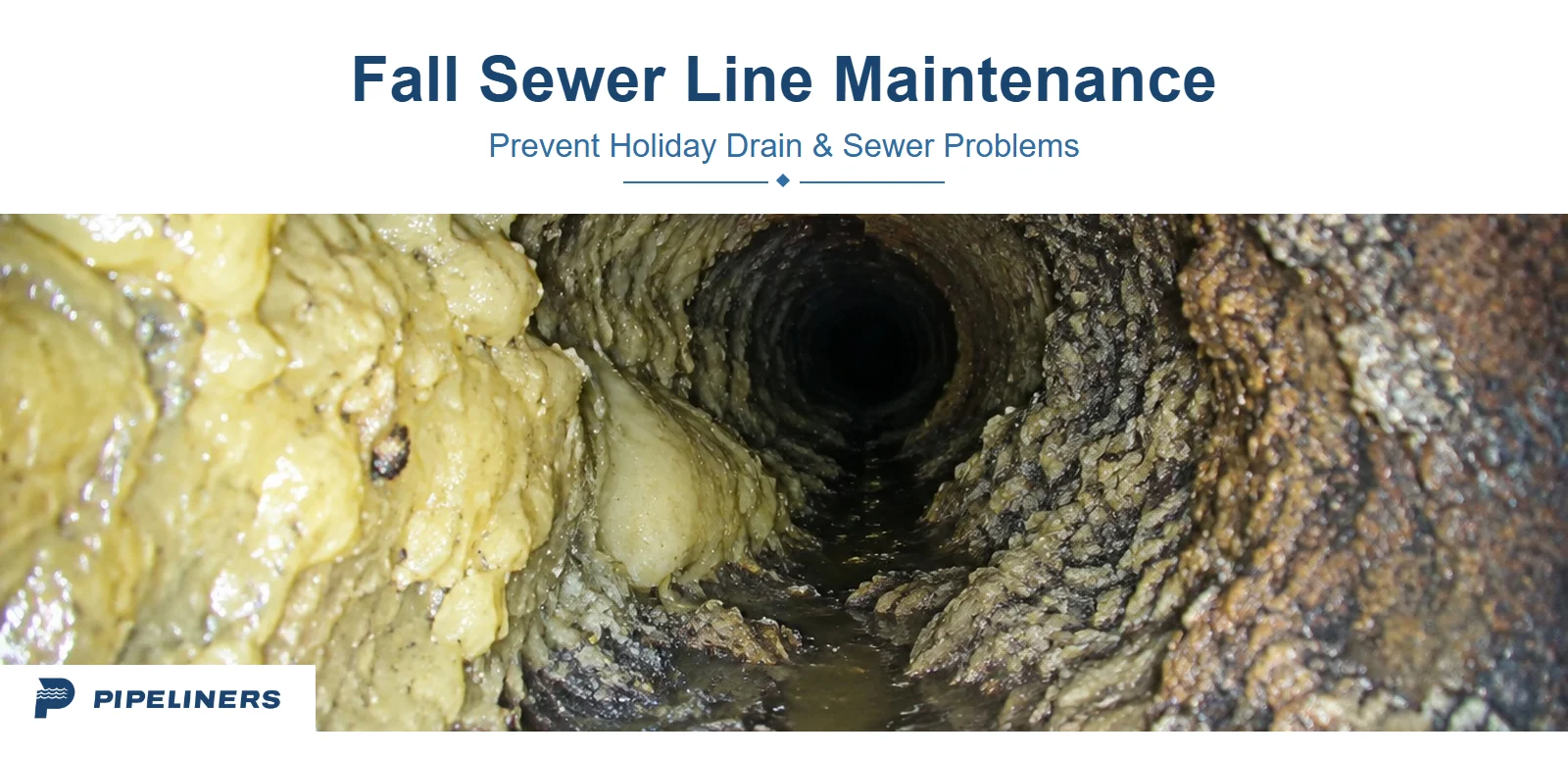
Cooking grease goes down the drain as a liquid, then cools and hardens on the pipe wall. Each layer narrows the pipe until paper and food scraps catch on it. The City of Phoenix recommends letting cooking oil cool and throwing it out with the trash instead of pouring it down the drain.
Tree roots
Roots grow toward moisture. A small crack or loose joint in an older clay or cast iron line is enough for fine roots to get in, and they grow into a net that catches everything else. See how to deal with tree roots in a sewer line.
Sagging pipe (a “belly”)
Shifting soil, including the soaking and drying from monsoon storms, can let a section of pipe sink. Wastewater and solids settle in the low spot and build up into a clog that comes back again and again. Read more about a belly in the sewer line.
Cracked, corroded, or collapsed pipe
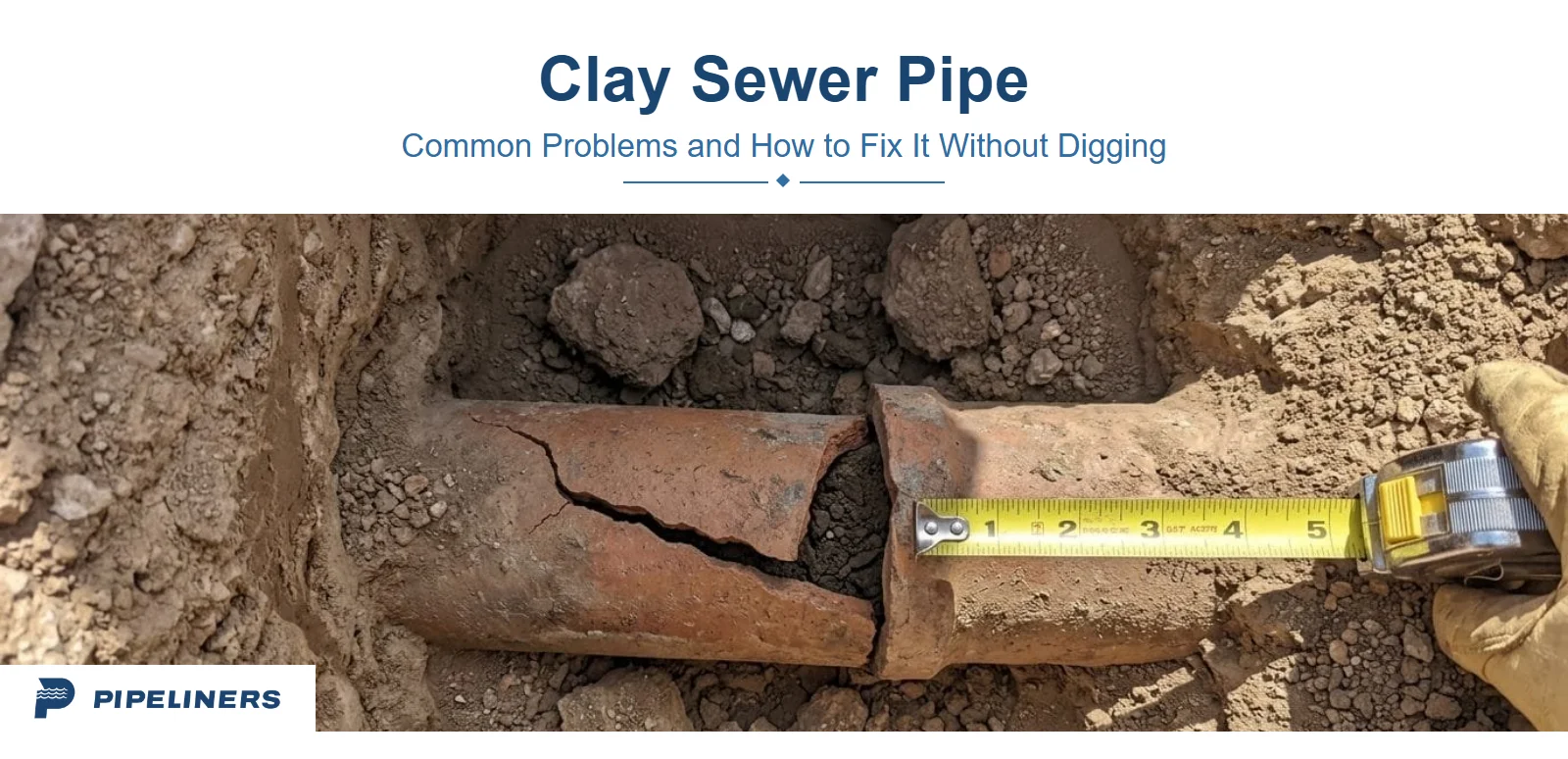
Many older Valley homes have cast iron or clay sewer lines. Cast iron scales and corrodes from the inside, and rough scale catches debris. A cracked or partly collapsed section can block the line completely.
Things that should never be flushed
“Flushable” wipes, paper towels, and feminine products don’t break down the way toilet paper does. They are among the most common items found in a blocked main line.
Can you clear a clogged main line yourself?
Usually not safely. A plunger or a small handheld snake reaches a few feet into a single drain. A main line blockage is usually much farther out, in the pipe under the yard.
Chemical drain cleaners are a poor choice here. They sit in standing water without reaching the blockage, and repeated use can damage older cast iron pipe. If the line does back up, you are left with caustic water in your tub or shower.
What a homeowner can do safely:
- Stop using water in the house until the line is cleared.
- Find your sewer cleanout and check whether water is standing in it. Don’t force the cap open if it’s under pressure.
- Call a sewer professional. Pipeliners offers 24/7 emergency service.
How do professionals fix a sewer line clog?
A proper repair has two parts: clear the line, then find out why it clogged.
Step 1: Clear the blockage
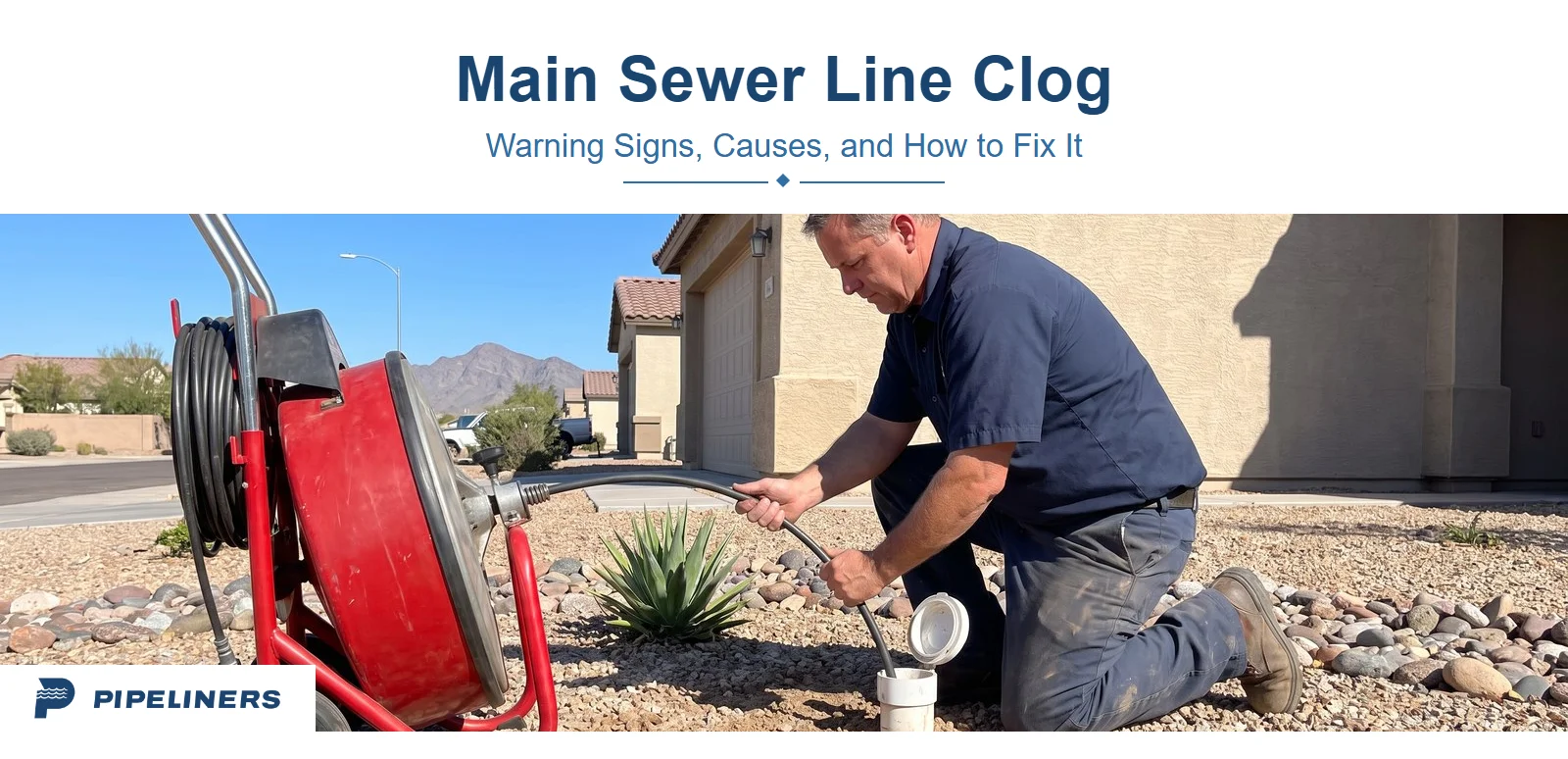
- Cable machine (snaking): a powered cable cuts an opening through the clog. It’s fast, and it gets water flowing again.
- Hydro jetting: high-pressure water scours the whole pipe wall, removing grease, scale, and root growth rather than punching one hole through them. Hydro jetting is usually the better choice for grease and roots. Here is how hydro jetting vs snaking compare.
Step 2: Look inside with a camera
A sewer camera inspection runs a waterproof camera through the line and shows exactly what caused the clog: grease, roots, a belly, a crack, or a collapsed section. Without it, you are guessing, and a clog caused by a damaged pipe will come back.
Step 3: Repair the pipe if it’s damaged
If the camera finds roots getting in through cracks, heavy corrosion, or failed joints, clearing alone will not last. Trenchless repair can fix the line from the inside by lining the pipe with a new cured-in-place wall, usually without digging a trench across the yard. Learn how to repair a sewer line without digging.
| Cause found on camera | Typical fix |
|---|---|
| Grease buildup | Hydro jetting, then grease habits at home |
| Roots at a joint | Hydro jetting to remove roots, then relining to seal the joint |
| Scale in cast iron | Descaling, then relining if the pipe wall is thin |
| Belly (sag) | Depends on depth of the sag; sometimes spot excavation |
| Crack or collapse | Trenchless repair or section replacement |
How to prevent a sewer line backup
- Keep grease out of the drain. Let it cool, scrape it into the trash, and wipe greasy pans before washing.
- Flush only toilet paper. Put wipes in the trash, even the ones labeled flushable.
- Plant trees away from the sewer line. The City of Phoenix advises against planting near cleanouts and sewer lines.
- Watch for early signs. Several slow drains or gurgling after the washer drains are worth a call before they become a backup.
- Inspect older lines. If your home has cast iron or clay pipe, or has had more than one main line backup, a camera inspection shows the pipe’s real condition. Monsoon season is a common trigger for sewer backups in older lines.
Sewer backups are more than an inconvenience. The U.S. Environmental Protection Agency notes that sewer backups into homes cause property damage and threaten public health. Keep children and pets away from any backed-up water, and clean the area thoroughly once the line is cleared.
Frequently asked questions
How do I know if the clog is in my main sewer line or just one drain?
Check whether more than one fixture is affected. If only one sink or toilet is slow, the clog is in that fixture’s branch line. If several drains are slow, or water comes up in the tub when you flush, the main sewer line is blocked.
Is a main sewer line clog an emergency?
It is if wastewater is backing up into the house. Stop using water right away and call for service. Pipeliners handles sewer emergencies 24/7. If drains are only slow, schedule service soon, before the clog becomes a full backup.
Who is responsible for a main sewer line clog in Phoenix?
In Phoenix, the property owner is responsible for the sewer line from the house to the city sewer main. The City of Phoenix only repairs service lines inside the public right of way, such as under the street or alley.
Will the clog come back after the line is cleared?
It can. If the cause was grease or flushed wipes, good habits usually prevent a repeat. If the cause was roots, a belly, or cracked pipe, the clog is likely to return until the pipe itself is repaired. A camera inspection tells you which case you have.
Can drain cleaner fix a clogged main line?
Rarely. Chemical cleaners usually can’t reach a main line blockage and can harm older pipes. Professional cable clearing or hydro jetting is the reliable fix.
Get your main sewer line cleared and checked
If several drains in your home are slow, gurgling, or backing up, you likely have a main sewer line clog. Pipeliners clears main lines, inspects them with a camera to find the cause, and repairs damaged pipe with trenchless methods, often without digging up your yard. Call Pipeliners or schedule a sewer camera inspection today. Crews are available 24/7 for backups that cannot wait.
Last updated: September 2026. Written by Jake Shaker, Pipeliners.