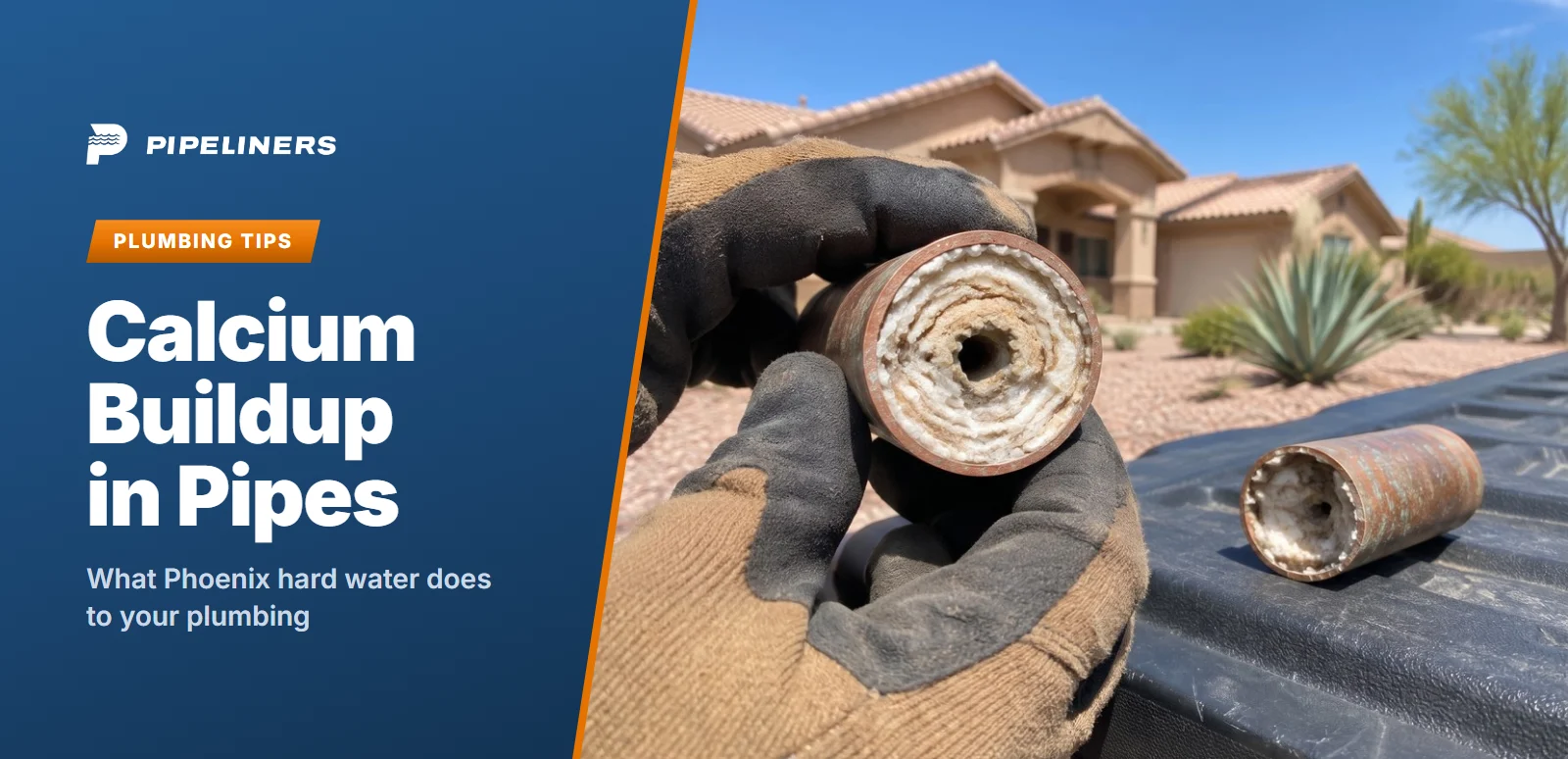

Quick answer: Calcium buildup in pipes is a hard, white crust that forms inside water lines and drains. It comes from the minerals in hard water, and Phoenix water is hard. Over time the crust narrows the inside of the pipe, which means weaker water pressure, slower drains and more wear on older pipes.
In short: crust on a showerhead is a cleaning job. Low pressure or slow drains all over the house usually means the buildup is inside the pipes.
Key takeaways
- Phoenix water is hard, which means it carries a lot of dissolved calcium and magnesium.
- Those minerals settle on the inside of pipes and build up slowly, a little with every gallon.
- Weak water pressure, slow drains that keep clogging and white crust on fixtures are the most common signs.
- Vinegar cleans faucets and showerheads, but it cannot reach scale inside your walls or under the floor.
- Most buildup can be cleared without digging, and a worn pipe can often be repaired from the inside.
What is calcium buildup in pipes?
Calcium buildup is the same white, chalky crust you see on a showerhead or around a faucet. Plumbers call it scale. It forms inside your pipes too, where you cannot see it.
Every time water flows through your plumbing, a small amount of calcium and magnesium comes out of the water and sticks to the pipe wall. One day of it is nothing. After years, it becomes a hard, rough layer that can take up a real share of the pipe.
Scale causes two problems:
- It makes the pipe smaller inside. Less water fits through, so pressure drops at the faucet and drains empty more slowly.
- It makes the pipe wall rough. Grease, soap and hair catch on the crust instead of washing away. That is why some drain clogs keep coming back.
Why does calcium build up in Phoenix pipes?
A few things work together in Valley homes.
Hard water
The City of Phoenix explains that its water picks up calcium and magnesium from the soil and rock it flows through before it reaches the treatment plants. The city also notes that hardness is not a health concern. Your water is safe to drink. It is a plumbing concern, though, because those minerals stay in the water until something gives them a place to settle.
Heat
Hot water drops minerals faster than cold water. That is why hot water lines, the pipes near the water heater and the tank itself often scale up first. Long, hot Arizona summers add to it, since pipes in attics and exterior walls run warm for months.
Older metal pipes
Galvanized steel and cast iron pipes get rough inside as they age and rust, and rough walls collect scale faster than smooth ones. Many older Valley homes still have their original copper, galvanized or cast iron plumbing, so they tend to see the most buildup.
What are the signs of calcium buildup in pipes?
Scale builds slowly, so the signs creep up over months or years. Watch for these:
- Weak water pressure. It may start at one faucet or shower and spread to the whole house.
- Pressure drops when two fixtures run. If the shower weakens every time someone runs the kitchen sink, the supply pipes may be narrowed.
- Slow drains that clog again soon after clearing. Rough scale gives grease and hair something to hold on to.
- White crust on faucets, showerheads and drains. This shows how hard your water is, and the same crust is forming inside the pipes.
- Flakes or grit from the faucet. Pieces of scale can break loose and clog aerators and showerheads.
- Banging, rattling or whistling pipes. Narrowed pipes can make more noise as water is forced through them.
One crusty showerhead usually just needs cleaning. Several of these signs together point to buildup inside the pipes.
Water pipes vs drain pipes: where calcium builds up
Scale behaves differently depending on which pipe it is in:
| Water pipes (bring clean water in) | Drain pipes (carry wastewater out) | |
|---|---|---|
| What builds up | Hard mineral scale, often worst on the hot side | Scale mixed with soap, grease and hair, plus rust in old metal pipe |
| What you notice | Weak pressure, flakes in the water, noisy pipes | Slow drains, gurgling, clogs that come back |
| What it can lead to | Extra wear on older pipes and, over time, leaks | Blockages and backups |
Older homes often have rust and scale at the same time. If you are also seeing rust, stains or leaks, read our guide to corroded pipes. If you have tiny leaks in copper, see what causes pinhole leaks in copper pipes. A leak in a copper line under the foundation is a slab leak, and hard water is one reason they are common here.
Can you dissolve calcium buildup yourself?
Only the part you can reach. White vinegar works well on fixtures:
- Remove the showerhead or the small screen at the tip of the faucet (the aerator).
- Soak it in white vinegar for a few hours or overnight.
- Scrub it with an old toothbrush, rinse it and put it back.
That cleans the fixture, not the pipe behind it. Vinegar cannot reach scale inside the walls or under the floor, and pouring it down a drain will not break up years of hard crust. Store-bought drain cleaners do not dissolve scale either, and harsh ones can damage older pipe.
If clean aerators and showerheads do not bring your pressure back, the buildup is inside the pipes, and it needs to be cleaned from the inside.
How do you find out how bad the buildup is?
You cannot judge it from the outside. For drains, a camera inspection runs a small waterproof camera through the line. The video shows the scale, how much of the pipe it blocks and whether the pipe underneath is cracked or worn thin.
For water pipes, a plumber checks the pressure and looks for leaks. If you also have a wet spot, a high water bill or a warm spot on the floor, leak detection can locate the leak without opening up walls to search for it.
This step matters because it tells you whether a cleaning is enough or whether the pipe itself needs repair.
How do you clear calcium buildup from pipes?
The fix depends on which pipe has the scale and what condition the pipe is in.
Drain pipes
Hydro jetting sprays water at very high pressure to scour scale, grease and debris off the pipe wall, instead of punching one hole through a clog. Very heavy scale in old cast iron may need pipe descaling, which uses rotating cutting tools. If the camera shows cracks once the pipe is clean, drain lining builds a new pipe inside the old one, with no trench through the yard or broken floors. Drain lining comes with a 20-year warranty.
Water pipes
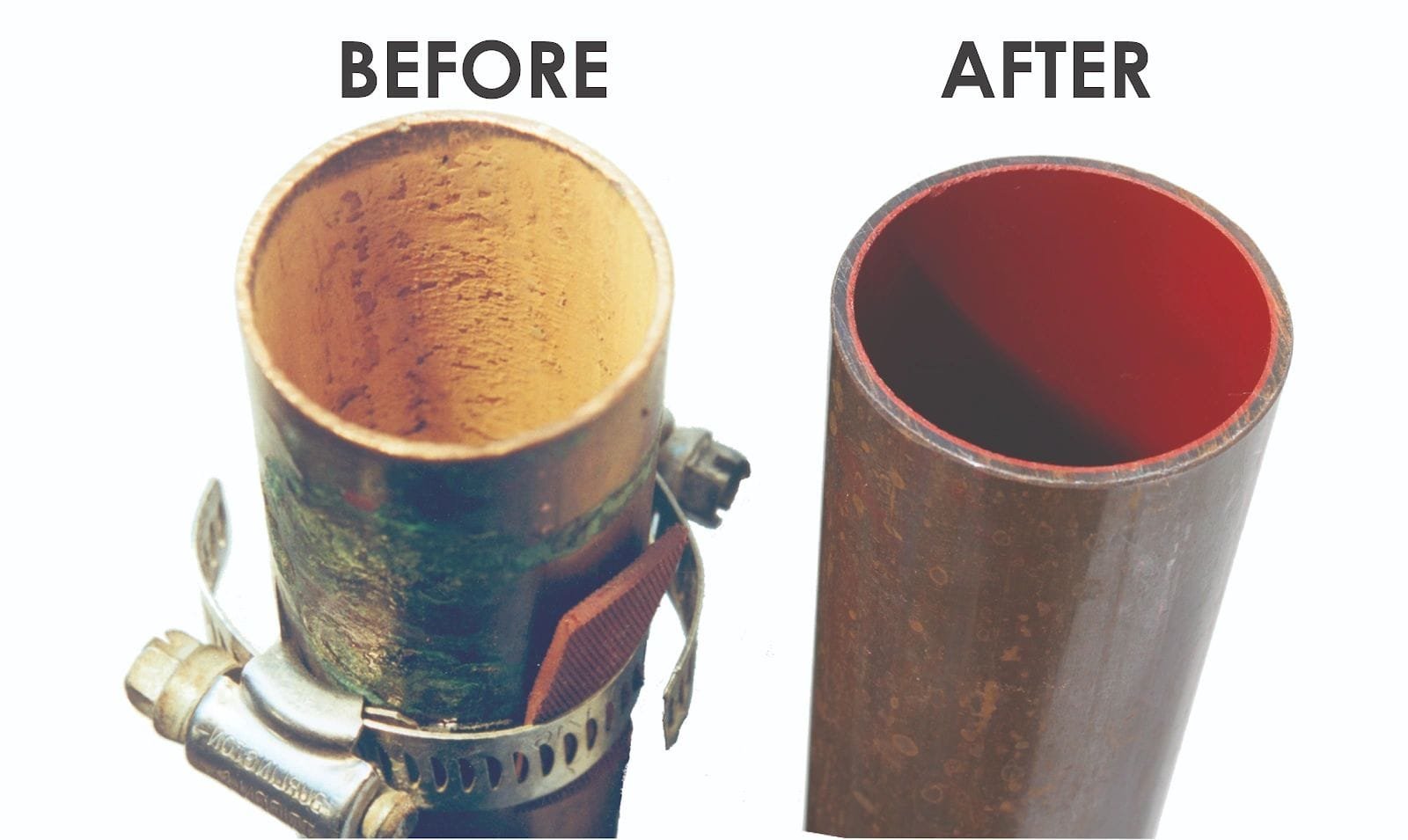
Scale in water lines is harder to reach. ePIPE cleans the inside of the water pipes, then coats them with a hard, smooth layer of epoxy. The coating seals the pipe wall and lets water flow freely again. The work is done through a few small access points instead of opening every wall, and it comes with a 10-year warranty.
| What the inspection finds | Typical fix |
|---|---|
| Scale in drain lines, pipe in good shape | Hydro jetting |
| Heavy scale in old cast iron drains | Descaling, then lining if the pipe wall is thin |
| Cracks or failed joints after cleaning | Trenchless drain lining |
| Scale and wear in water supply pipes | ePIPE cleaning and epoxy coating |
| A leak in a water line | Leak detection first, then repair |
Not sure which drain cleaning method fits? Here is how hydro jetting vs snaking compare.
When cleaning is not enough
Cleaning removes scale. It does not rebuild a pipe that is already failing. If the camera shows a collapsed section, a badly offset joint or a pipe wall that has worn through, that section usually has to be repaired first before the rest of the line can be lined or coated.
A drain that clogs again and again is also worth a closer look. Sometimes scale is only part of the story, and the real cause is roots, a sag in the line or a main sewer line clog farther out. The inspection is what separates the two.
How to slow down calcium buildup
You cannot change Phoenix water, but a few habits help:
- Clean aerators and showerheads every few months. It keeps flow strong and shows you how fast scale is building.
- Keep the water heater at a moderate setting. Very hot water drops minerals faster.
- Follow the water heater maker’s flushing schedule. Draining sediment from the tank keeps loose scale out of your pipes.
- Act on repeat clogs early. A drain that clogs every few weeks usually has buildup that a plunger will not fix.
- Have older pipes inspected. If your home has original copper, galvanized or cast iron plumbing, an inspection shows where things really stand.
Frequently asked questions
Can calcium buildup in pipes cause low water pressure?
Yes. Scale narrows the inside of the pipe, so less water gets through. It often starts at one faucet and spreads. If pressure is low throughout the house, the main water line and the supply pipes inside should be checked.
Is it safe to drink hard water in Phoenix?
Yes. The City of Phoenix says hardness is not a health concern. Calcium can affect taste and leave spots on dishes and fixtures, but the water is safe. The bigger issue is what the minerals do to your plumbing over time.
Does hard water damage pipes?
Over many years, it can. Scale narrows pipes, catches debris in drains and adds wear to older metal pipes, which can lead to leaks. Homes that still have their original copper, galvanized or cast iron pipes tend to see it most.
How do you remove calcium buildup in drain pipes?
Hydro jetting is the most common fix. It uses high-pressure water to scour scale, grease and debris off the pipe wall. Very heavy scale in old cast iron may need descaling. A camera inspection afterward shows whether the pipe itself still needs repair.
Will vinegar clear calcium buildup in pipes?
Vinegar cleans showerheads, faucet aerators and the crust you can see. It does not reach scale inside the walls or under the floor, and pouring it down a drain will not break up years of buildup. Those pipes have to be cleaned from the inside.
Find out what is inside your pipes
If you have weak water pressure, slow drains or crust that keeps coming back, the next step is seeing inside the pipes. Pipeliners starts with a camera inspection or a leak check, shows you what we find and explains your options in plain terms. We pull the permits, and most jobs take a couple of days. Call 480-535-6503 or contact Pipeliners to schedule an inspection.