
Looking for a Pipe Repair Company Serving Mesa Arizona?
Mesa's Trenchless Sewer Repair Team, Call Us Today!
Mesa is where Pipeliners is based, with the shop on West 2nd Avenue, so sewer line repair in Mesa, AZ is the work our crews know best. The 1950s-70s ranch houses across central Mesa still run their original clay and cast iron laterals, along with copper supply lines that have carried hard water for half a century. Further east, Las Sendas and Red Mountain are newer builds working through their own line problems as they age. Pipeliners rebuilds both from the inside, with no trench cut across a Mesa yard or driveway.
No Demolition Solution
No trenching across your Mesa yard, driveway, or slab. We restore pipes in place with minimal surface disruption.
Eco-friendly Repairs
We restore aging cast iron, clay, or Orangeburg pipes from within, reducing digging, waste, and property disruption.
Up To 30% Cost Savings
Mesa homeowners can save up to 30% versus dig-and-replace, with less concrete, sod, or hardscape restoration.
Minimal Interruption
Your Mesa home or business stays open and livable while our crews work underground. No days lost to an open trench.
Trenchless Pipe Repair Services in Mesa, AZ by Pipeliners
What Does Sewer Line Repair in Mesa, AZ Involve?
Sewer line repair in Mesa, AZ starts with a camera inspection of the full line, from the house to the City’s main. If the pipe still holds its shape, Pipeliners lines it from the inside and cures it in place, with no trench through the yard, driveway or slab. Collapsed sections are repaired first.
Most calls follow the same order. The line is cleared so the camera can see it, then the whole run is recorded. That footage shows the problem, how deep it sits, and which part of the line is yours: the City of Mesa maintains the main, and the lateral from the house to it is generally the owner’s.
A liner cured inside the old clay, cast iron or Orangeburg line is a trenchless sewer line replacement: the old pipe stays in the ground as the host for the new one. If a section has collapsed or a joint has shifted too far for a liner, that spot is repaired first and the rest of the run is lined after. Either way, you see the footage before you are quoted.
Pipe Lining

Pipe lining gives Mesa property owners a trenchless, no-dig way to rebuild cracked, leaking, or root-invaded sewer lines without tearing open a yard, driveway, or slab. Mesa is also where Pipeliners is based: the shop is on West 2nd Avenue, so this is the city our crews know best.
Its plumbing shows its age. The 1950s-70s ranch homes across west and central Mesa run on aging cast iron drain lines and clay or Orangeburg sewer laterals, while newer east Mesa and Las Sendas add lines that fail in their own time. The liner is drawn into the existing pipe and cured with UV LED light, so the repair happens through one or two small access points rather than a trench cut through Mesa’s caliche and expansive clay.
Pipe Lining Advantages
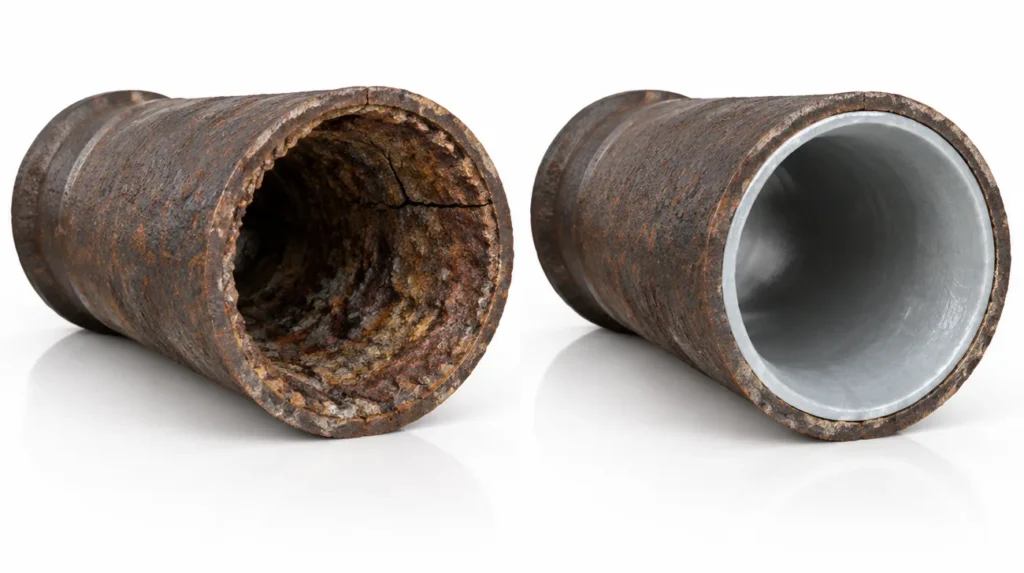
Built for Mesa’s established neighborhoods
Whether you own a mid-century ranch in central Mesa or a newer house in Las Sendas or Red Mountain, an open trench costs the same things every time: landscaping, driveway, irrigation. Lining rebuilds the pipe from within instead, so the surface above it is never opened. Once the resin cures you have a jointless pipe with a 50-year design life, better flow, and a sealed barrier against the roots that mature trees drive into older Mesa laterals.
ePipe Water Line Solutions
Repipe, or restore the copper you already have?
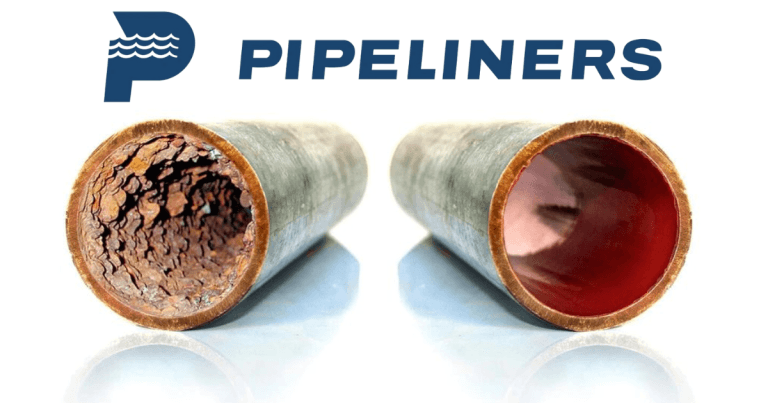
Mesa’s mid-century housing stock is full of copper that has been carrying hard water for fifty years or more. Fifty years of that leaves a system where the failures start clustering. In the slab-foundation homes across the city each new pinhole leak is harder to reach than the one before it, which is what turns a plumbing problem into a flooring problem.
A whole-house repipe replaces the system and opens walls to do it. ePIPE restores it from the inside with nothing opened. What settles it is what the pipe looks like from the inside. On a slab system that has to be established before anything gets opened, because opening is the expensive part.
Slab construction is what makes this matter in Mesa. When supply lines run inside or under a poured slab, reaching a leak conventionally means breaking concrete and then rebuilding the floor above it, and the restoration usually costs more than the plumbing did.
Coating the system internally avoids that entirely, because the work travels through the pipe rather than through the house. Systems that have lost too much wall thickness are not candidates, and we say so after looking rather than before.
Watch our crew clear and line the sewer drains of a Mesa business without digging. We’re based on West 2nd Avenue in Mesa.
Frequently Asked Questions About Sewer Line Repair in Mesa
If several drains back up at once in my Mesa home, what should I do first?
When multiple fixtures back up at the same time, the problem may be in the main building sewer rather than an individual sink or drain.
The first step is usually to determine whether the blockage is in the private sewer lateral or the public sewer main. The City of Mesa states that private lateral lines are generally the property owner’s responsibility, while the City maintains the sewer main in the street or alley.
A professional sewer camera inspection can help locate the problem and show whether the line is blocked, root-damaged, cracked, deteriorated, or structurally compromised.
If tree roots keep coming back after drain cleaning, does the sewer line need to be repaired?
Possibly.
Tree roots often enter sewer lines through cracks, joints, or other openings. Cleaning can remove the roots and restore flow, but it does not necessarily repair the opening that allowed the roots to enter.
NASSCO identifies root control as an important part of sewer maintenance and notes that root intrusion can affect pipe joints and restrict flow.
If roots repeatedly return, the line should be inspected after cleaning. A suitable damaged lateral may be a candidate for CIPP lining, which NASSCO describes as a structural rehabilitation method that can prevent future root intrusion.
How do I know whether my sewer problem belongs to me or the City of Mesa?
In Mesa, responsibility generally depends on which part of the sewer system is affected.
The City maintains the public sewer main. The property owner is generally responsible for the lateral line connecting the building to that main.
Mesa City Code also provides an exception in some cases where a damaged section of the building connection is located off the property in a street or alley. The City recommends locating and documenting the damaged section with a sewer camera so responsibility can be determined.
Is hydro jetting safe for an older sewer line in Mesa?
Hydro jetting can be used on older sewer lines, but the pipe’s condition should be considered before aggressive cleaning.
NASSCO notes that jetting pressure, water flow, nozzle selection, pipe size, and pipe condition all affect how sewer cleaning should be performed. Older or deteriorated pipe may require lower pressure or a different cleaning approach to reduce the risk of additional damage.
That is why inspection and proper equipment selection matter, especially with heavily corroded or fragile pipe.
Can CIPP lining be installed if my sewer line has offset joints?
Sometimes.
Small or moderate offsets do not automatically rule out CIPP lining. NASSCO reports that CIPP can smooth over smaller offsets in suitable pipes.
However, when an offset significantly reduces the usable cross-sectional area of the pipe, the joint may need to be repaired before lining. NASSCO specifically notes that offsets approaching roughly 30% to 40% area loss can create installation or performance concerns.
A camera inspection is needed to measure the severity of the offset before a repair method is selected.
Can a sewer line beneath a Mesa driveway or patio be repaired without excavating the entire surface?
In many cases, yes.
CIPP lateral lining rehabilitates an existing pipe from the inside and is specifically used to reduce disruption to yards, sidewalks, and driveways.
This can be especially useful when the damaged sewer runs beneath concrete, landscaping, patios, or other finished areas where conventional excavation would create additional restoration work.
The pipe must still be inspected first because trenchless lining is appropriate only when the existing line can support the installation.
Does Mesa's hard water mean my home's water pipes need to be replaced or internally restored?
No. Hard water alone does not mean a home’s water lines need replacement or restoration.
The City of Mesa reports water hardness ranging from approximately 12 to 22 grains per gallon, depending on the water source serving the property. The hardness comes primarily from naturally occurring calcium and magnesium.
Hard water can contribute to mineral deposits on fixtures and plumbing components, but a pipe-restoration decision should be based on actual conditions such as recurring leaks, corrosion, reduced flow, or deterioration.
Pipeliners uses ePIPE restoration for suitable water-line systems affected by problems such as pinhole leaks, corrosion, and aging piping, rather than recommending restoration simply because the water is hard.
Repiping in Mesa: does hard water mean my copper is finished?
Not on its own. Mesa’s water is genuinely hard, and the City reports roughly 12 to 22 grains per gallon depending on which source serves the property. Over decades that scales pipe interiors and works on copper from the inside.
But hardness does not tell you whether one particular system has reached the end. Recurring pinhole leaks, visible corrosion and falling flow do. A system with enough sound wall left can usually be restored internally; one past that point needs a whole-house repipe. The condition decides it, not the water report.
What happens if a sewer camera finds a collapsed or badly deformed section of pipe?
A severely collapsed or deformed sewer line may not be suitable for CIPP lining by itself.
NASSCO guidance states that obstructions, severe misalignment, broken sections, collapsed pipe, or other conditions that prevent proper liner installation may need to be corrected before lining.
Depending on the location and severity of the damage, that could mean a localized excavation, point repair, or another replacement method.
A trenchless contractor should not recommend lining until the condition of the host pipe has been confirmed.
Should I receive camera footage after a CIPP sewer lining project?
Camera documentation is a useful quality-control step.
NASSCO’s CIPP specification guidance calls for a final CCTV inspection after installation to verify that the finished liner is continuous and free of significant visible defects.
For a homeowner, before-and-after footage can also provide a clear record of the original pipe condition and the completed repair.
It is reasonable to ask a contractor how the finished work will be inspected and documented before approving a trenchless project.
How long is a properly installed CIPP sewer liner expected to last?
CIPP is designed as a long-term structural rehabilitation method.
NASSCO states that a properly designed, installed, and tested CIPP lateral has a minimum life expectancy of 50 years.
Actual performance depends on the liner design, installation quality, host-pipe condition, curing process, and project-specific conditions.
Pipeliners describes its drain liners as designed for 50+ years and provides a 20-year drain-lining warranty.
