
Quick answer: A sewer scope inspection is a camera check of the buried pipe that carries waste from a house to the city sewer. A small waterproof camera on a long cable goes into the pipe, and the video shows cracks, roots, sags, and blockages you can’t see from the yard. Buyers use it to spot costly sewer problems before closing.
Key takeaways
- A regular home inspection looks at the plumbing you can see. The main sewer line is underground, so a sewer scope is usually a separate service.
- The camera shows the inside of the pipe: roots, cracks, sags that hold water, shifted joints, and buildup.
- In Phoenix, the homeowner is responsible for the sewer line from the house to the city main. If you buy the house, you buy that pipe.
- Get the scope during your inspection period, while you can still ask for a repair or a credit.
- Ask for the video and a written summary, not just a “pass” or “fail.”
What Is a Sewer Scope Inspection and How Does It Work?
A sewer scope inspection is a video check of your main sewer line. That’s the pipe that runs under the yard from the house to the city sewer in the street or alley. Every sink, shower, toilet, and washer in the house drains into it.
Here’s how it works:
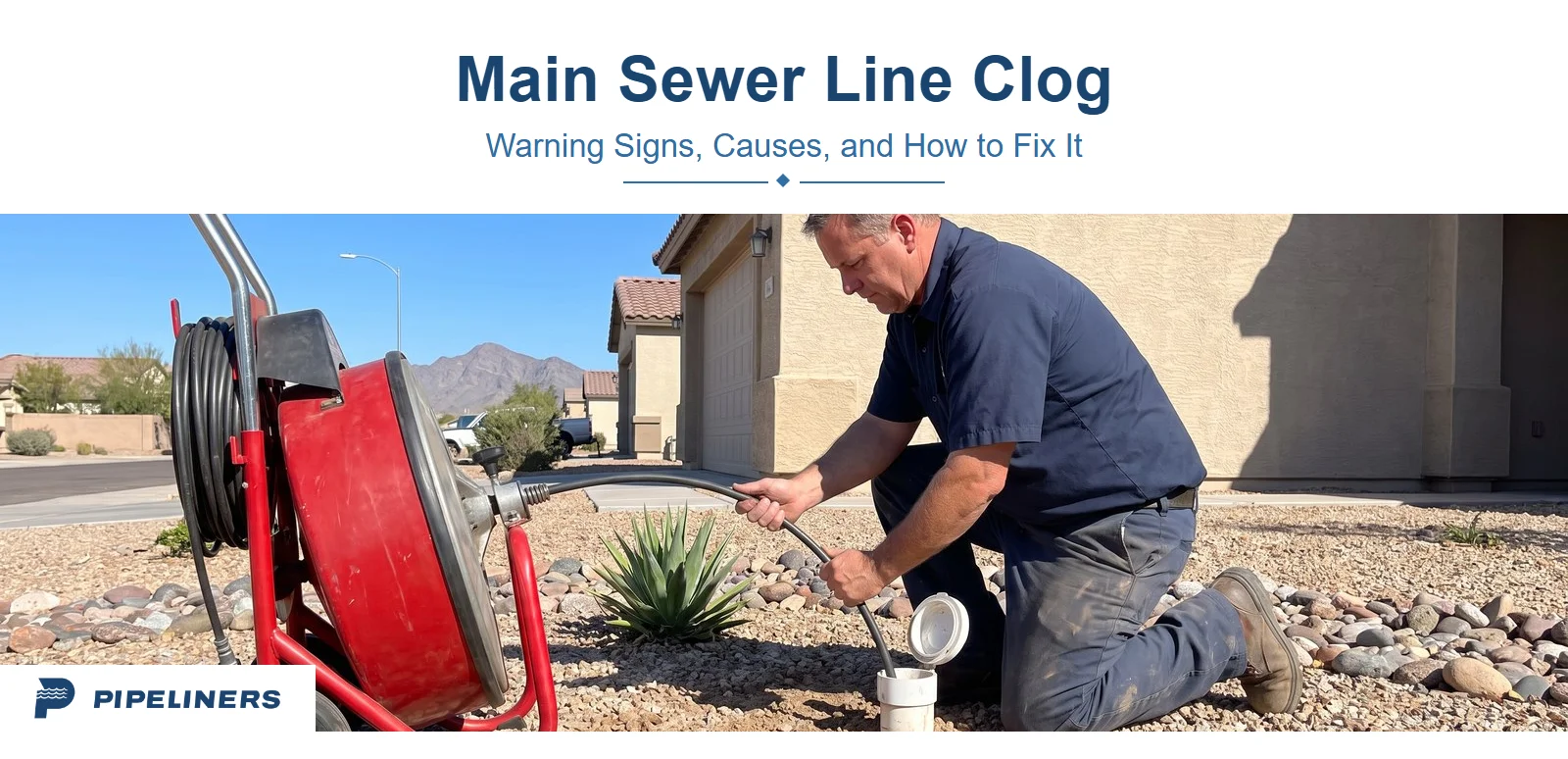
- The technician finds a way in. Most homes have a cleanout. That’s a short pipe with a cap, usually outside near the house, that gives direct access to the sewer line.
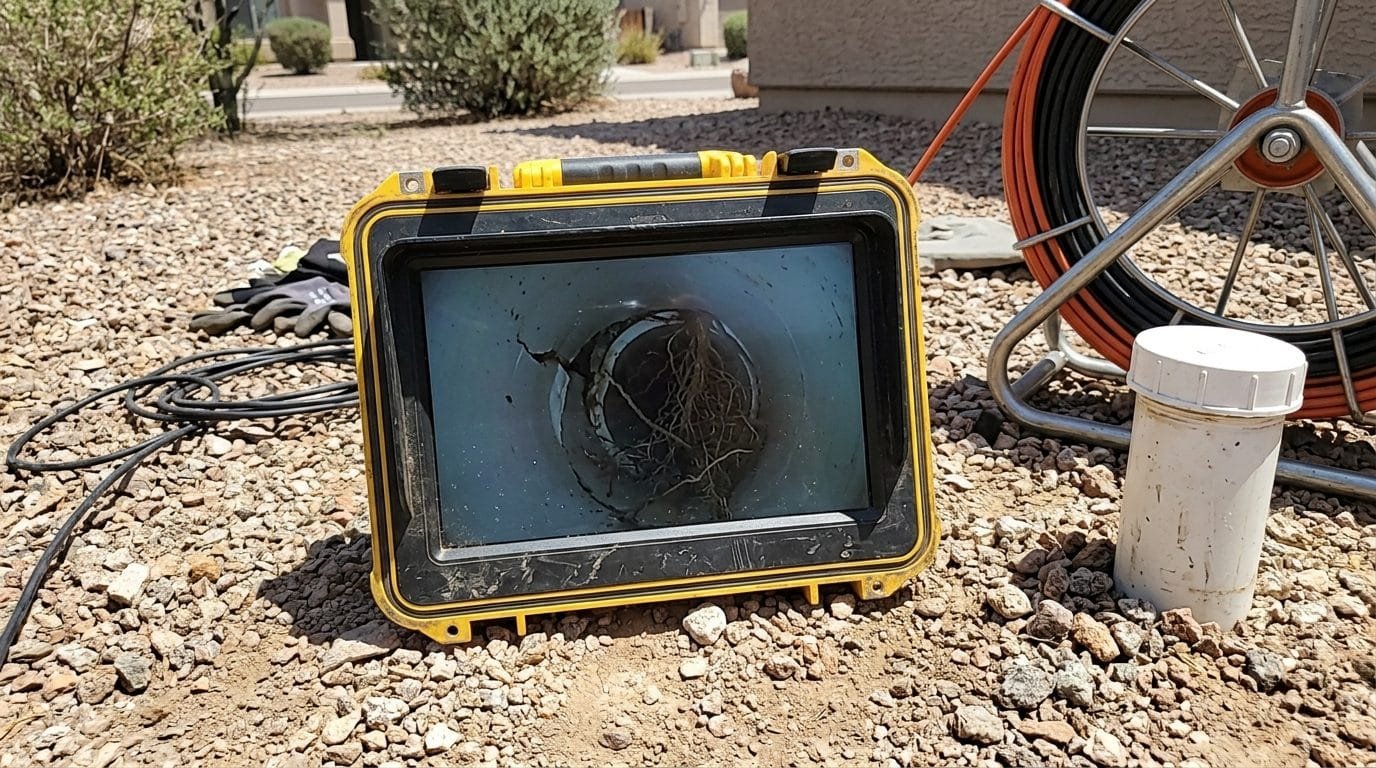
- The camera goes down the pipe. A small waterproof camera on a long, bendable cable is pushed through the line toward the street.
- The video records everything. The technician watches a screen as the camera moves. The cable shows how far the camera has traveled, so any problem can be marked by its distance from the house.
- You get the results. A good inspection ends with the video and a plain summary of what was found and where.
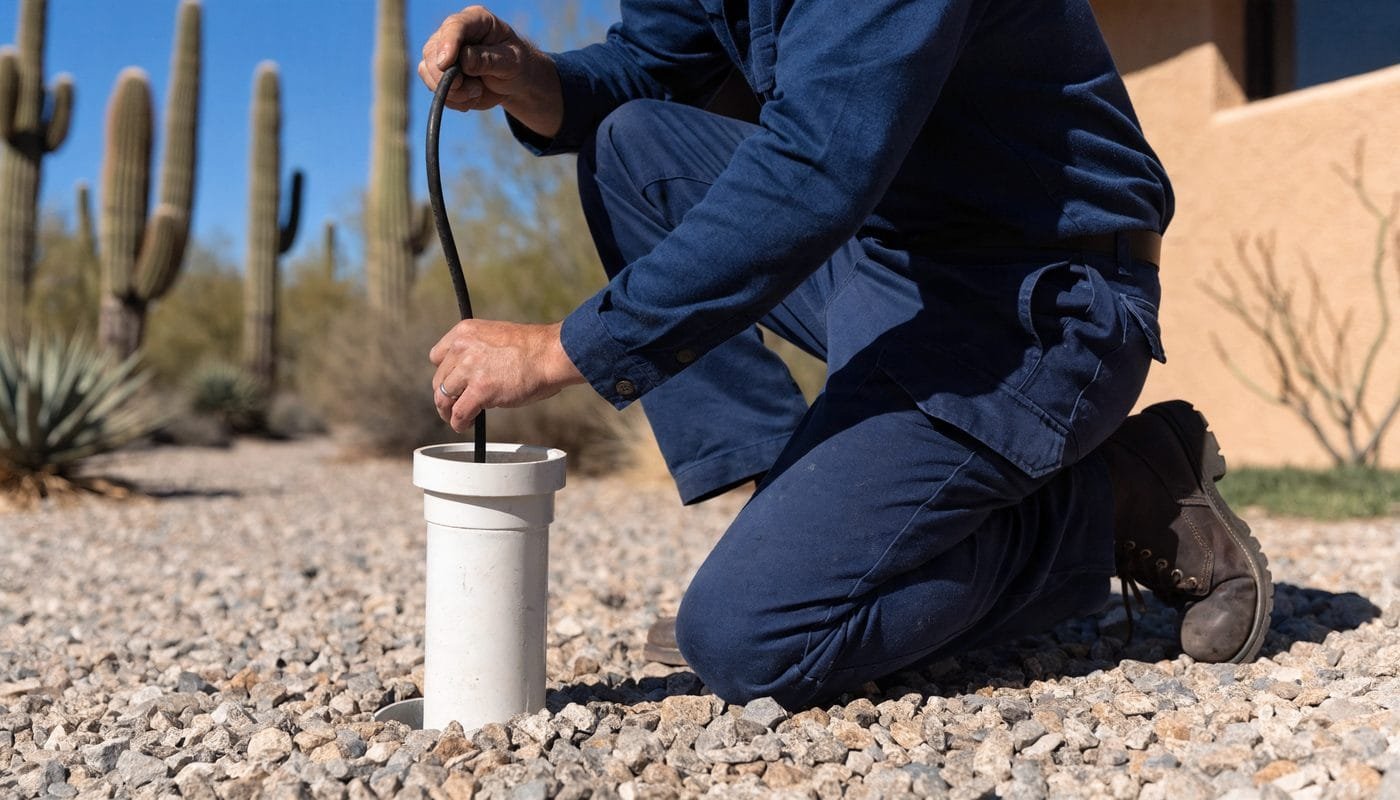
Nothing gets dug up. The whole check happens from inside the pipe.
What Can a Sewer Scope Find?
A sewer line can look fine from the outside and still be in bad shape. The camera shows what’s really going on inside.
| What the camera shows | What it means | Why it matters to a buyer |
|---|---|---|
| Tree roots | Roots got in through a crack or loose joint | They grow back and can block the line |
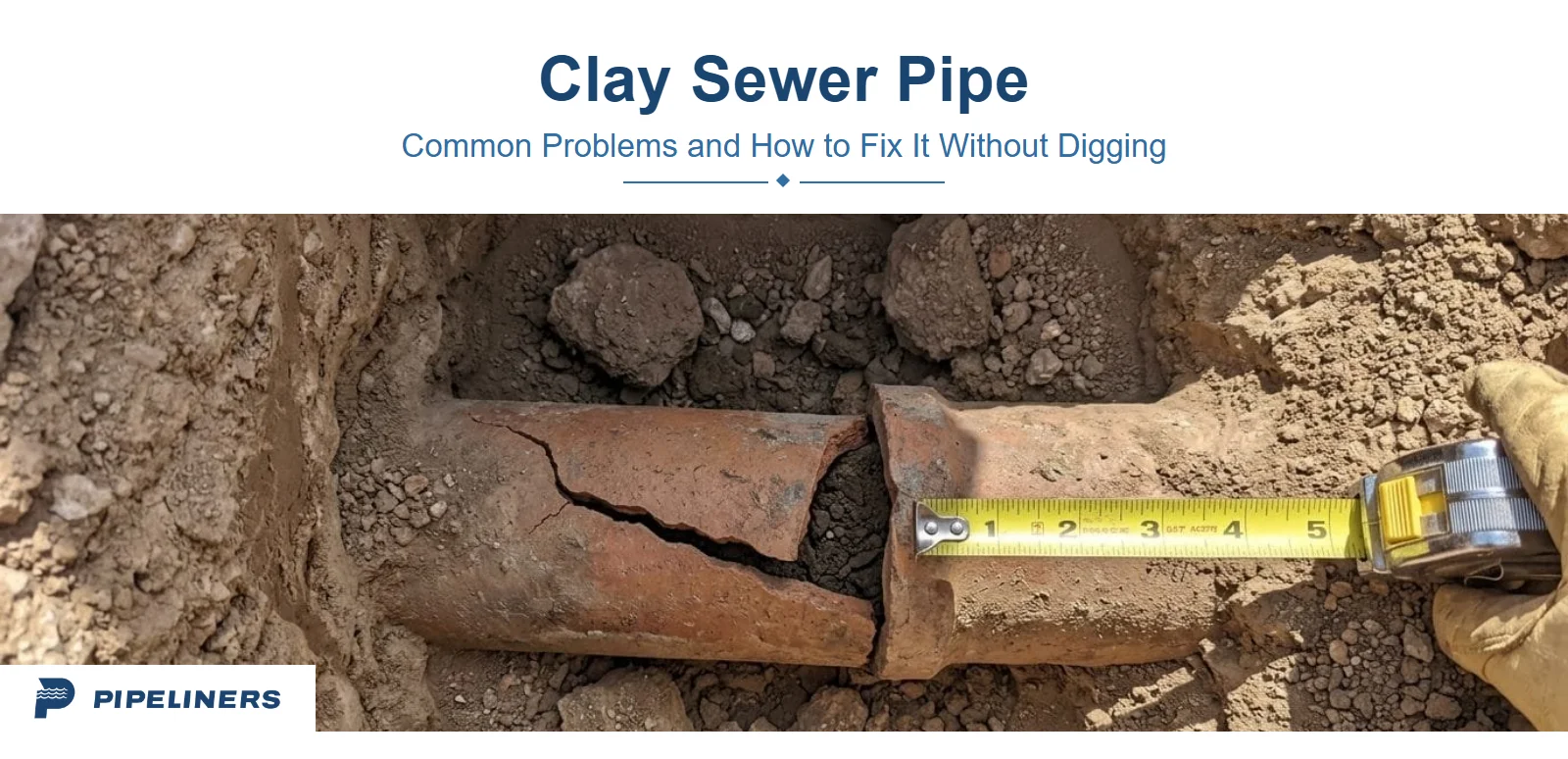
| Cracks or breaks | The pipe wall is damaged | Leaks into the soil and can get worse |
| A belly (a low spot holding water) | Part of the pipe sank | Waste settles there and causes repeat clogs |
| Offset or separated joints | Pipe sections shifted apart | Roots and dirt can get in |
| Heavy scale or grease buildup | The inside of the pipe has narrowed | Slow drains and backups |
| Collapsed section | Part of the pipe caved in | Usually needs repair soon |
| Pipe material | Clay, cast iron, or plastic | Older materials can need more attention |
Want to know more about these problems? See what a belly is, how tree roots in the sewer line cause trouble, and whether a pipe is cracked or collapsed.
Is a Sewer Scope Part of a Home Inspection?
Usually, no. A standard home inspection covers the plumbing the inspector can see, like faucets, drains, and exposed pipes. The main sewer line is buried, so the inspector can’t see inside it.
Some home inspectors offer a sewer scope as an add-on. You can also hire a plumber or a sewer company to do it. Either way, ask for it by name. Don’t assume it’s included.
Should You Get a Sewer Scope When Buying a House?
Yes, for most homes. Here’s why it’s worth it.
You become responsible for the pipe. The City of Phoenix says the property owner is responsible for the sewer line from the house to the connection with the city main. The city only repairs broken lines in the public right of way. Once you close, a problem in that pipe is yours. Check with your city or HOA if you’re buying outside Phoenix or in a condo.
Sewer problems are hidden. A house can pass a home inspection and still have roots or a crack in the sewer line. The drains might seem fine during a short showing, especially if the home has been empty.
Older homes carry more risk. Older homes are more likely to have clay sewer pipe or cast iron. Clay joints let roots in, and cast iron rusts from the inside. Here’s how long cast iron pipes last. Newer homes usually have plastic pipe, but that pipe can still sag, shift, or get damaged.
It gives you time to act. If the camera finds a problem during your inspection period, you still have options. Many buyers use the video to ask the seller for a repair or a credit before closing.
A sewer scope is a good idea even for a newer home. It matters most when:
- the house is older
- there are large trees near the sewer line
- the home sat empty for a while
- you see slow drains, gurgling, or a sewage smell
- the seller says the line was “recently cleared”
What Should You Ask For After a Sewer Scope?
Don’t settle for a quick “looks fine.” Ask for:
- The video. It’s your proof, and other contractors can review it.
- A written summary. It should list each problem and how far it is from the house.
- The pipe material. Clay, cast iron, and plastic each have different weak spots.
- The full length. Ask whether the camera reached the city connection. If it stopped early, ask why.
- A clear next step. Is it fine, does it need cleaning, or does it need repair?
At Pipeliners, we camera the line first, then recommend the repair that fits. If the pipe is fine, we tell you.
What If the Sewer Scope Finds a Problem?
A problem found before closing is much easier to deal with than one found after you move in. The fix depends on what the camera shows.
- Buildup or minor roots: Often a cleaning job. Hydro jetting uses high-pressure water to clear the pipe walls.
- Cracks, root entry points, or separated joints: These can often be fixed by lining the pipe. A new pipe is formed inside the old one, so no trench goes across the yard.
- A collapse or a deep belly: These may need a different repair. The video helps show which one.
Pipeliners repairs sewer lines by lining them from the inside. Most jobs take a couple of days. Our drain lining comes with a 20-year written warranty, and we pull the permits. Not sure which repair fits? Read our guide on lining vs replacement.
Sewer Scope Inspection FAQs
How long does a sewer scope inspection take?
Most scopes take about an hour at the house. It can take longer if the cleanout is hard to find or the line has to be cleared before the camera can get through.
How often should a sewer scope be done?
There’s no set schedule. Get one before you buy a home, when drains back up or keep clogging, or when roots have been a problem before. For an older home with a known issue, a check every few years helps you catch changes early.
What is the difference between a septic inspection and a sewer scope?
A sewer scope checks the pipe that runs from the house to the city sewer. A septic inspection is for homes that aren’t on city sewer. It checks the septic tank and the area where the water drains into the ground. Find out which one the house has before you book.
Do plumbers do sewer scopes?
Yes. Many plumbers and sewer repair companies do sewer camera inspections, and some home inspectors offer them as an add-on. A sewer company can also tell you what a repair would involve.
Is it worth doing a sewer scope?
For most buyers, yes. It’s a small step compared to the cost of finding a sewer problem after you own the home.
Can I do a sewer scope myself?
You can rent a basic drain camera, but reading the video takes practice. Roots, sags, and shifted joints are easy to miss. When you’re buying a home, a professional report carries more weight with the seller.
Buying a Home in the Phoenix Valley?
We do sewer camera inspections across the Phoenix Valley and show you the footage, so you know exactly what you’re buying. See how a sewer camera inspection in Mesa works, or call 480-535-6503 to schedule a sewer camera inspection. You can also request an estimate online.
Last updated: October 2026. Written by Jake Shaker, Pipeliners.