
Quick answer: A sewer lateral is the underground pipe that carries all of your home’s wastewater out to the city sewer main. In most Phoenix-area cities, the homeowner is responsible for it, often all the way to where it joins the main. The exact line between your part and the city’s part depends on your city, so check its rule before you pay for a repair.
In short: the lateral is usually yours to clean and fix, and a camera inspection shows where a problem sits.
Key takeaways
- It is one pipe for the whole house. Every sink, tub and toilet drains into it.
- Most cities put it on the owner. Phoenix, Mesa, Scottsdale, Chandler, Glendale and Peoria all make the owner responsible for at least the part on private property.
- The street section varies. Some cities fix breaks under the street or alley; others leave even that part to you.
- A damaged lateral does not always mean digging. Many can be cleaned or relined from the inside.
What is a sewer lateral?
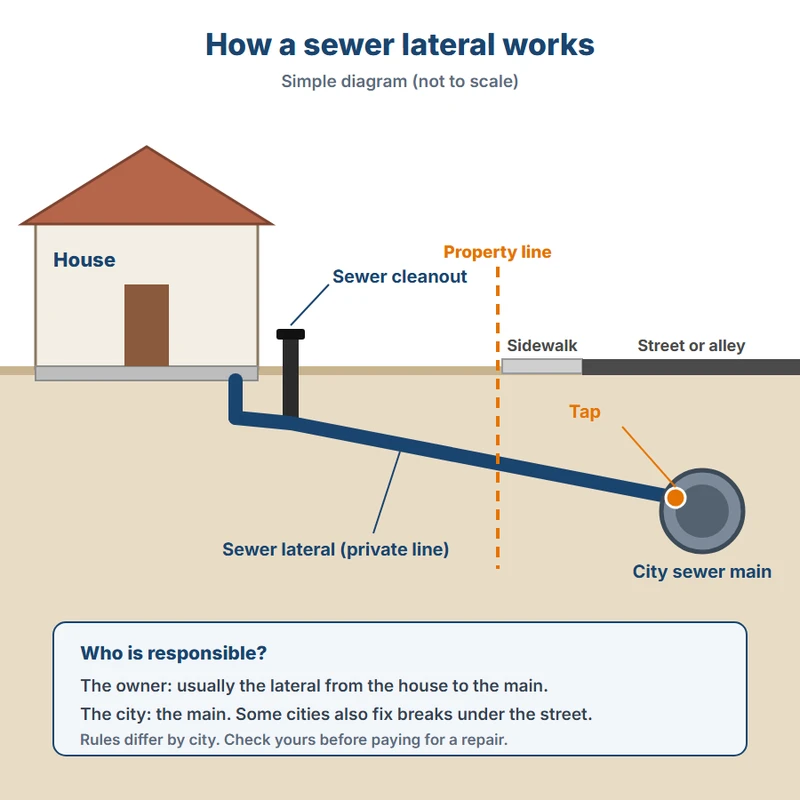
A sewer lateral is the private sewer pipe that runs from your house to the public sewer main, which is usually under the street or the alley. Every drain in your home feeds into it. You may also hear it called the sewer service line, the building sewer or the house connection.
The City of Mesa puts it simply: “The pipe used to carry wastewater from a property is called a lateral line.” It connects to the sewer main, and the main carries everyone’s wastewater to a treatment plant.
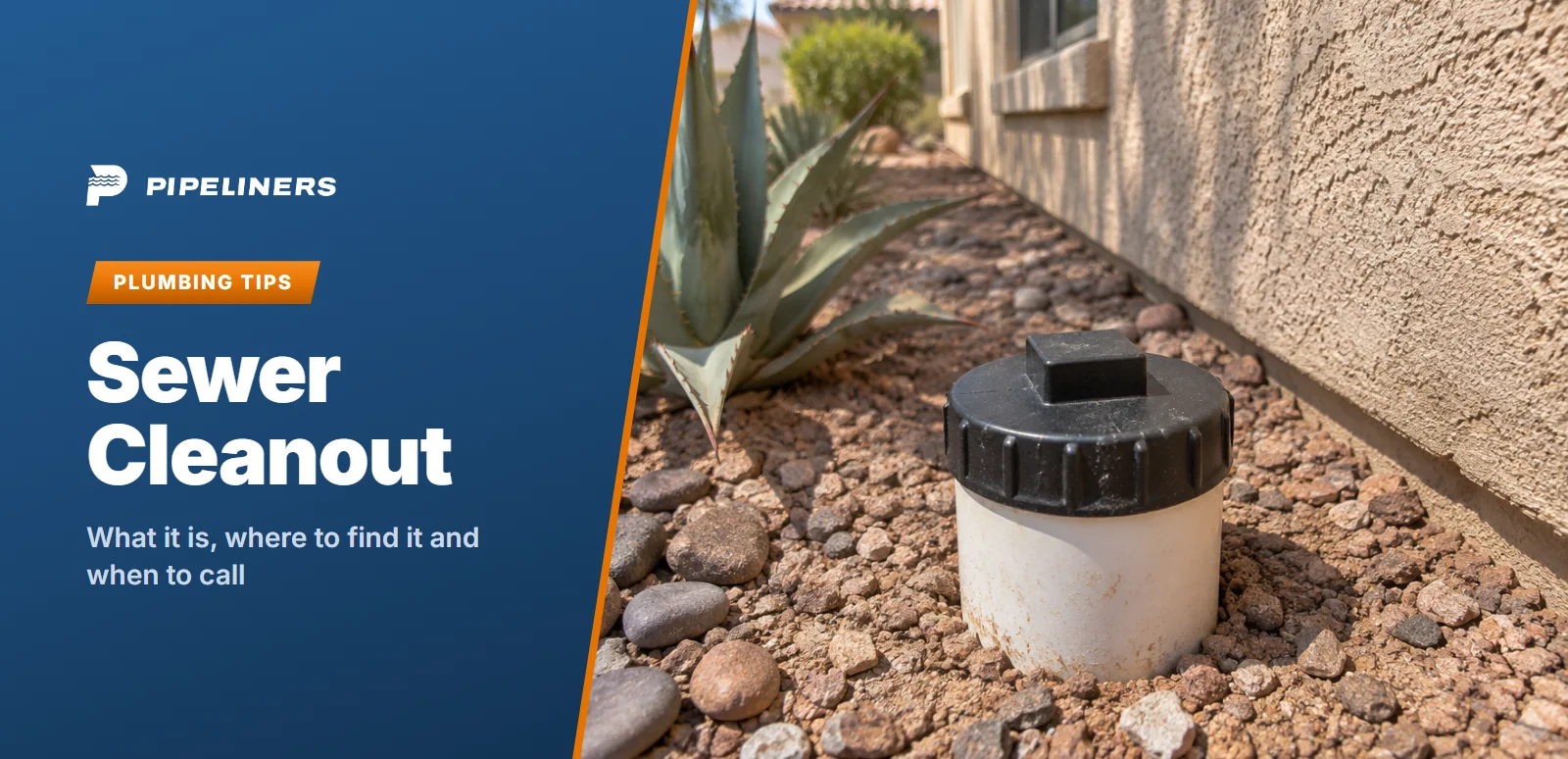
The lateral starts at your house, passes the sewer cleanout (the capped access pipe near the foundation), runs under the yard and ends at a fitting on the main called the tap. That is why one blocked lateral can back up every drain in the house at once.
Who is responsible for the sewer lateral in Phoenix-area cities?
In most Phoenix-area cities, the homeowner is responsible for cleaning and repairing the sewer lateral. The main difference between cities is the short section under the street, sidewalk or alley.
| City | Who is responsible | What the city covers |
|---|---|---|
| Phoenix | The owner, for the line from the house to the connection with the city main | Repairs to broken service lines within the public right of way only (City Code 28-5) |
| Mesa | The owner, from the home to the public sewer (City Code 8-4-8) | Repairs when the broken section is off the property in a street or alley |
| Scottsdale | The owner, for all piping from the main to the house, including the tap | The sewer main; a city crew can help find where a backup starts |
| Chandler | The owner, on the property and in the right-of-way, down to the tap (City Code 51-6) | For single-family homes, repairs in the street or alley up to the property line |
| Glendale | The owner, for cleaning, repair and replacement (City Code 33-217) | The work, at no cost to the owner, when it means digging up a public street, right-of-way or sidewalk |
| Peoria | The owner, from the home or building to the public sewer line (City Code 25-107) | The public sewer line |
These are general rules. Other cities, such as Gilbert and Avondale, split the work in their own way, and a street location alone does not mean the city pays. Before you pay for work near the street, call your city’s water or wastewater department and ask how its rule applies to your home.
What usually goes wrong with a sewer lateral
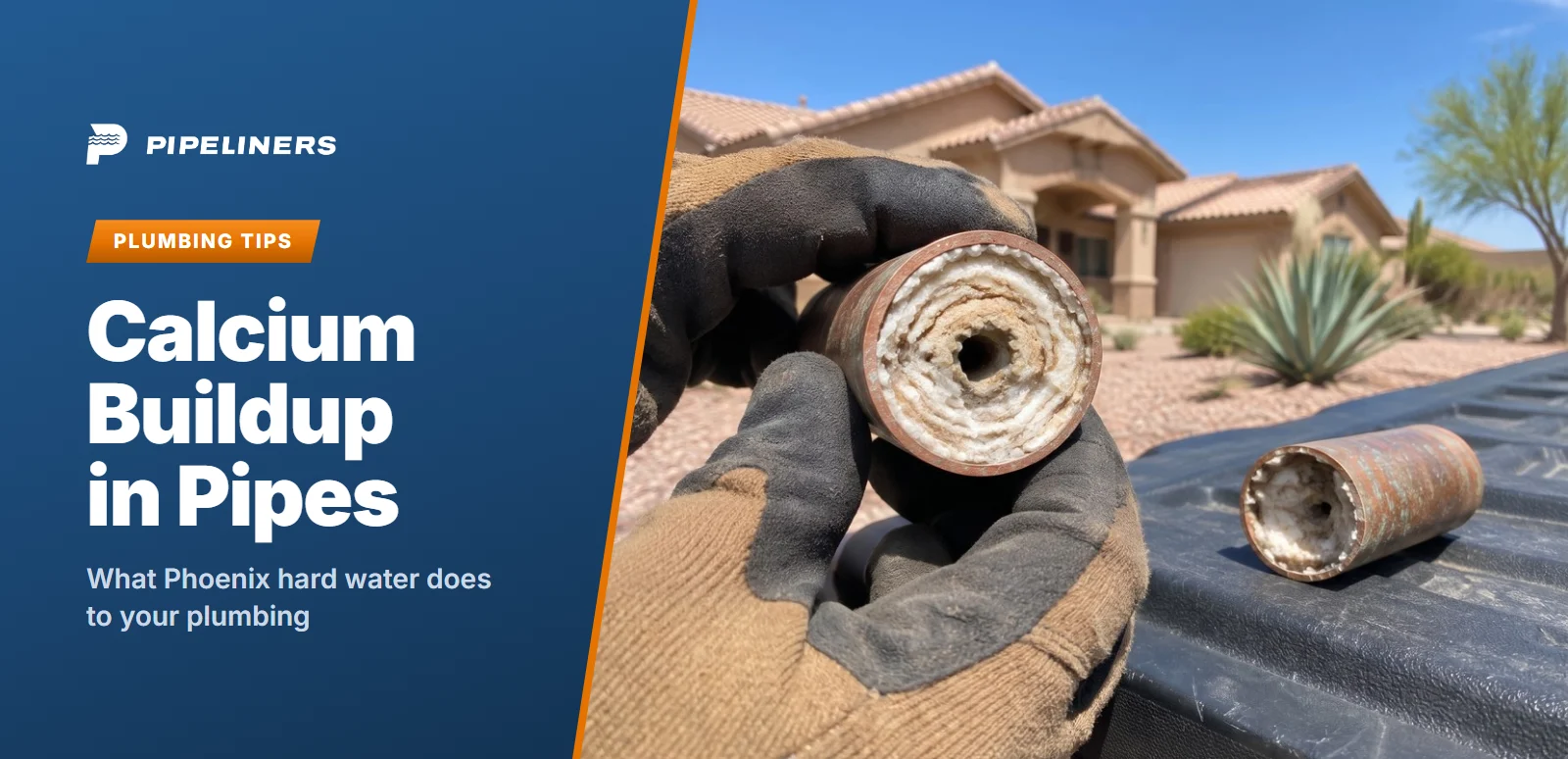
The City of Phoenix names the two biggest causes of sewer blockages: cooking grease first, and roots second, “from trees and invasive shrubs, such as oleanders” (Phoenix sewer cleaning Q&A). Both affect laterals as much as city mains.
Other common problems:
- Old pipe. The City of Phoenix says most pipe that gets replaced or rehabilitated is replaced “due to age.” Older homes may still have cast iron or clay laterals. See how long cast iron pipes last and clay sewer pipe problems.
- Root entry at joints. Roots find small gaps and grow into the pipe, then catch paper and waste.
- Cracks and breaks. Older pipe splits, and waste can leak into the soil.
- Sags. A low spot, or belly, holds water and waste and keeps clogging. See what a belly in a sewer line is.
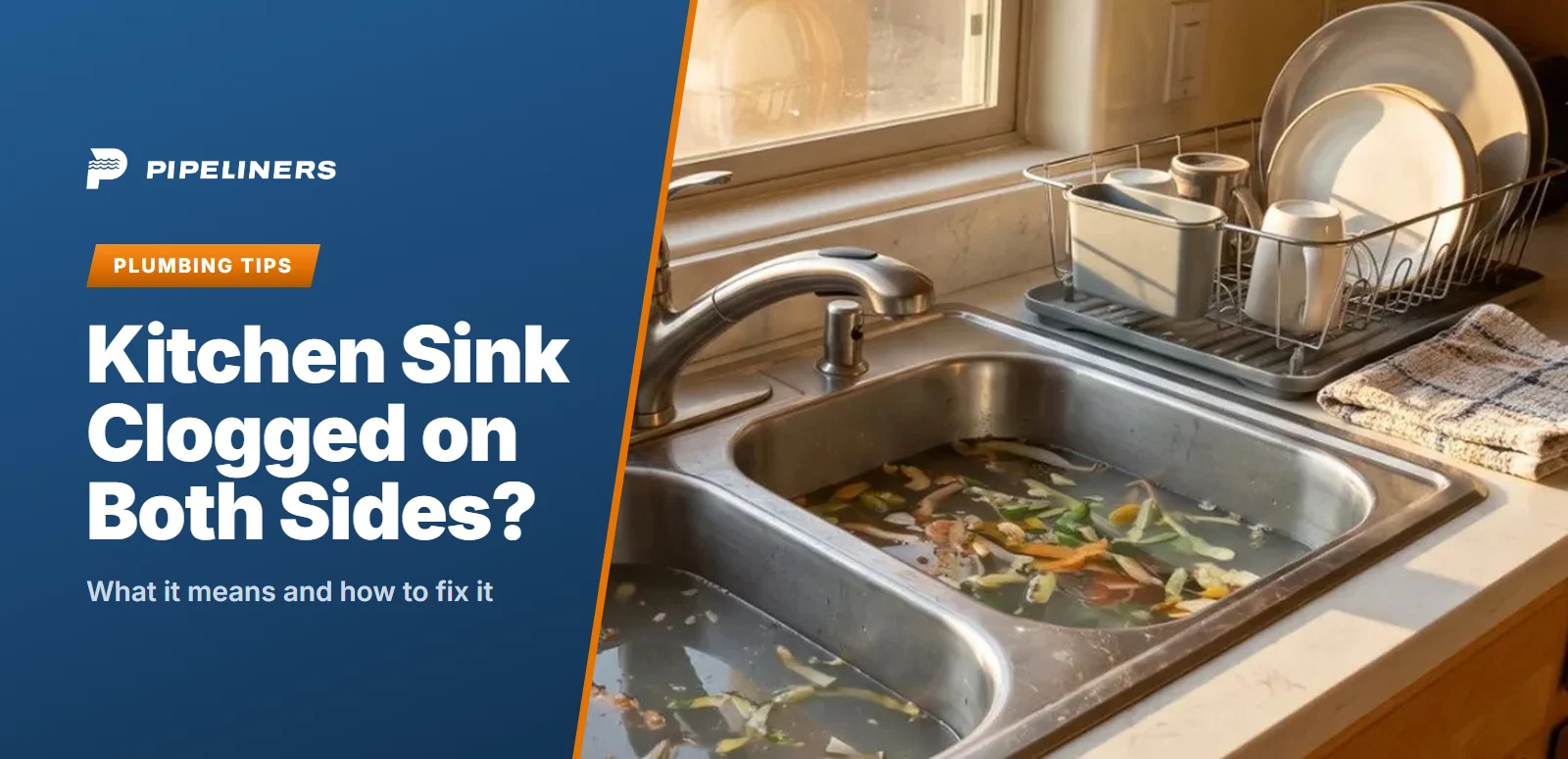
Warning signs that point to the lateral, not one drain: several drains slow at once, water rising in the tub when you flush, gurgling toilets, a sewer smell, or the same clog coming back after it was cleared.
What to do if your sewer lateral is blocked or damaged
Work through it in this order:
- Stop using water if sewage is backing up. Every flush or load of laundry has nowhere to go but up.
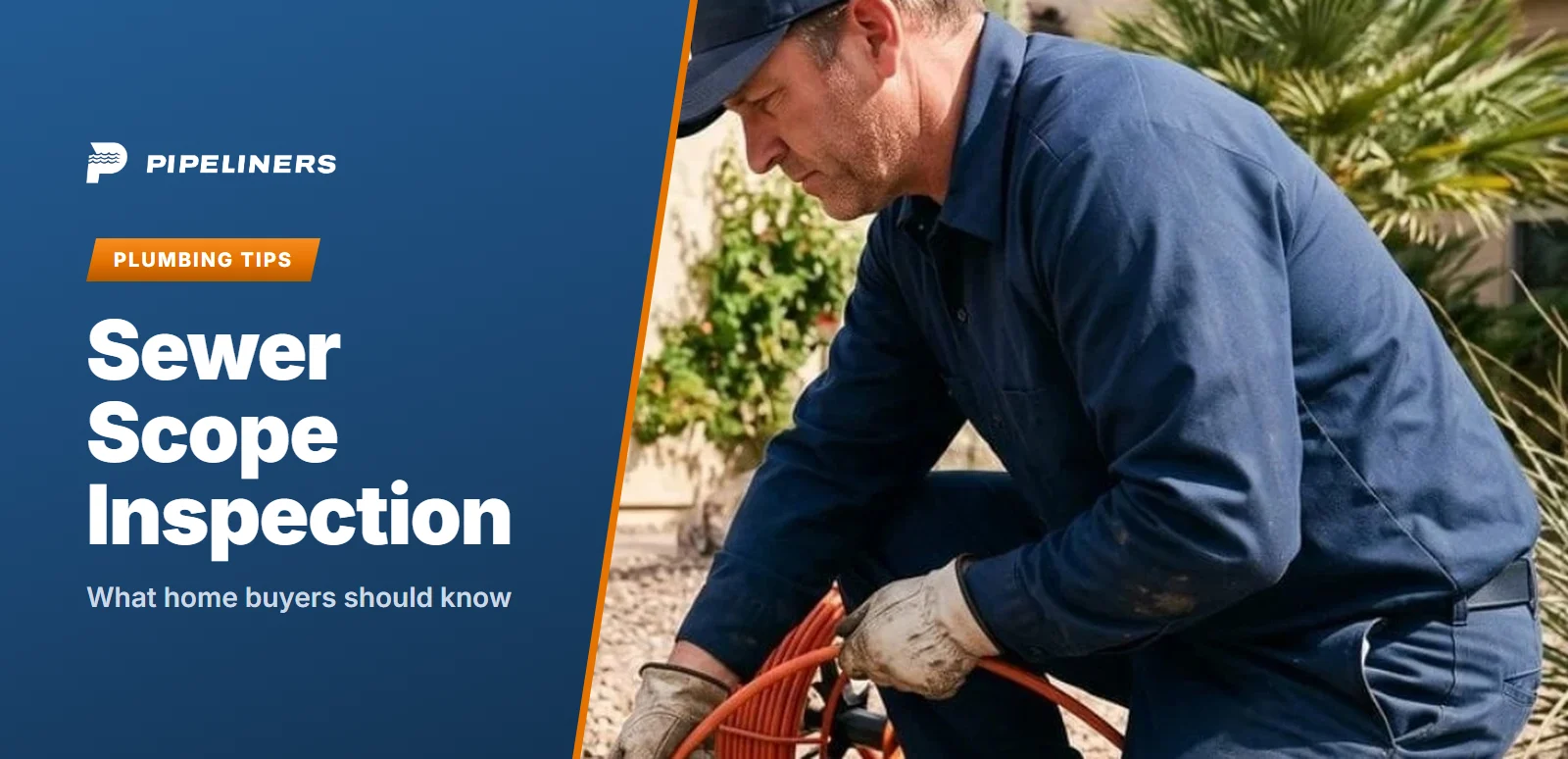
- Find the problem. A sewer camera inspection is the only way to know what is wrong and where. We feed a small waterproof camera through your sewer cleanout and watch the full run of the lateral. The camera counts the feet, so we can tell you whether the problem sits under your yard, under the sidewalk or right at the main.
- Check your city’s rule for that spot, using the table above.
- Decide who does the work. If the problem is on your side, choose a repair. If it may be the city’s, call the city with your video.
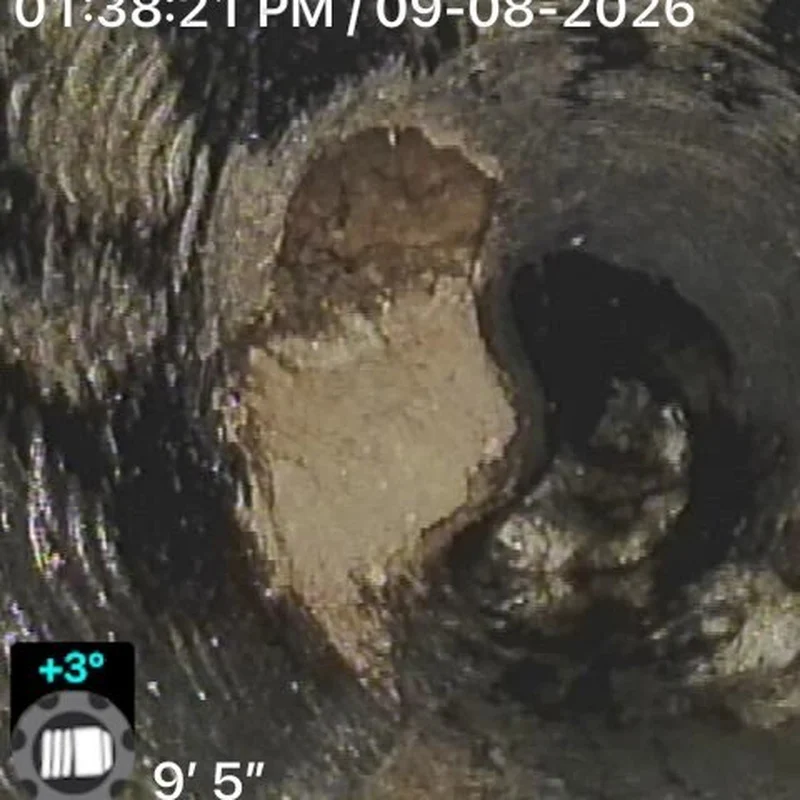
Finding the problem and deciding who pays are separate steps. In Mesa, for example, the city’s sewer blockage form says it is the owner’s responsibility to identify and locate a broken section, and that the best way is to record it with an inspection camera. That recording can then be given to the city if the damage is off the property in a street or alley. If you call Mesa out to check your line instead, the city charges a fee.
Can a sewer lateral be cleaned or relined instead of replaced?
Often, yes. There is no set age when a lateral must be replaced; its condition decides. The right fix depends on what the camera shows. Here is how the common findings usually line up:
| What the camera shows | Usual fix | Digging? |
|---|---|---|
| Grease, scale or light roots | Cleaning with hydro jetting | No |
| Cracks, root entry or open joints in a pipe that still holds its shape | Relining the lateral from the inside | Usually only small access points |
| A collapsed section or a deep sag | Replacing that section | Yes, at that spot |
Relining puts a new pipe inside the old one. The liner is cured in place, seals cracks and joints, and stops roots from getting back in. Our drain relining carries a 20-year warranty, and the liner is built to last 50 years or more. Most of our relining jobs take a couple of days. See how sewer line repair without digging works.
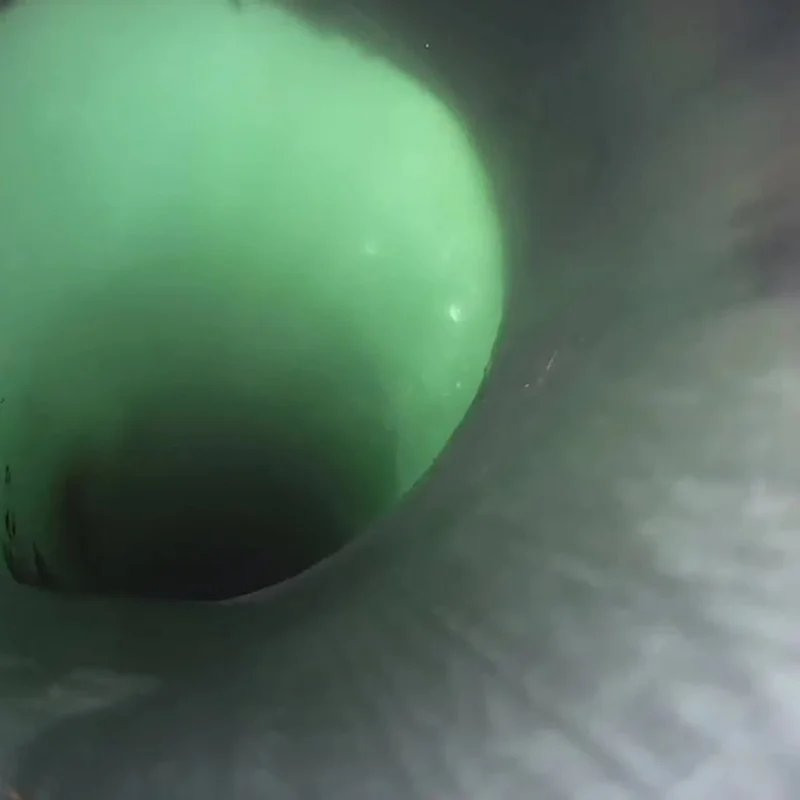
Not every lateral qualifies. Hydro jetting cannot fix a broken pipe, and relining cannot fix a collapsed section or a deep sag. Those spots may need to be dug up and replaced. The camera inspection tells you which case you are in before you spend money.
Check your sewer lateral before it fails
Call when several drains back up at once, when the same clog keeps coming back, or when you are buying an older home. A sewer scope inspection before closing shows the condition of the lateral you are about to own.
Not sure what is going on in your sewer lateral? Call Pipeliners at (480) 535-6503. We will look inside the line with a camera, show you the video and explain your options before any work starts.
Frequently asked questions
Does homeowners insurance cover a sewer lateral?
It depends on your policy, the cause of the damage and any extra coverage you bought. Coverage for a sewer backup inside the house and coverage for the buried pipe itself are not always the same thing. Read your policy and ask your insurer. Phoenix and Scottsdale also point homeowners to optional service line protection plans from private partners, and Scottsdale encourages owners to check their current homeowner’s policy before adding one.
How long does sewer lateral replacement take?
There is no single timeline. The length and location of the damaged section, access, permits and whether any city work is involved all change the schedule. Get the line inspected first so the contractor can give you a timeline for your home. When a lateral qualifies for relining, most of our jobs take a couple of days.
Do homes on a septic system have a sewer lateral?
Not to the city. A home on septic sends its wastewater through a building sewer pipe to its own tank on the property. That pipe can have the same problems, such as roots, cracks and sags, and a camera inspection works the same way.
Related reading: Main sewer line clog: warning signs and fixes | Sewer cleanout: what it is and where to find it