
Looking for a Pipe Repair Company Serving Sacaton Arizona?
We Are Sacaton's Pipelining Experts, Call Us Today!
Property around Sacaton tends to sit with room around it, and the line between a house and its connection runs a long way across that ground. The distance is what makes a conventional repair expensive: the fault has to be found before it can be reached, and on a long run the digging is most of the job. Pipeliners inspects the line first and lines it only where the pipe can actually carry a liner, which is a question of what CIPP can and cannot do rather than the age of the pipe.
No Demolition Solution
No trenching across your Sacaton yard, driveway, or slab. We restore pipes in place with minimal property disruption.
Eco-friendly Repairs
The clay, cast iron, or copper already in the ground becomes the host for the new liner. Nothing is excavated out of a rural lot and nothing has to be hauled back in to replace it.
Up To 30% Cost Savings
Sacaton homeowners can save up to 30% versus dig-and-replace, without added concrete, sod, or hardscape restoration.
Minimal Interruption
Access is through one or two small openings rather than a cut across the property, and on most jobs the drains are back in normal use the same day.
Trenchless Sewer Line Repair Solutions in Sacaton, AZ
Pipe Lining

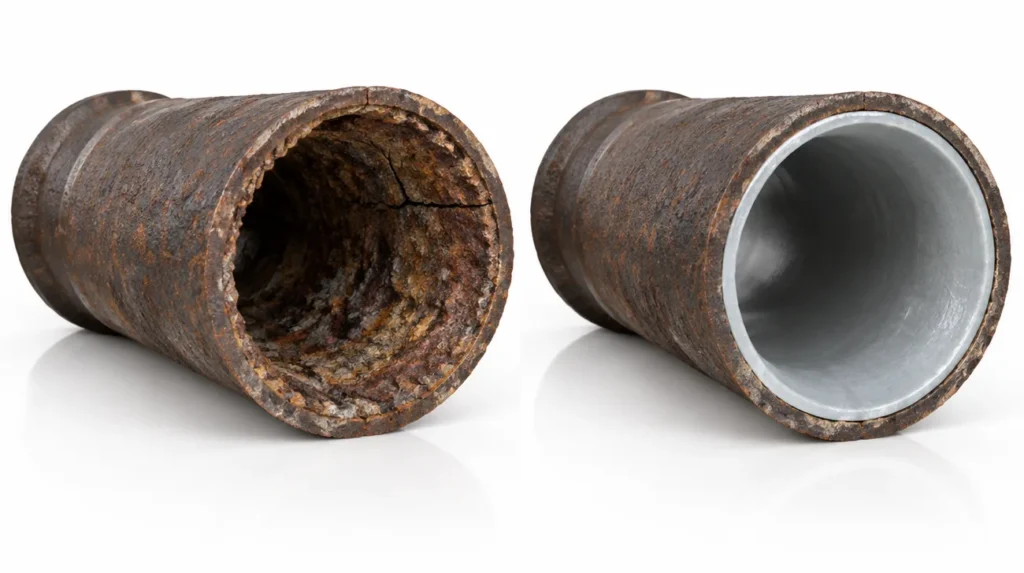
Pipe lining gives Sacaton area property owners a trenchless, no-dig way to rebuild cracked, leaking, or root-invaded sewer and drain lines without tearing open a yard, driveway, or slab. Sacaton, the seat of the Gila River Indian Community south of Chandler, is a rural area where properties run on long private line runs across desert ground and some rely on septic systems. That distance is what decides the cost of a conventional repair here: the fault has to be found before it can be reached, and on a long run the digging is most of the job. Instead, we insert an epoxy-saturated liner into the existing pipe and cure it in place with UV LED technology, forming a seamless new pipe inside the old one.
Pipe Lining Advantages
Trenchless repair for the Sacaton area
On rural properties near Sacaton, where lines run long distances across desert terrain, digging up a sewer or water line is expensive and disruptive. Pipe lining rehabilitates the pipe from the inside through one or two small access points. The liner cures as one continuous length, so the joints that roots were using are no longer joints, which matters more the longer the run is.
ePipe Water Line Solutions
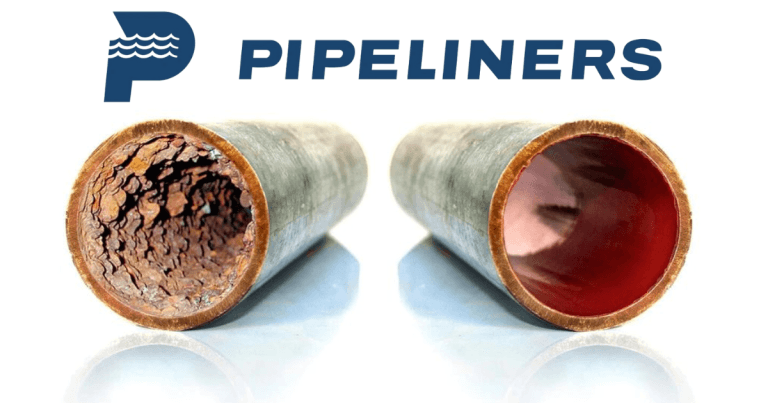
Stop pinhole leaks in your Sacaton copper lines. Hard water thins copper from the inside, and it does it in patches rather than evenly, so a supply system tends to give way at one weak point instead of failing all over. Where the pipe runs under a slab, that first hole is out of sight and the earliest sign of it is usually a warm patch of floor or water use that has climbed with nothing to explain it. Reaching that one fault leaves the rest of the run exactly as it was. The ePIPE solution cleans and coats the copper as a whole system in place.
The patented ePIPE process cleans the inside of your existing water piping, then applies a safe, non-toxic epoxy barrier coating that is NSF/ANSI 61 certified for drinking water. The coating seals the pipe and resists the scale that hard water leaves behind, which puts a new pipe inside the one already in your walls, with no need to open walls, floors, or ceilings. That means no drywall demolition, and nothing left to make good afterwards.
Frequently Asked Questions About Trenchless Pipe Repair in Sacaton, AZ
Can a damaged sewer line in Sacaton be repaired without digging up my yard, driveway, or concrete?
Yes, some damaged sewer lines can be repaired without excavating the entire pipe. Cured-in-place pipe lining, or CIPP, installs a new structural liner inside the existing sewer line, which can reduce the need to remove concrete, landscaping, driveways, or other finished surfaces.
Whether trenchless pipe lining is possible depends on the condition of the existing pipe. NASSCO guidance notes that the host pipe must be able to maintain its shape and should not contain conditions such as crushed or collapsed sections that prevent proper liner installation.
Pipeliners USA evaluates the sewer line first to determine whether no-dig restoration is appropriate.
How do I know if my recurring sewer backup is caused by a clog, tree roots, or a damaged pipe?
Recurring sewer backups can have several causes, including grease and debris buildup, wipes, tree roots entering through pipe defects, cracks, broken sections, or other sewer-line problems. The EPA identifies fats, oils, grease, certain household products, tree roots, and sewer defects among recognized causes of sewer blockages and overflows.
Because these problems can create similar symptoms, a sewer camera inspection is often the best way to see what is happening inside the line.
If the problem is buildup, cleaning may be appropriate. If the camera finds cracks, deterioration, root entry points, or other structural damage, the pipe may need repair rather than repeated clog removal.
Can old cast iron or clay sewer pipes in Sacaton be repaired with CIPP pipe lining?
Potentially, yes. CIPP can be used with different host-pipe materials as long as the existing line is suitable for rehabilitation. NASSCO’s rehabilitation guidance states that CIPP systems can be used with various host-pipe materials when the pipe can maintain its shape and the installation conditions are appropriate.
For older cast iron or clay pipe, the line normally needs to be cleaned and inspected first. The inspection helps determine whether corrosion, cracking, root intrusion, joint movement, or structural deterioration has progressed too far for lining.
The pipe material alone does not determine whether CIPP will work. Its actual condition does.
What types of sewer line damage can trenchless pipe lining repair?
CIPP pipe lining is commonly considered for sewer lines with cracking, leakage, corrosion, root-entry points, aging pipe walls, and certain joint defects.
Small and moderate pipe offsets may also be manageable in some CIPP installations. NASSCO notes, however, that severe offsets that substantially reduce the pipe’s cross-sectional area should be corrected before lining.
The important distinction is that CIPP rehabilitates an existing pipe. It still needs enough usable host-pipe structure and a clear pathway for the liner to be installed correctly.
A sewer camera inspection helps determine whether the specific damage is suitable for trenchless rehabilitation.
When is a sewer line too damaged for pipe lining and needs to be replaced instead?
Pipe lining may not be appropriate when a sewer line is completely collapsed, crushed, severely deformed, blocked by major structural failure, or damaged in a way that prevents proper liner installation.
NASSCO’s rehabilitation guidance states that the existing pipeline should be free of crushed or collapsed pipe and significant restrictions that would prevent correct installation.
Severe offsets, missing sections, or other major structural conditions may require a localized excavation or another replacement method before CIPP can be considered.
Pipeliners USA’s approach is to inspect the pipe first rather than assume every sewer line can be lined.
Do I need a sewer camera inspection before deciding between hydro jetting, pipe lining, and replacement?
A camera inspection is an important part of making that decision because each method solves a different type of problem.
Hydro jetting is used to remove buildup and obstructions. CIPP lining rehabilitates suitable damaged pipe. Replacement may be necessary when the existing pipe has severe structural failure.
EPA technical guidance for CIPP rehabilitation describes cleaning and CCTV inspection before lining so that connections, offsets, transitions, and other conditions can be identified. CCTV is also used after installation to check the completed liner.
Instead of choosing a repair method based only on symptoms, inspecting the sewer line first gives the contractor evidence to work from.
Is hydro jetting enough for recurring sewer clogs, or does the pipe need to be repaired?
It depends on why the sewer keeps clogging.
Hydro jetting can be effective when grease, sludge, scale, debris, or similar buildup is restricting the pipe. Pipeliners USA uses hydro jetting as a thorough internal cleaning method and as preparation for sewer inspection or lining.
However, cleaning does not repair a crack, damaged joint, deteriorated pipe wall, or another structural defect.
The EPA notes that tree roots can enter through defects and openings in sewer lines and create blockages. If roots or buildup keep returning because the pipe itself is damaged, cleaning may restore flow temporarily while the underlying pipe problem remains.
How much does trenchless sewer pipe repair cost in Sacaton, Arizona?
There is no reliable single price for trenchless sewer repair because the scope of work depends on the individual pipe.
Important pricing factors include:
- Length of the damaged section
- Pipe diameter
- Pipe condition
- Access to the sewer line
- Cleaning and preparation required
- Number and severity of defects
- Repair method recommended after inspection
Pipeliners USA does not use a universal price claim because sewer-line conditions vary from property to property. The appropriate repair and cost should be determined after the pipe has been inspected.
A camera inspection and project evaluation are the best starting points for an accurate estimate.
Who is responsible for a sewer problem in Sacaton, the property owner or the Gila River Indian Community?
Responsibility depends on where the problem is located and who owns or maintains that portion of the wastewater system.
The Gila River Indian Community states that its Department of Public Works manages water and wastewater services within the Community. However, the publicly available information does not establish one simple responsibility rule that applies to every private property, service connection, or sewer line in Sacaton.
If there is uncertainty about whether the problem involves Community wastewater infrastructure or a privately maintained line, contact the Gila River Indian Community Department of Public Works before authorizing major repair work.
A sewer inspection can also help identify where the problem is located.
How long does CIPP sewer pipe lining last, and what warranty does Pipeliners USA provide?
CIPP is designed as a long-term sewer rehabilitation method, not simply a temporary clog repair.
An EPA retrospective study examined CIPP liners that had been in service for approximately 5 to 25 years. The samples were found to be in excellent condition, and the EPA concluded there was no reason to expect the evaluated liners would not reach their intended 50-year service life, and potentially longer.
Actual performance depends on proper design, installation, pipe conditions, and the specific liner system.
Pipeliners USA describes its drain liners as designed for 50+ years and provides a 20-year drain lining warranty.
