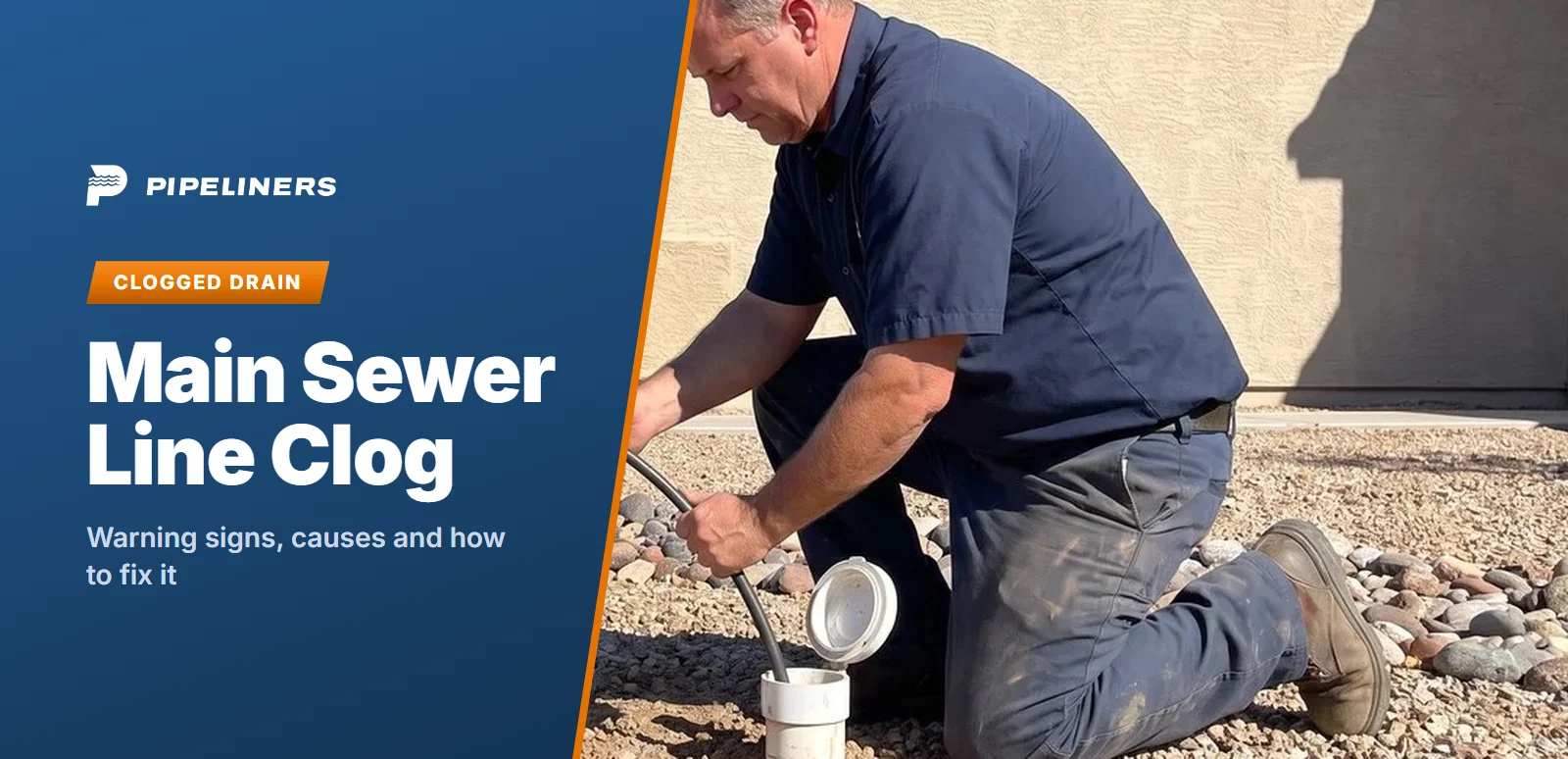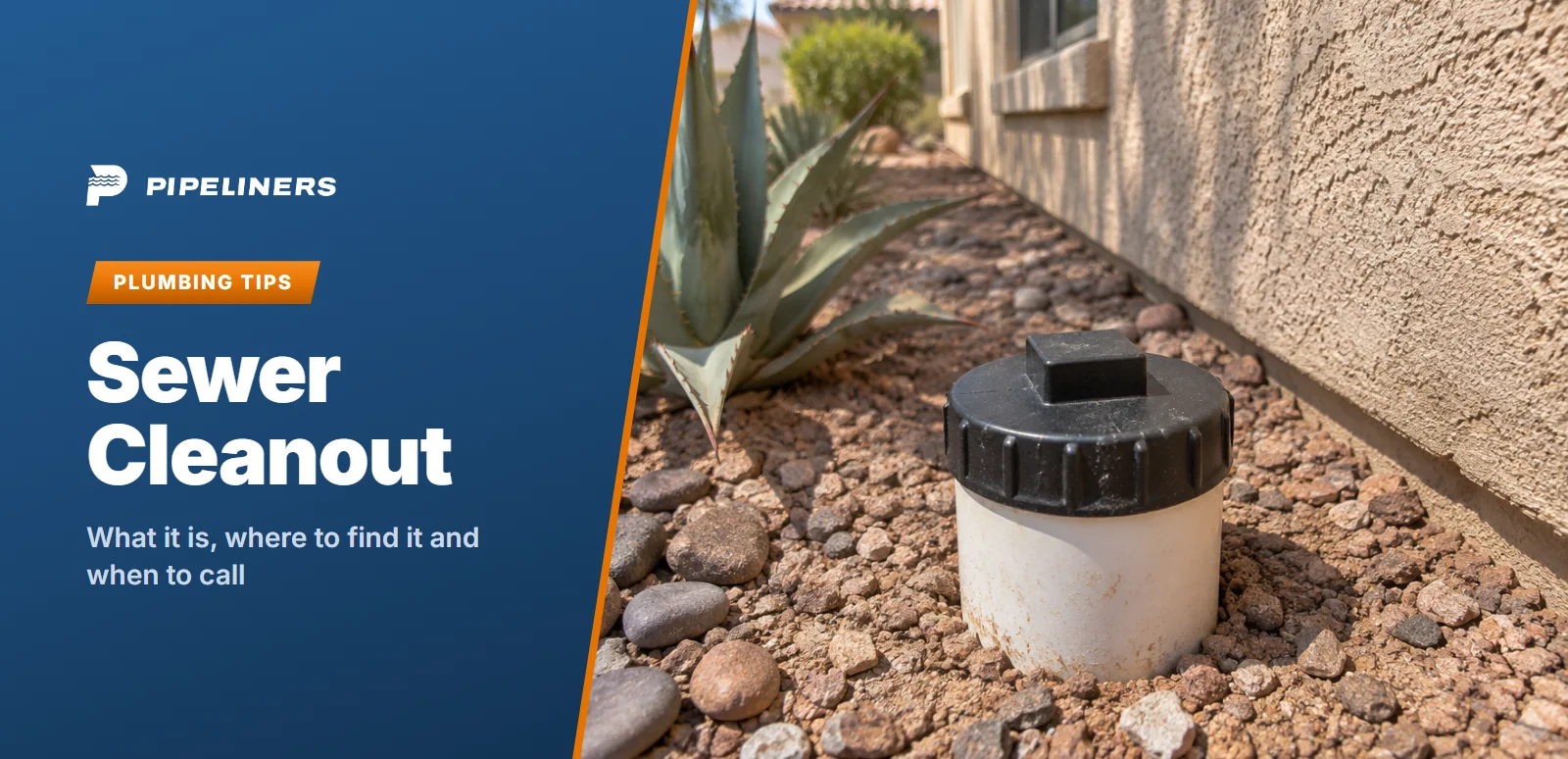

A sewer cleanout is a capped pipe that opens into your home’s main sewer line. Plumbers and sewer crews use it to run a camera or clear a clog without going through a toilet or sink. On most Arizona homes it sits outside, near the foundation. If sewage is backing up, do not open the cap yourself.
In short: find it now, keep it clear, and let a professional open it when there is a backup.
Key takeaways
- It is your access point. Every camera inspection, jetting or relining job on the main line usually starts at the sewer cleanout.
- Look outside first. Arizona homes sit on slabs with no basement, so the cleanout is usually at ground level next to the house.
- Older homes may not have one. Some cities warn that homes 20 or more years old may be missing a cleanout, or it may be buried.
- A full cleanout is a warning sign. Water standing in the cleanout pipe usually means the clog is past it, toward the street.
What is a sewer cleanout and what does it do?
A sewer cleanout is a short, capped pipe that connects straight down into the main sewer line, the pipe that carries everything from your toilets, showers and sinks out to the city sewer.
The cap gives a sewer specialist a straight path into that pipe. From the cleanout we can:
- Run a sewer camera to see roots, cracks, scale or a sag in the line.
- Clear a blockage with a cable or a hydro jetting hose.
- Measure how far a problem is from the house before choosing a repair.
Without a cleanout, the only way in is often through a toilet or a roof vent. That is slower, and it can be harder to see the whole line.
Where is the sewer cleanout located?
On most homes in Mesa, Phoenix and the rest of the Valley, the main sewer cleanout is outside at ground level, close to the house.
The City of Mesa describes it this way: the cleanout is “typically located outside at ground level next to the house (often outside a bathroom or the kitchen).” Mesa also says it “may be hidden by landscaping,” and that in neighborhoods with alleys, “your cleanout may be in the backyard.”
Places to check:
- Along the outside wall near a bathroom or the kitchen.
- In the front yard, between the house and the street.
- In the backyard, if your street has an alley behind the homes.
- Under gravel, rock, bushes or ground cover next to the foundation.
- On an outside wall, on some homes.
Walk the outside of the house and look for a short pipe sticking a few inches out of the ground with a round cap on top.
What does a sewer cleanout cap look like?
Most residential cleanout caps are round and about 3 to 4 inches across. Mesa describes “a black threaded cap” with “a raised square nut on top.” Newer caps are often white or black plastic. Older homes can have a metal cap.
Mesa also notes that “older homes usually have only one opening, while new homes have two cleanout pipes.” A two-pipe cleanout lets a crew reach the line in both directions.
Is a cracked or missing cap a problem? Yes. A broken or missing sewer cleanout cap is an open hole into the sewer line. It can let in dirt, rocks and rainwater, and let sewer gas out. Have a damaged cap replaced so the opening stays sealed.
What if you cannot find your sewer cleanout?
This is common, especially in older neighborhoods and homes that have been remodeled.
- The home may not have one. The City of Buckeye notes that if your home is twenty years old or older, you may not have a sewer cleanout.
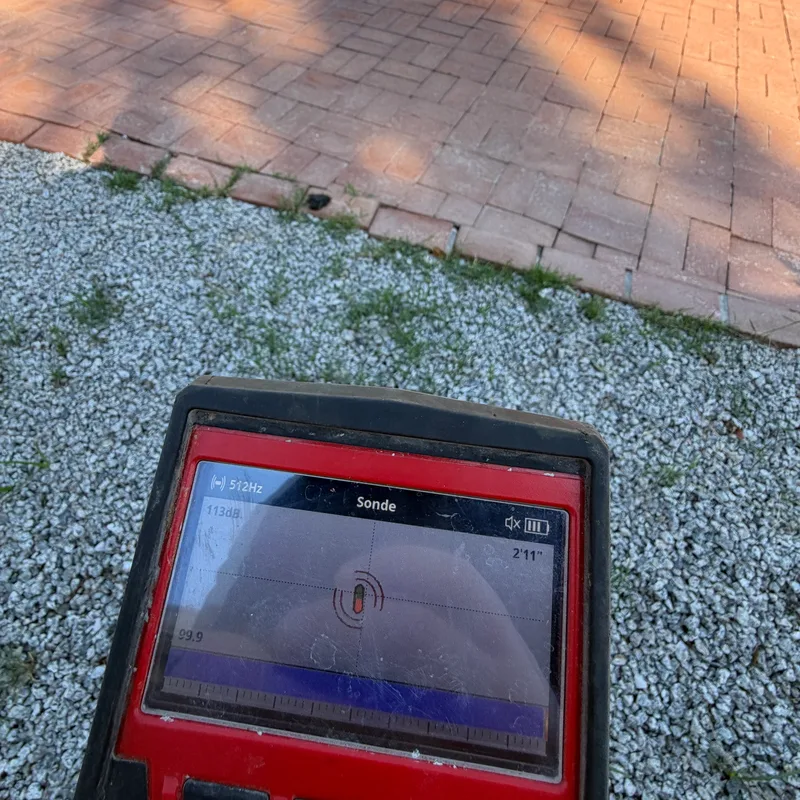
- It may be buried. Landscaping, pavers, a patio or a remodel can cover the cap.
- The city will not have a map of it. The City of Chandler says it does not keep records of where private cleanouts are located, and the City of Phoenix says homeowner cleanouts are generally on private property and outside the jurisdiction of city staff.
Do not dig to look for it. Buried utility lines can be close to the surface. Have a sewer professional locate it.
Who is responsible for the sewer cleanout?
In most Valley cities, the homeowner is. The City of Phoenix states that “home or property owners are responsible for cleaning and maintaining the sewer line that runs from the house to the connection with the city sewer main.” The cleanout is part of that private line.
Rules about breaks in the street or right of way differ by city, so check with your city if a problem looks like it is past your property line.
Signs your main sewer line may be clogged
A clog in one sink usually stays in that sink’s drain. A clog in the main sewer line affects the whole house. Watch for:
- Several drains slow at the same time.
- Water coming up in a tub or shower when you flush a toilet.
- Gurgling from a toilet when the washer drains.
- A sewer smell near the cleanout or inside.
- Water or sewage sitting inside the cleanout pipe.
These are clues, not proof. A camera inspection shows what is really inside the line.
| What you notice | What it can mean | Next step |
|---|---|---|
| Cap is visible, drains work fine | Normal | Keep the area clear and the cap tight |
| Cap is cracked, loose or missing | Open path into the sewer line | Have the cap replaced |
| Several drains backing up | Possible main line clog | Stop running water and call for an inspection |
| You cannot find the cleanout | Buried, covered or never installed | Have a professional locate the line |
What to do if sewage is backing up
- Stop using water in the house: no flushing, showers, laundry or dishwasher.
- Keep kids and pets away from any sewage.
- Do not open the cleanout cap. If the line is full, sewage can come out under pressure when the cap loosens.
- Do not pour drain chemicals into the cleanout or drains.
- Call a sewer specialist to clear and inspect the line.
How we use the cleanout to find and fix the problem
When we come out for a main line problem, the cleanout is where we start.
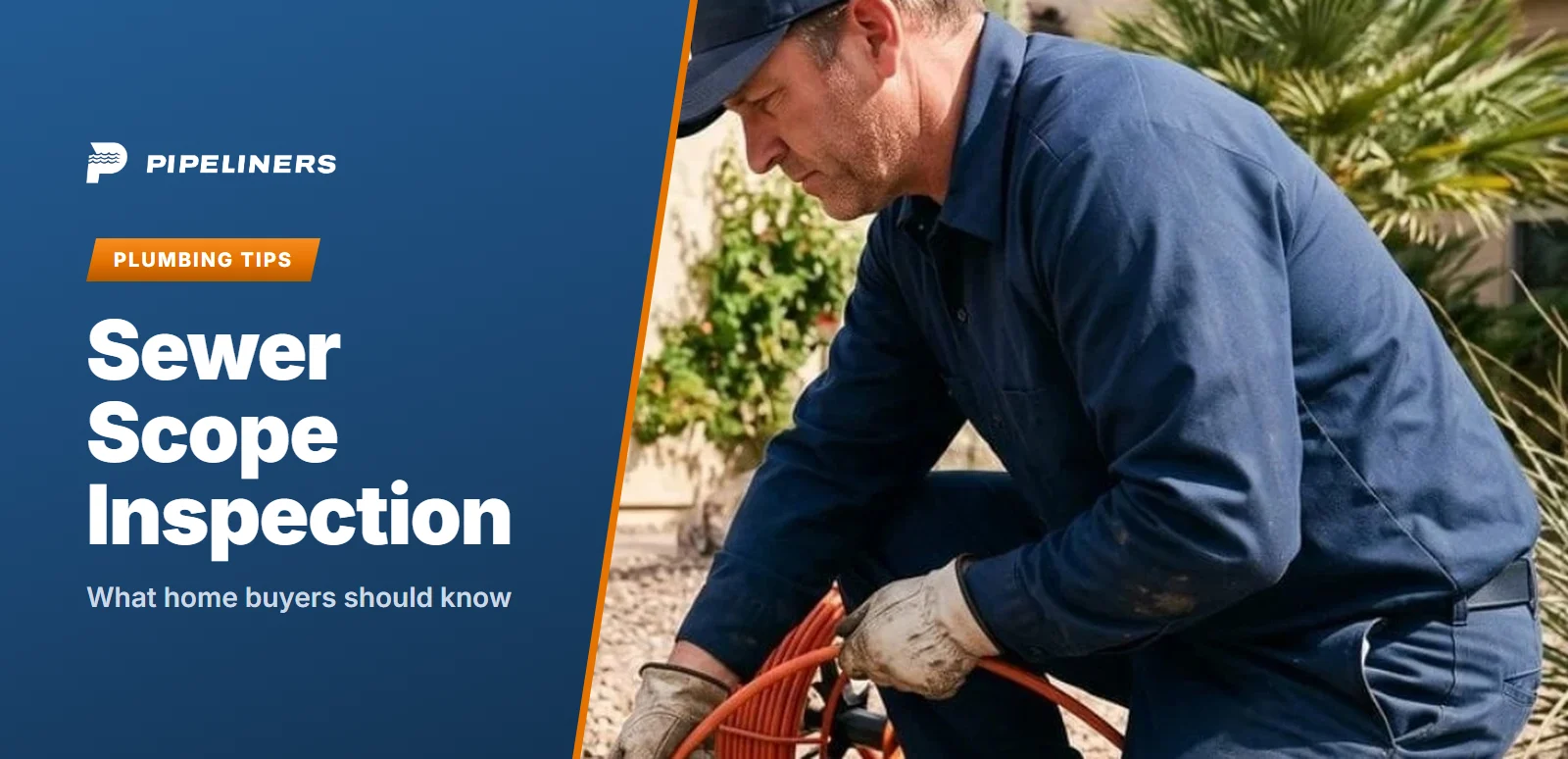
- Camera inspection. We feed a waterproof camera through the cleanout and watch the full run of pipe. You see the video and we explain what it shows. See our sewer camera inspection in Mesa.
- Cleaning. Grease, scale and roots can often be cleared with hydro jetting, which scours the pipe walls with high-pressure water.
- Repair from the inside. If the camera shows cracks, root entry or broken joints and the pipe qualifies, we can reline it through the cleanout instead of digging a trench. Read how trenchless sewer repair works. Drain relining comes with a 20-year warranty.
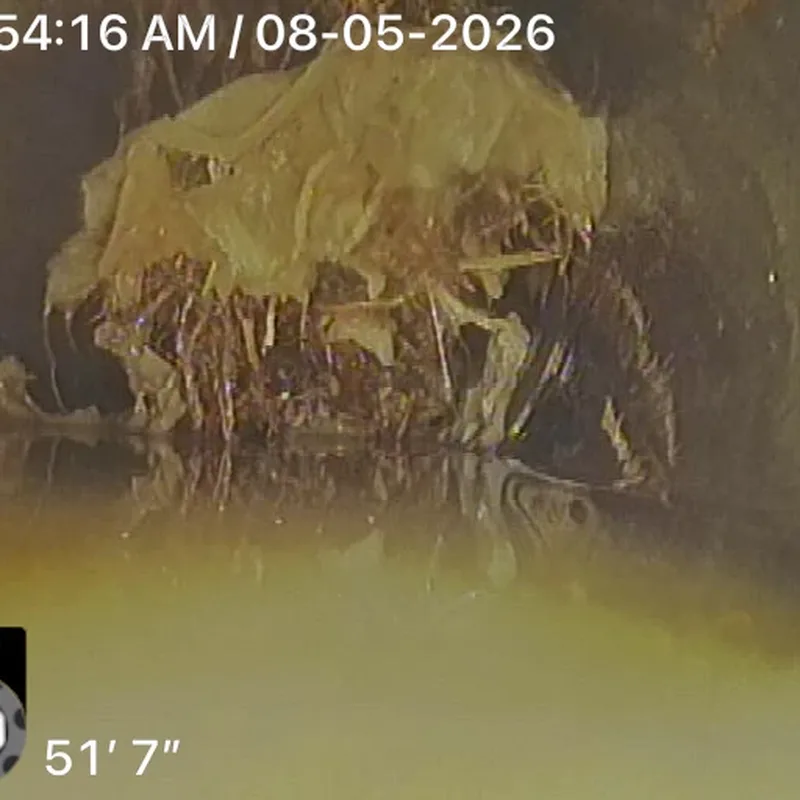
A camera look first means you pay for the fix that matches the problem, not a guess.
Keep your cleanout easy to reach
- Leave a small open area around the cap. Do not cover it with pavers, artificial turf or heavy rock.
- Do not plant trees or large shrubs near it. The City of Phoenix advises against planting a tree or large shrub “over or near the sewer line or cleanout for your home.”
- Check that the cap is tight once in a while, especially after yard work.
Not sure what is going on in your sewer line?
Call Pipeliners at (480) 535-6503. We will find your cleanout, look inside the line with a camera and tell you plainly what we see.
Frequently asked questions
What is the difference between a sewer cleanout and a drain cleanout?
The sewer cleanout opens the main sewer line that carries everything out of the house. A drain cleanout is a smaller access point on one branch line, such as the kitchen or laundry drain. A clog in one sink can often be cleared from its drain cleanout. A clog that backs up the whole house is usually reached from the main sewer cleanout.
Can I drain my pool into the sewer cleanout?
In many Valley cities, the sewer cleanout is where pool water should go, not the street. The City of Chandler says no permit is needed to drain a pool into the sanitary sewer cleanout. Drain slowly: the City of Buckeye warns that you may be liable for a backup or other damage, and the City of Mesa says not to leave the drain line in place as a permanent fixture. Check your city’s rules first.
How much does sewer cleanout work cost?
It depends on the job. Finding a buried cleanout, inspecting the line and clearing a clog are different kinds of work. How easy the line is to reach and the condition of the pipe also matter. Call us and we will explain the cost before any work starts.
Should I have the sewer line checked before buying a home?
For an older home, yes. An inspector runs a camera through the sewer cleanout and records the line, so you can see roots, cracks or sags before you close. Read what a sewer scope inspection is.