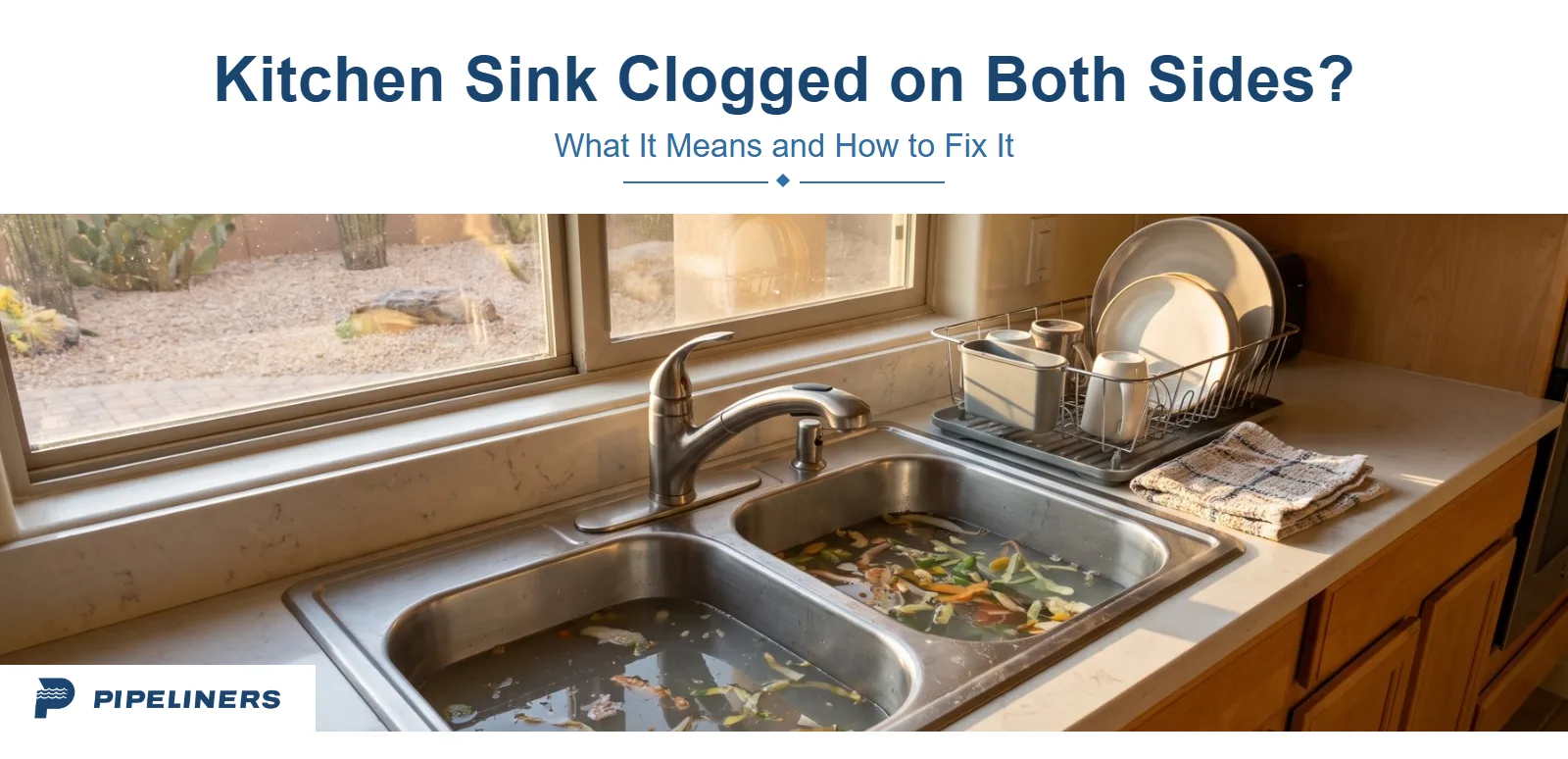

Quick answer: A kitchen sink clogged on both sides means the blockage is past the point where the two basin drains join, in the shared drain line. A plunger rarely reaches it. The usual cause is cooled grease and food solids coating the pipe wall, and the fix is cleaning that line, not either basin.
In short: one side clogged is a problem in that side’s drain. Both sides clogged is a shared drain line problem.
Key takeaways
- One side clogged: the problem is in that basin’s own drain pipe or the disposal. Both sides clogged: the problem is at or past the tee, in the shared trap or drain line.
- Grease is the main cause. It goes down hot, cools a few feet in, and sticks to the pipe wall.
- Clear the trap and plunge with one side sealed. If that fails, the clog is out of reach from the sink.
- Skip chemical drain cleaners. They rarely clear grease and they are hard on older pipe.
- A clog that keeps coming back means the pipe wall is still coated. Hydro jetting removes the coating; a camera shows whether the pipe underneath is damaged.
Why Is My Kitchen Sink Clogged on Both Sides?
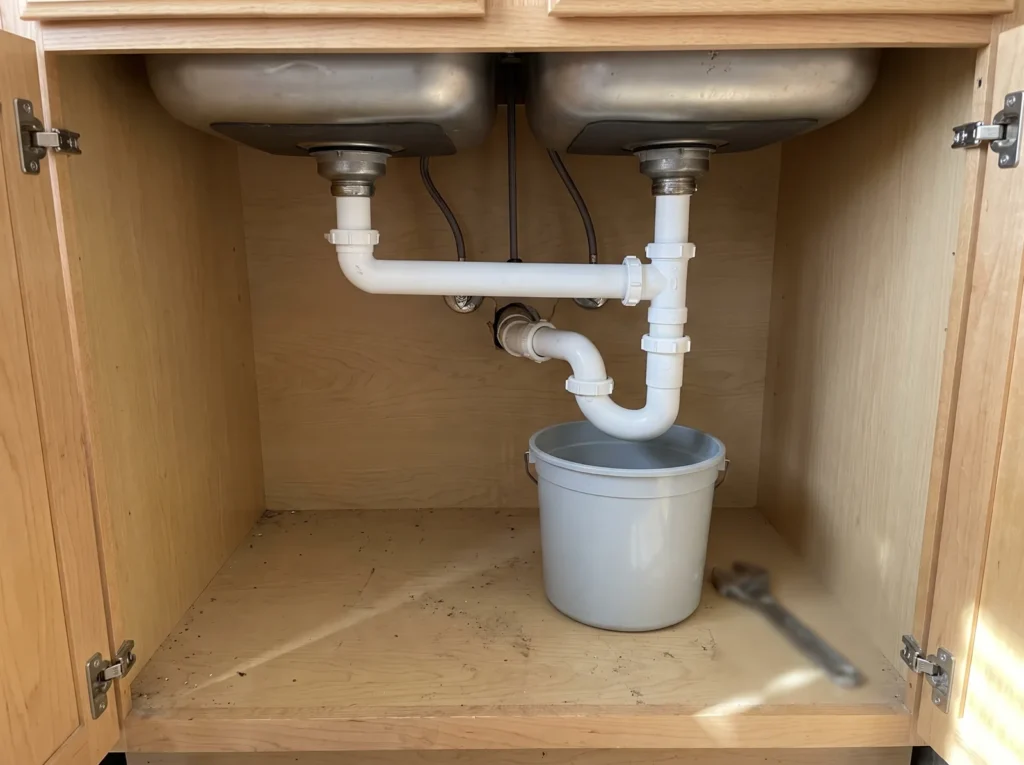
Your kitchen sink is clogged on both sides because the blockage sits in the drain line that both basins share. A double-bowl sink is two basins feeding one drain. Each basin has a short drain pipe, and the two meet at a tee fitting. Most kitchens then have one shared trap below the tee before the line runs into the wall.
If water cannot get past that fitting, both bowls fill. If running the disposal on one side makes water rise in the other, that is the same signal. The useful part: you now know roughly where the clog is before anyone opens anything.
| What you see | Where the clog usually is | What usually fixes it |
|---|---|---|
| One side slow, other side fine | That basin’s drain pipe, strainer, or disposal | Clear that side, plunge |
| Both sides backed up | Shared trap or drain line past the tee | Drain cleaning, ideally hydro jetting |
| Both sides backed up, plus toilets gurgling or other drains slow | Main sewer line | Main line cleaning and a camera inspection |
| Clears, then clogs again within weeks | Grease or scale still coating the pipe wall | Hydro jetting, then a camera check |
What Causes a Double Kitchen Sink to Clog?
Most double-sink clogs come from grease that cooled inside the pipe, with food solids caught in it. Older pipe and heavy disposal use make it worse.
Grease That Cooled Inside the Pipe
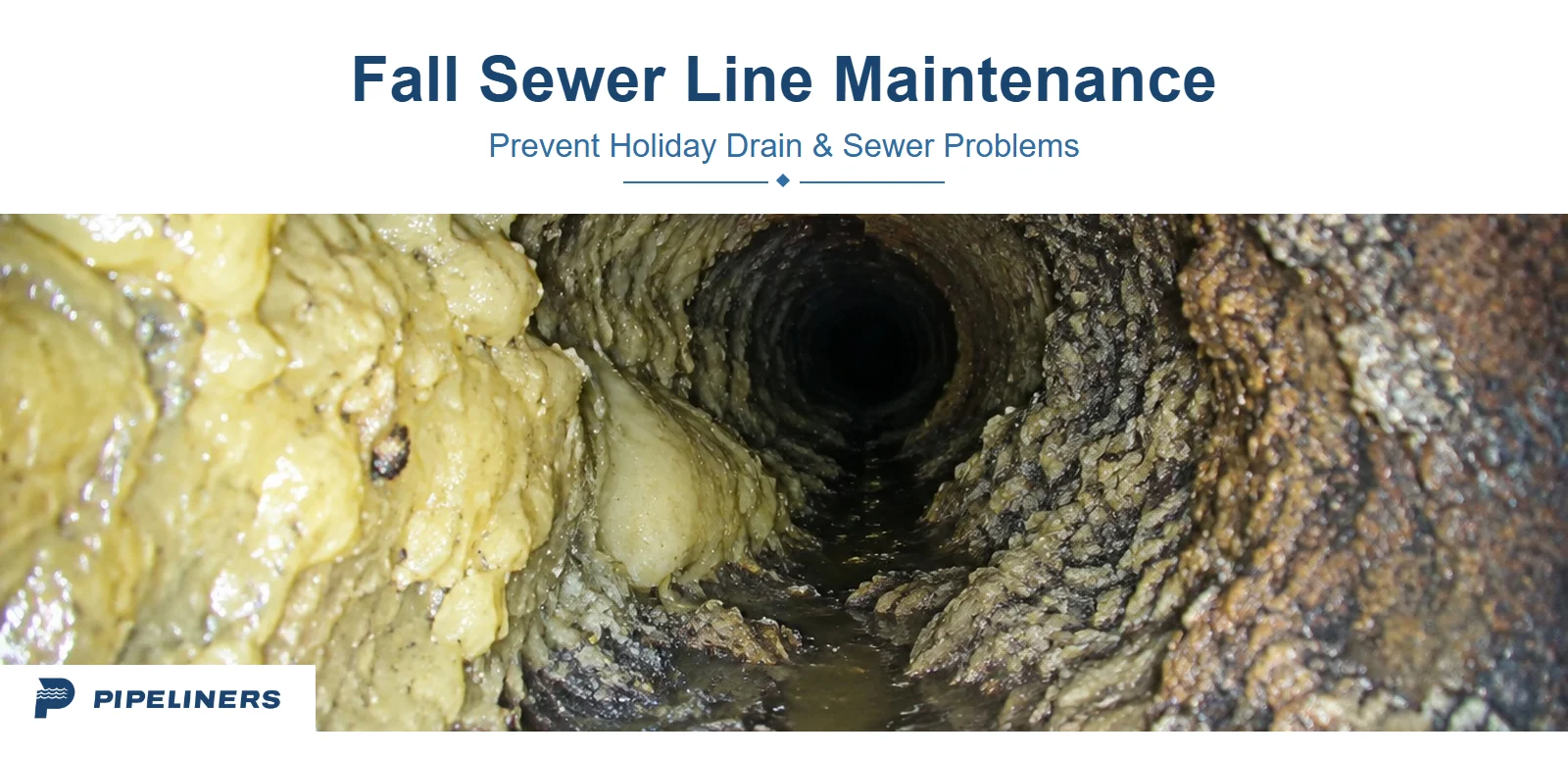
Grease leaves the pan as a hot liquid, travels a few feet, cools, and sticks to the pipe wall. Each time, the opening gets a little narrower, until one normal evening of dishes closes it.
The City of Chandler’s wastewater program states plainly that home garbage disposals do not keep grease out of the wastewater pipes, and it warns against using hot water or detergent to push grease down the drain. The grease does not go away. It cools and sticks a few feet deeper, where you cannot reach it.
Food Solids Caught in That Grease
Coffee grounds, rice, pasta, eggshells, celery strings, and potato peels catch on a greasy pipe wall and build a plug. Starchy foods are the worst because they swell with water.
Heavy Disposal Use Around a Holiday
A garbage disposal grinds food smaller. It does not make food disappear, and it does not change what happens when that food meets a grease-coated pipe. Two days of holiday cooking can send more down the kitchen drain than a normal month.
An Older Pipe That Was Already Narrow
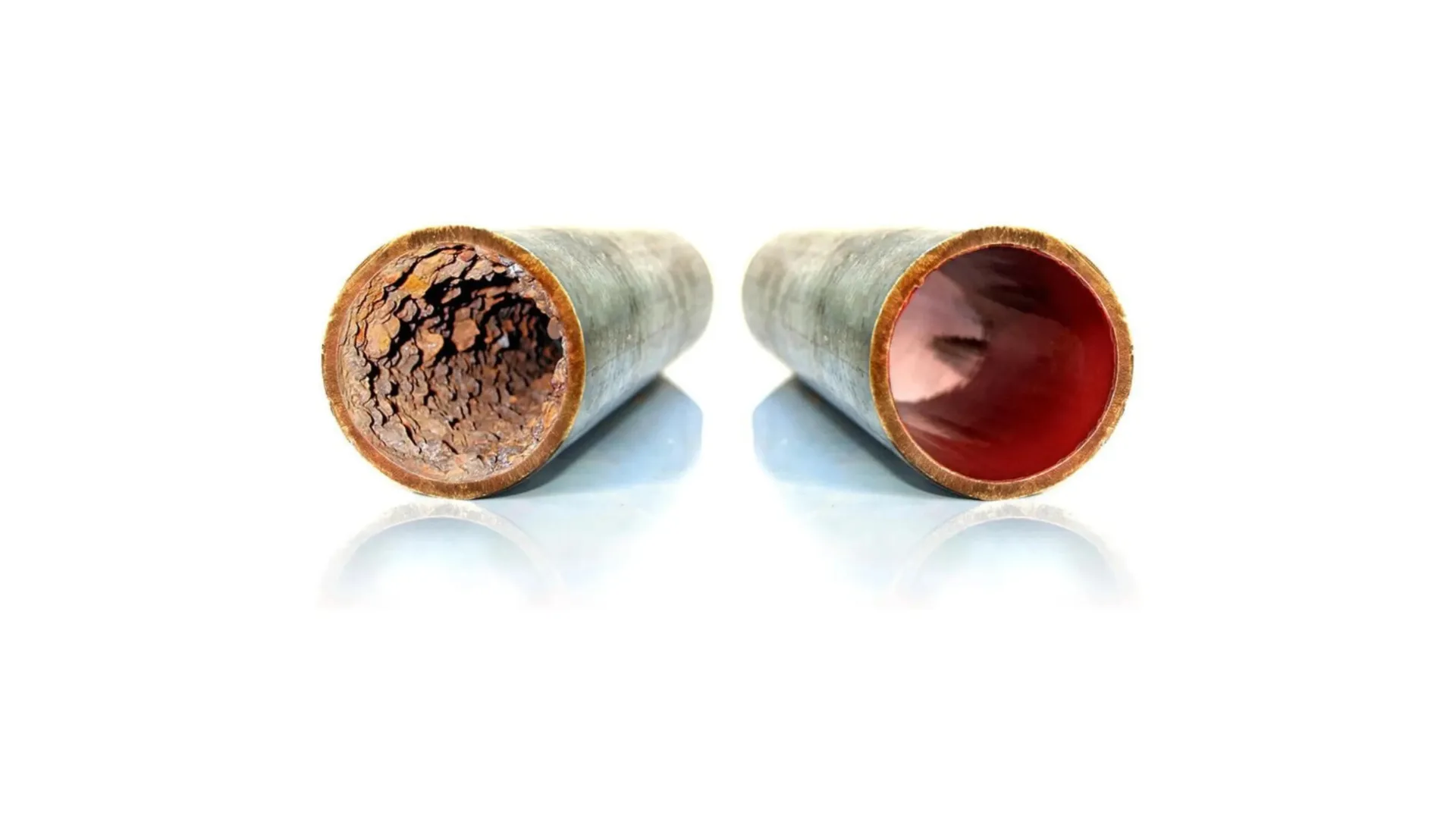
Many older Valley homes still have their original cast iron drain lines. Cast iron corrodes from the inside and builds a rough scale layer that grease grips much better than smooth plastic pipe. If your kitchen sink keeps clogging every few months no matter how careful you are, the pipe itself is often the reason.
The Problem Is Further Down the Sewer Line
If both sides of the kitchen sink are backed up and a toilet gurgles, a shower drains slowly, or a floor drain backs up, this is no longer a kitchen problem. That pattern points at a main sewer line clog, which needs attention sooner.
What Should You Try First?
Start with the two easy steps: clear the trap, then plunge with one side sealed.
- Clear the trap. Put a bucket under the sink, open the P-trap below the tee (some sinks have one under each basin), and check for a plug of debris. It is messy, but it rules out the easy case.
- Plunge with one side sealed. Block one basin’s drain tightly with a stopper or a wet rag, then plunge the other. Without that seal, you only push water back and forth between the bowls.
- Skip chemical drain cleaner. It rarely gets through a grease plug, it sits against the pipe while it tries, and it is hard on older cast iron. It also makes the line hazardous for whoever opens it next.
- Stop running the disposal. Grinding into a full line packs the clog tighter and can push water back into the dishwasher.
If clearing the trap and a sealed plunge do not work, the blockage is beyond anything you can reach from the sink.
When Should You Call a Professional?
Call when the sink is still backed up after you clear the trap, or when any of these are true:
- It clears, then clogs again within days or weeks
- Water backs up into the dishwasher
- Other fixtures in the house are slow or gurgling at the same time
- The house has original cast iron drain lines
The clog that keeps coming back is the one to deal with now rather than the week of Thanksgiving. A recurring kitchen clog means the pipe is already narrowed, and a narrowed pipe will struggle under a holiday weekend of cooking and guests.
How Do You Stop a Kitchen Sink That Keeps Clogging?
To stop repeat clogs, remove the coating on the pipe wall instead of punching a hole through the blockage. A cable or snake opens a channel so the sink drains again, but the grease that caused the clog stays on the wall, which is why it comes back. Our guide to hydro jetting vs snaking covers when each one makes sense.
Hydro jetting drain cleaning uses high-pressure water to scour the full width of the pipe, taking grease and scale off the wall. A camera inspection afterward shows whether the pipe underneath is sound.
If the camera finds cracks, separated joints, heavily corroded cast iron, or root entry points, cleaning alone will not hold, because each defect is a place for waste to catch. Trenchless drain relining installs a new liner inside the existing pipe through a cleanout, sealing the damage and leaving a smooth wall that grease has a hard time gripping. The slab, cabinets, and yard stay in place, and drain lining comes with a 20-year warranty.
It also helps to know where your part ends. The City of Mesa states that the lateral line from a home to the sewer main is the property owner’s to maintain and clean. A blockage in that stretch is yours to fix, not the city’s.
How Do You Keep the Kitchen Drain Clear Through the Holidays?
The single most effective habit is keeping grease out of the drain. The rest are small steps that add up:
- Grease goes in the trash. Let it cool in a can or jar, then throw it out.
- Wipe pans before washing. A paper towel removes the grease that would otherwise coat the pipe.
- Scrape plates into the trash. Use the disposal for the scraps that slip past, not as a food bin.
- Keep starches and grounds out. Rice, pasta, oatmeal, coffee grounds, and potato peels go in the trash.
- Use a sink strainer. It is the cheapest drain protection there is.
- Clean the line before the guests arrive. If the kitchen sink has clogged at all this year, book drain cleaning in October or early November, before the holiday rush.
For the rest of the house, our fall sewer line maintenance checklist covers the main line, cleanouts, and what to watch for before Thanksgiving. For homeowners in Mesa, Chandler, and across the Phoenix Valley, a little prevention now means a quiet holiday weekend instead of standing water in the sink with a full house.
Frequently Asked Questions
Why is my kitchen sink clogged on both sides when I use the garbage disposal?
A garbage disposal grinds food, but it does not remove grease. The City of Chandler notes that disposals do not keep grease out of the pipes. The grease cools on the pipe wall, and ground food sticks to it until both sides back up.
Will boiling water clear a kitchen sink clogged on both sides?
Sometimes, briefly, on a thin grease film. It will not clear an established plug, it can soften plastic drain joints, and it usually moves the grease a few feet further down, where it cools and sticks again.
Why does my kitchen sink keep clogging every few months?
Repeat clogs mean the pipe wall is still coated. Snaking opens a channel through the clog but leaves the buildup behind. Hydro jetting removes the buildup, and a camera inspection confirms whether the pipe underneath is sound.
Can a kitchen drain line be relined without breaking the slab?
In most cases, yes. Trenchless drain relining goes in through an existing cleanout, so the slab, cabinets, and flooring stay as they are.
Is a kitchen sink clogged on both sides a sewer line problem?
It can be. If the kitchen is the only slow fixture, the problem is usually the kitchen drain line. If toilets gurgle or other drains back up at the same time, the main sewer line is involved and should be checked promptly.
Get Your Kitchen Drain Cleared Before the Holidays
A kitchen drain that has clogged once this year is likely to clog again under holiday cooking. Pipeliners serves Mesa, Chandler, Phoenix, and the surrounding Valley with hydro jetting, camera inspection, and trenchless drain relining. Contact Pipeliners or call (480) 535-6503 to get the line cleared and checked before the guests arrive.
Last updated: October 2026. Written by Jake Shaker, Pipeliners.