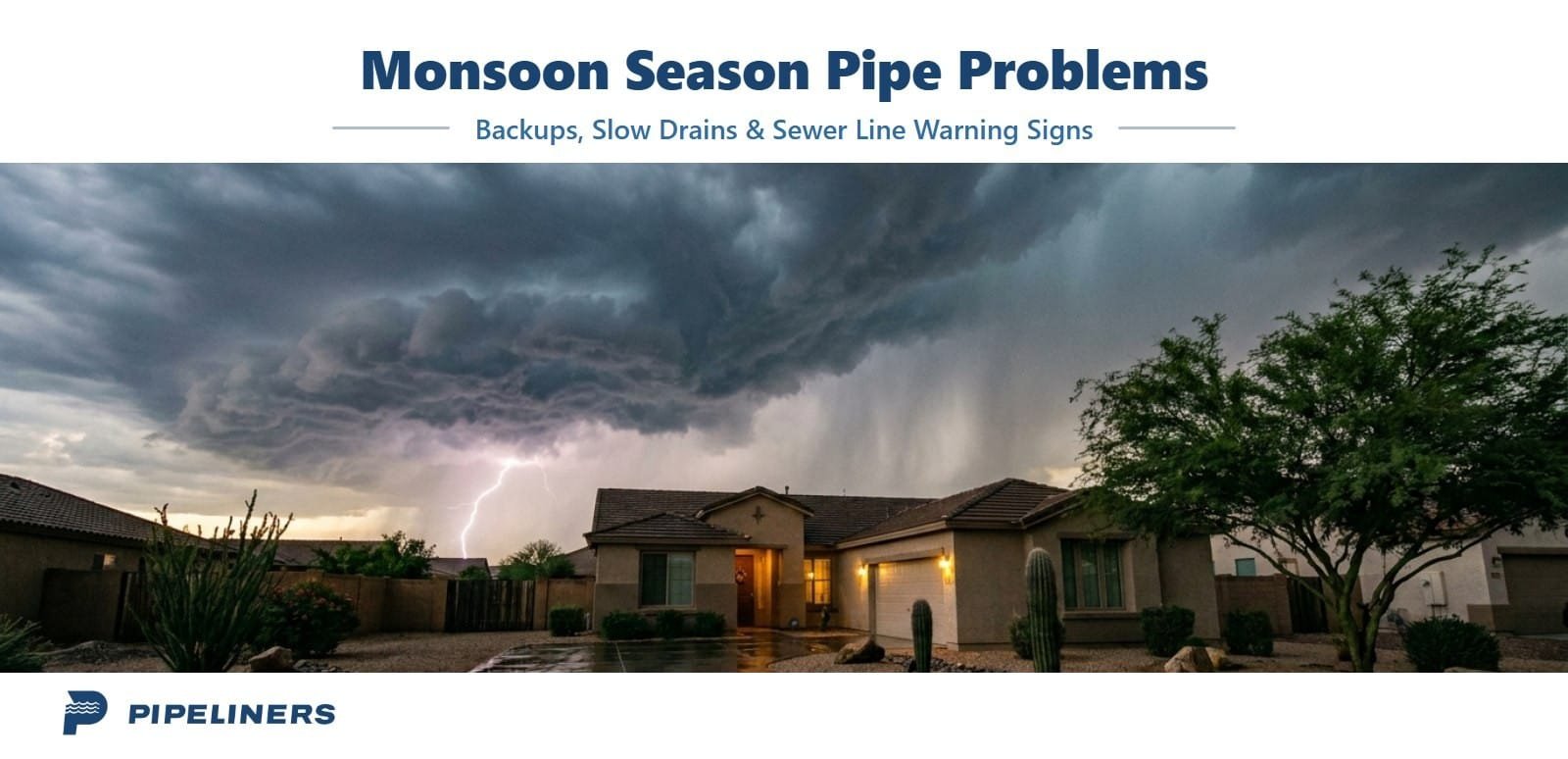

Why does my sewer back up when it rains? If your drains only back up during or right after a monsoon storm, rainwater is getting into a cracked or root-damaged sewer line faster than the pipe can drain it, so the extra water pushes back up through your lowest drains. The lasting fix is a camera inspection to find the damage, then sealing the pipe from the inside with trenchless lining so rain and roots have no way back in.
In short: monsoon rain does not create the problem on its own. It finds the weak spots that are already in your pipe. Catch the warning signs early and you can seal the line before the next storm turns a slow drain into a flooded bathroom.
Key Takeaways
- Rain-only backups are a warning sign. If it happens during or right after storms, rain is getting into a damaged pipe.
- Watch the early signs. Slow or gurgling drains, a sewer smell near a cleanout, and several drains slowing at once.
- Monsoon season is the stress test. Arizona’s monsoon runs June 15 through September 30, and the heaviest rain lands on pipes worn down by extreme summer heat.
- Tree roots make it worse. Roots find cracks that are already there and grow in during the wet season.
- A camera inspection is how you know what you’re dealing with. It tells a simple clog apart from a cracked pipe, a collapse, roots, or a belly.
- Trenchless pipe lining is the lasting fix for most damaged lines. It seals the cracks and joints without digging up your yard, though a fully collapsed pipe may need replacement.
Why does my sewer back up when it rains?
The short answer is that heavy rain sends more water into the sewer system than it was built to handle, and any weak spot in your own pipe becomes the place where that extra water pushes back into your home instead of flowing away from it.
Here is what is actually happening underground. Older sewer pipes develop small cracks, gaps at the joints, or spots where roots have pushed their way in. During a dry Arizona summer, those weak spots do not cause much trouble. But once monsoon rain soaks the ground, water finds its way into the pipe through those same cracks and gaps. Plumbers call this inflow and infiltration, or I and I for short. All that extra water fills the pipe faster than it can drain, and it has to go somewhere. Often, that somewhere is back up through the lowest drains in your house, a shower, a floor drain, or a toilet.
Warning signs to watch for before a storm
You do not have to wait for a backup to know trouble is coming. A pipe that is about to cause problems in monsoon season usually gives warning signs first:
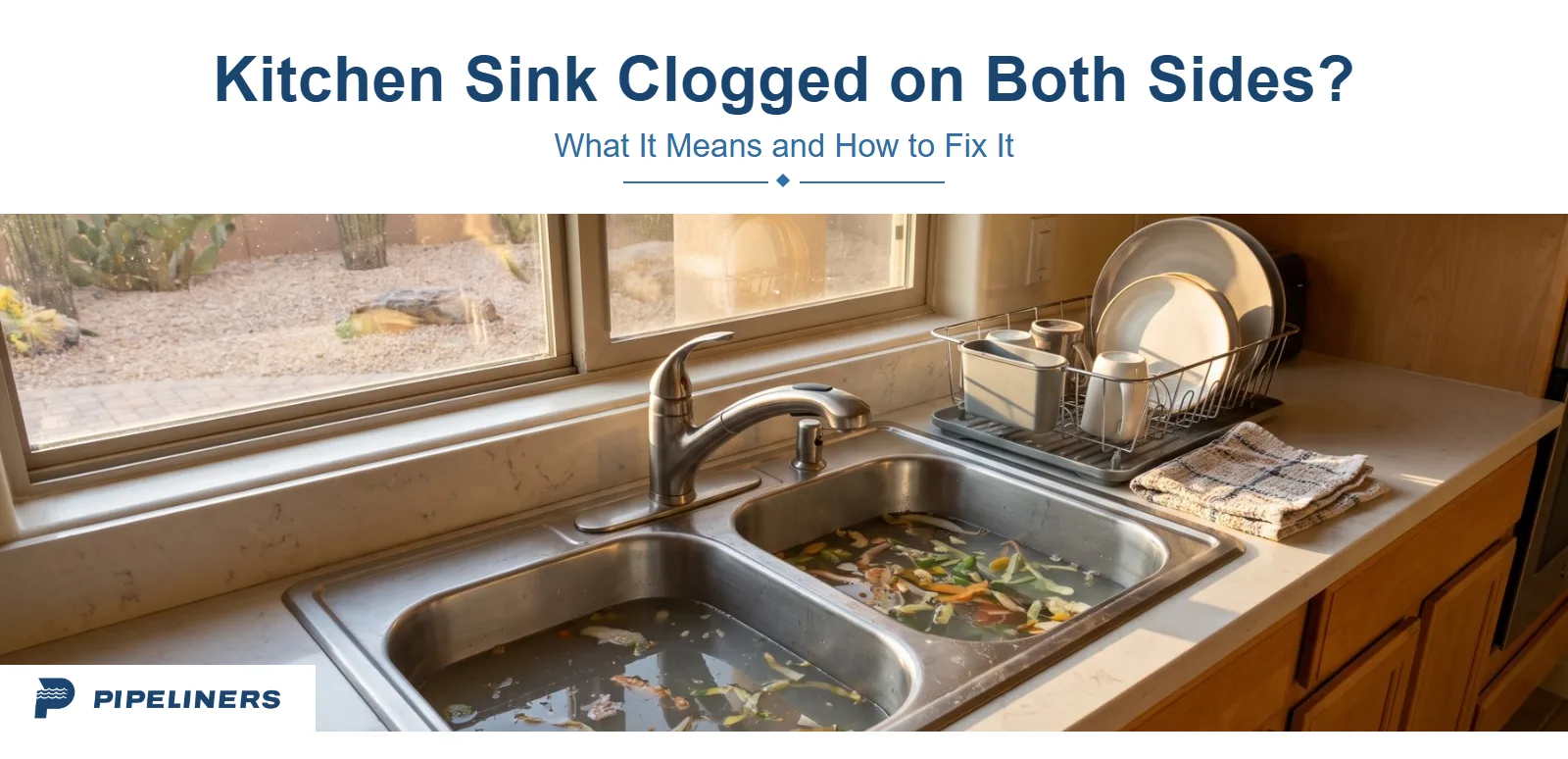
- Slow or gurgling drains, especially in the lowest fixtures in the house, like a downstairs shower, a floor drain, or a laundry sink.
- Gurgling in one drain when you run water somewhere else, such as the toilet bubbling when the washing machine drains. This means air is trapped in a line that is not flowing freely.
- A sewer smell in the yard or near a cleanout, which can mean a pipe is leaking underground even before it fully clogs.
- Multiple drains slow at the same time, which usually points to the main line rather than one fixture.
- A backup that only happens during or right after a storm, which is one of the clearest signs that rain is getting into a cracked or damaged line.
Running a business? See our guide to commercial monsoon sewer backups.
If you notice any of these, especially more than one at once, it is worth having the line checked before the next big storm rolls through. Here is a quick way to read the signs:
| Warning sign | What it usually means |
|---|---|
| Slow or gurgling drains in your lowest fixtures | Water is backing up in the main line, often the first sign of trouble |
| One drain gurgles when you run water elsewhere | Air is trapped in a line that is not draining freely |
| Sewer smell in the yard or near a cleanout | A pipe may be cracked or leaking underground before it fully clogs |
| Several drains slow at the same time | The problem is in the main sewer line, not a single fixture |
| Backups only during or right after a storm | Rain is getting into a cracked or root-damaged line |
Why does this get worse during monsoon season?
Arizona’s monsoon season runs from June 15 through September 30, with the most active stretch usually falling between mid-July and mid-August, according to National Weather Service monsoon data. That means the heaviest rain of the year lands directly on top of pipes that spent the rest of the year baking in extreme heat.
Extreme heat and dry soil cause the ground around a pipe to shift and shrink. That movement can widen small cracks or pull a joint slightly apart. When monsoon rain finally soaks that same dry ground, the water has an easy path into the pipe right where the ground movement created a gap. So the same summer heat that Arizona homeowners deal with all year is part of what sets the pipe up to leak once the rain arrives.
Tree roots make monsoon backups worse
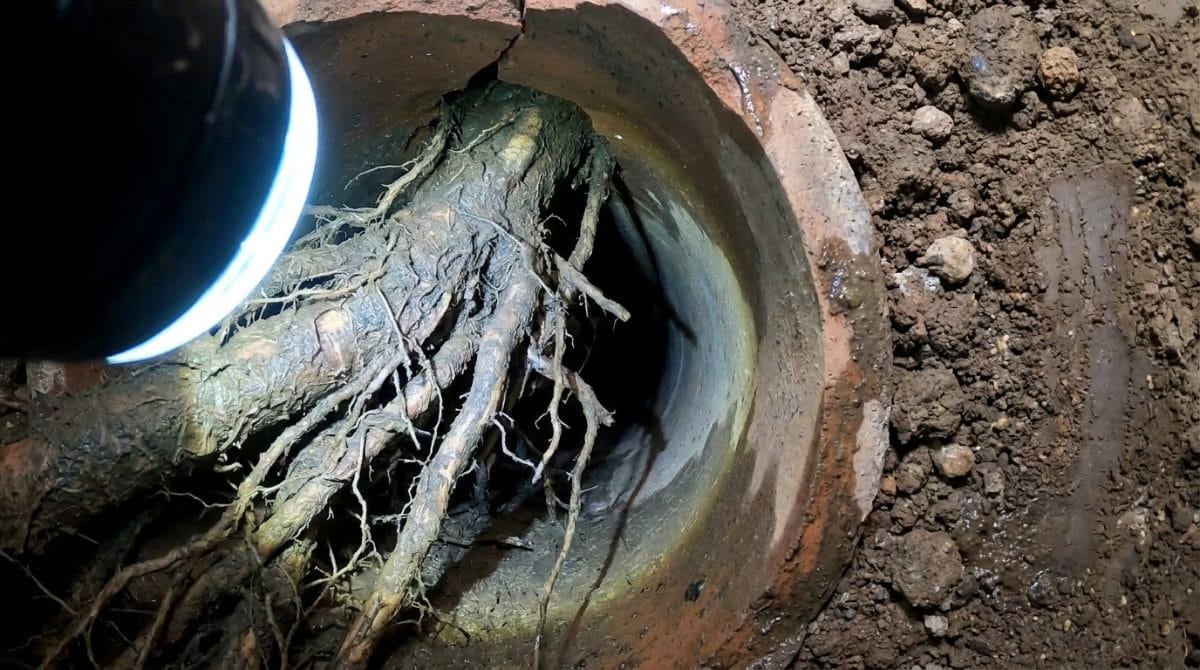
Rain does something else underground too. It wakes up tree roots. Roots grow toward moisture, and a leaking sewer pipe is one of the most reliable moisture sources near a home. Roots do not create the crack in the first place. They find a crack or loose joint that is already there and grow into it, according to N.C. Cooperative Extension, which is why root problems show up most often in older pipes that already have some damage. Once a root gets inside, it grows thicker over time and can block the line completely, and tree roots are behind a majority of sewer blockages nationwide, especially in older, cracked pipe.
That combination, a crack from ground movement plus a root finding its way in during the wet season, is exactly why so many Arizona sewer backups seem to appear out of nowhere right after a storm. When roots are the culprit, clearing them is only half the job. Our guide on how to get rid of tree roots in a sewer line explains why the crack they entered through still has to be sealed, and hydro jetting is often the step that cuts and flushes the roots before that repair.
How a plumber diagnoses a monsoon sewer problem
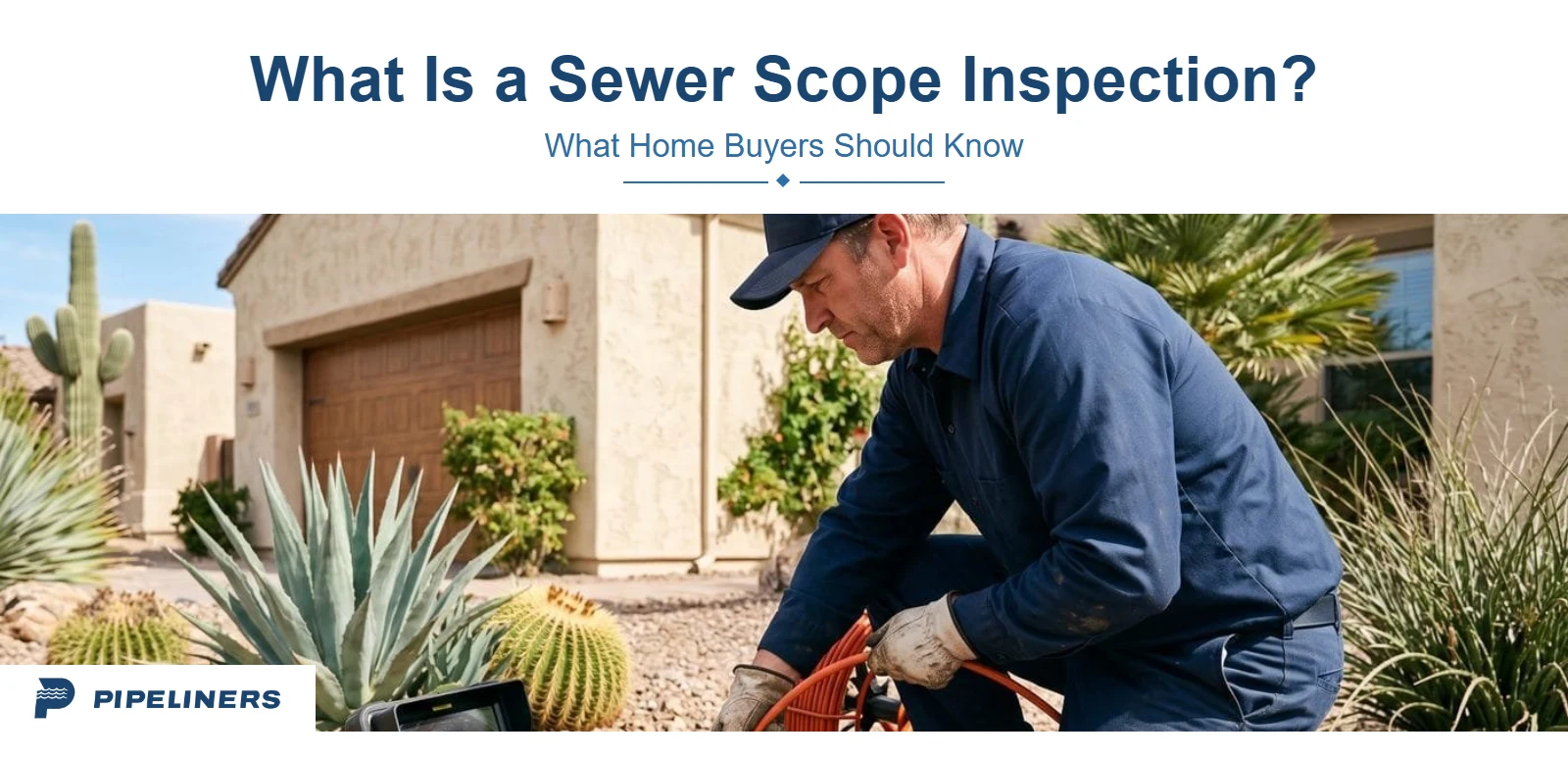
Before anyone talks about a repair, the line has to be seen. Two backups that look identical from inside your bathroom can have very different causes underground, and the fix depends entirely on which one you have. That is what a sewer camera inspection is for. A waterproof camera is sent through the line so a technician can see exactly what is happening and where.
Here is what the camera is sorting out:
- A simple clog shows as a soft blockage in an otherwise sound pipe. This may only need clearing.
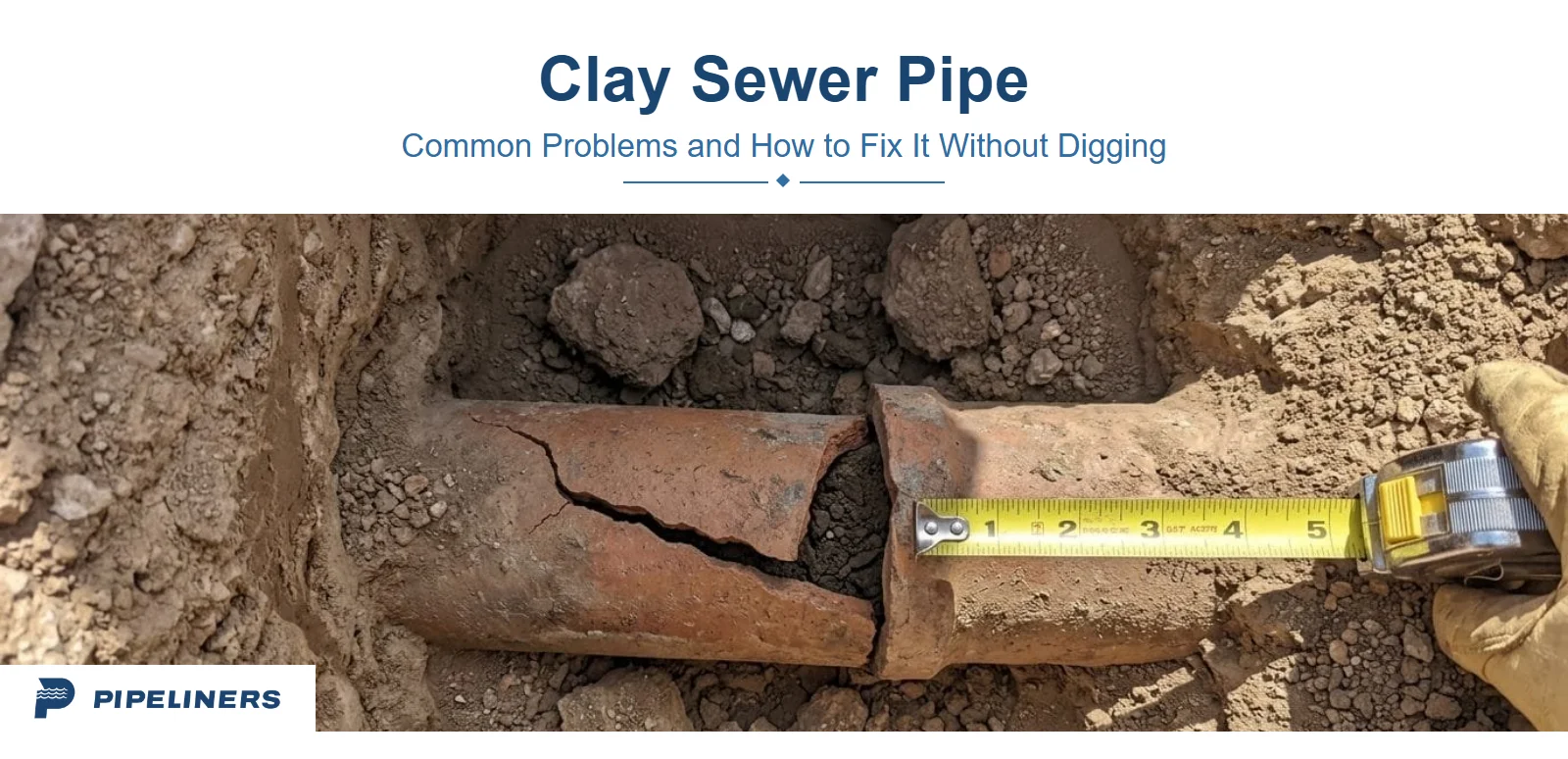
- A cracked pipe shows as a linear opening or a separated joint where water and roots are getting in. This is usually a good candidate for lining.
- A collapsed pipe shows as a caved-in or badly deformed section that blocks flow. This is more serious and lining alone may not restore it.
- Root intrusion shows as fibrous masses at joints and cracks.
- A belly shows as standing water pooled in a low spot where the pipe has sagged.
The difference between a crack and a collapse matters most, because it decides whether the line can be repaired from the inside or needs more work. We break that down in cracked vs. collapsed sewer pipes, and our complete guide to sewer camera inspections in Mesa covers what the footage shows and why a recorded report is worth having before you approve any repair. Guessing at a monsoon backup is how homeowners pay to fix the wrong thing.
Your long-term repair options
A plumber cannot stop a monsoon storm, but a cracked or root-damaged pipe does not have to stay that way. Once the camera shows the actual condition of the line, the repair follows what it finds.
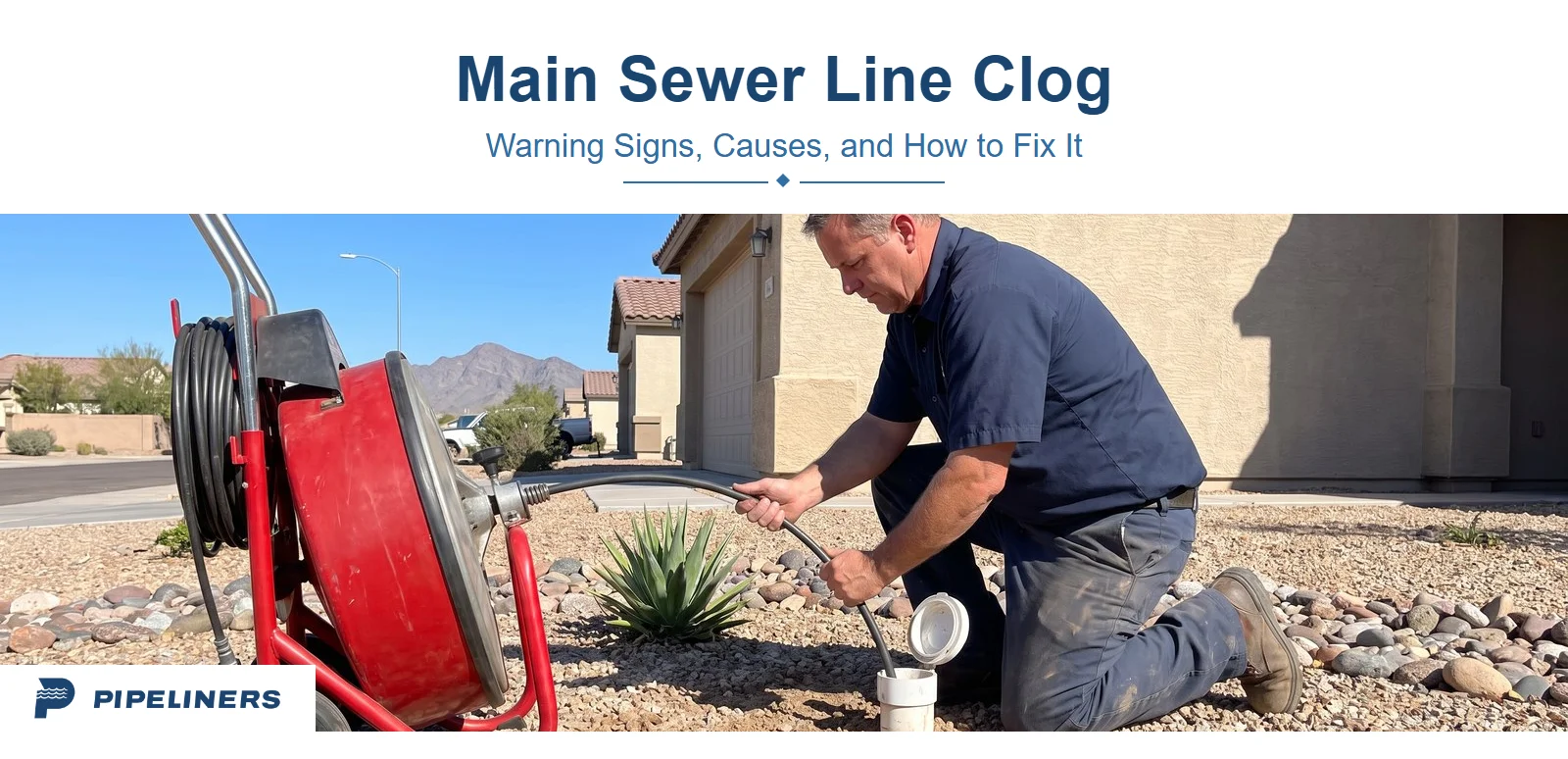
Clear it first. If the line is packed with roots, grease, or debris, hydro jetting uses high-pressure water to scrub the pipe wall to wall and cut the roots out. On a sound pipe, clearing may be all that is needed. It is also the required first step before any lining, because the pipe has to be clean for a liner to bond.
Seal it for the long term. For a cracked or root-invaded line that still has its shape, trenchless CIPP lining is the lasting fix. A resin liner is cured inside the existing pipe, forming a new seamless pipe within the old one that seals the cracks and joints roots and rainwater were using, with minimal digging. If you want the full walk-through of how that works, see what is CIPP. A lined pipe is rated to last for decades and gives roots no seam to re-enter.
When lining is not enough. A fully collapsed, offset, or severely deteriorated pipe may not support a liner, and in those cases replacement or pipe bursting is the right call instead. This is exactly why the camera inspection comes first: it separates the many lines that can be lined from the few that cannot, so you are not sold a repair that will not hold. This inside-out approach is common for the aging clay and cast iron pipe under older Mesa, Phoenix, and Chandler homes, where mature trees and decades-old sewer lines sit side by side.
Add a backup barrier. Even a sound, sealed line can be overwhelmed when the city sewer main surcharges during a heavy storm. A backwater valve installed on your main line acts as a one-way gate that closes automatically during that surge, blocking sewage from flowing back into the house. It works alongside a healthy line as your last line of defense against a monsoon backup.
Frequently asked questions
Why does my sewer only back up when it rains?
This usually means rainwater is getting into a cracked or damaged sewer pipe faster than the line can drain it, which pushes water and waste back up through the lowest drains in your home.
Can tree roots really cause a sewer backup?
Yes. Roots grow toward the moisture from a small leak and can grow large enough to block the pipe completely, especially in older lines that already have some damage.
Is a slow drain during monsoon season a big deal?
It can be an early warning sign. A drain that is slow only during or after storms is often telling you that rain is getting into the line somewhere it should not be.
How does a plumber tell a cracked pipe from a collapsed one?
A sewer camera inspection shows the difference. A crack or separated joint appears as a linear opening and can usually be lined, while a collapse shows as a caved-in section that may need replacement or pipe bursting.
Can trenchless lining fix a cracked pipe after a monsoon storm?
In most cases, yes. If the pipe still holds its shape, a CIPP liner seals the cracks and joints from the inside without digging. A camera inspection confirms whether your line is a good candidate.
Does trenchless repair work on Arizona homes?
Yes. It is often a good option for the older cast iron and clay pipe found in many Mesa and Phoenix Valley homes, since the epoxy liner seals cracks and joints without digging up the yard.
How do I know if my home is at risk before this monsoon season?
A camera inspection is the only way to know for sure. It shows a plumber exactly where a pipe has cracks, root intrusion, or joint separation before a storm turns a small issue into a backup.
Ready to get ahead of the next storm?
A slow drain or a gurgle today can become a backed-up bathroom during the next monsoon. The first step is simple: find out what is actually going on inside your line before the rain does it for you. Contact Pipeliners USA to schedule a sewer camera inspection and we will show you exactly what we find and walk you through your options.