
Quick answer: Clay sewer pipe is made in short sections joined end to end, and those joints are its weak point. Over time they crack, shift apart and let tree roots in. A camera inspection shows the damage, and in many cases the line can be repaired from the inside by lining it, with no trench across the yard.
What is clay sewer pipe, and how do you know if you have it?
Clay sewer pipe is a pipe made from fired clay that carries wastewater from your house to the city sewer or septic system. It was a common sewer material in older homes before plastic pipe became the standard, so many established neighborhoods still have it underground.
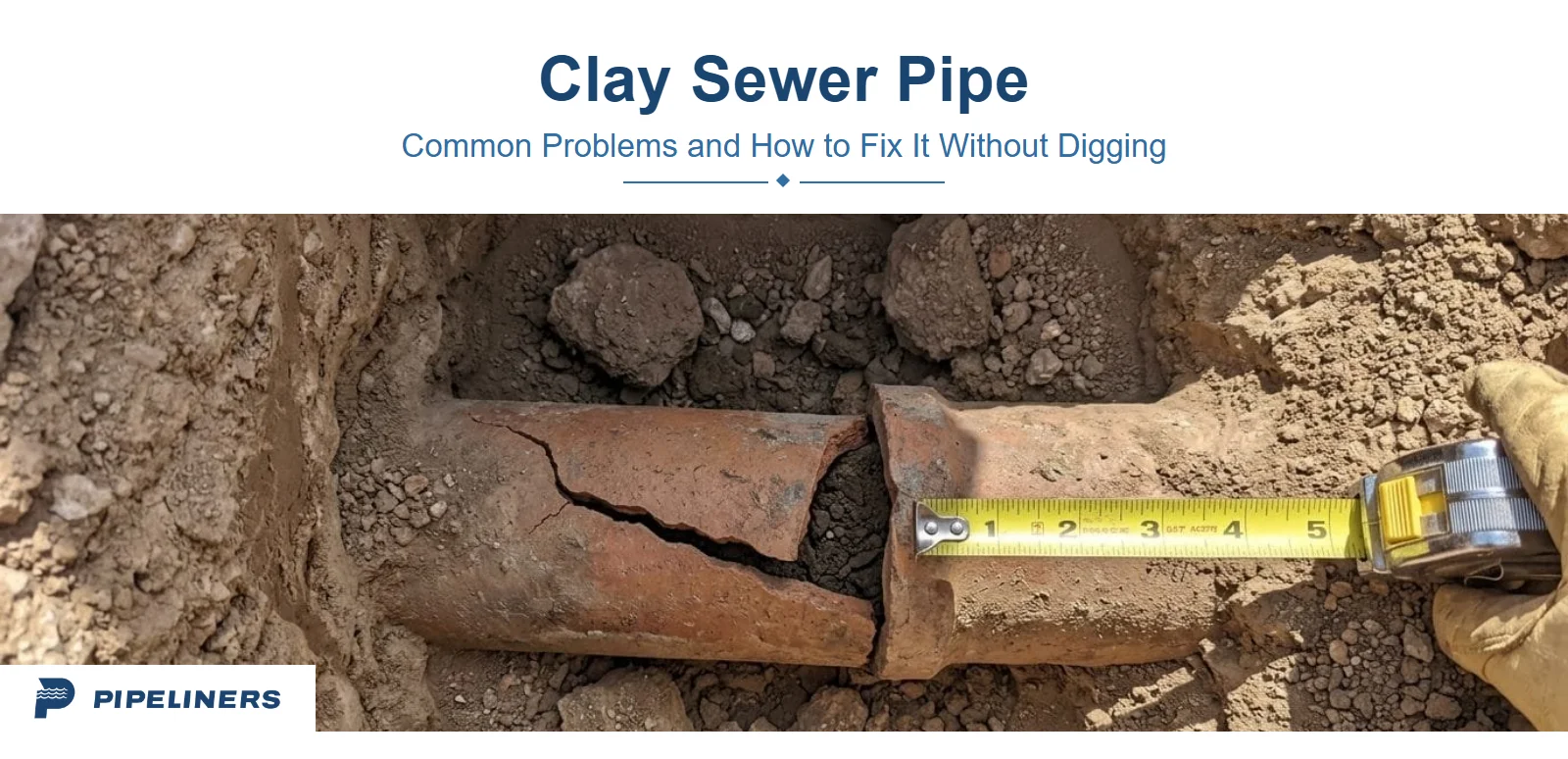
Fired clay holds up well against the wastewater itself. The trouble is how it was installed. Clay pipe comes in short, rigid lengths, and each length fits into the next at a joint. Many older joints were sealed with mortar or similar packing that can crack, wash out or pull loose over time. A long clay line has a lot of joints, and every one is a place where water can leak out and roots can get in.
How to tell if your sewer line is clay
You usually cannot tell from inside the house. The pipe you see at the cleanout (the capped pipe that comes straight up out of the ground near the foundation or in the yard) may be plastic even when the rest of the line is clay, because earlier repairs often replaced only the part near the house.
A few clues point toward clay:
- The home is in an older, established neighborhood.
- The sewer line has never been replaced, as far as you know.
- You have had repeated root clogs, especially from the same spot.
- A previous plumber mentioned “terracotta” or “clay tile” pipe.
The only way to know for sure is a sewer camera inspection. A technician feeds a camera through the cleanout and records the line to the street. Clay shows up on video as a reddish-brown or tan wall with joints at regular intervals, and the footage shows where each problem sits. Pipeliners always runs the camera first, before recommending any repair.
What goes wrong with old clay sewer lines?
Most clay sewer problems start at the joints. Here are the four issues that show up most often on camera.
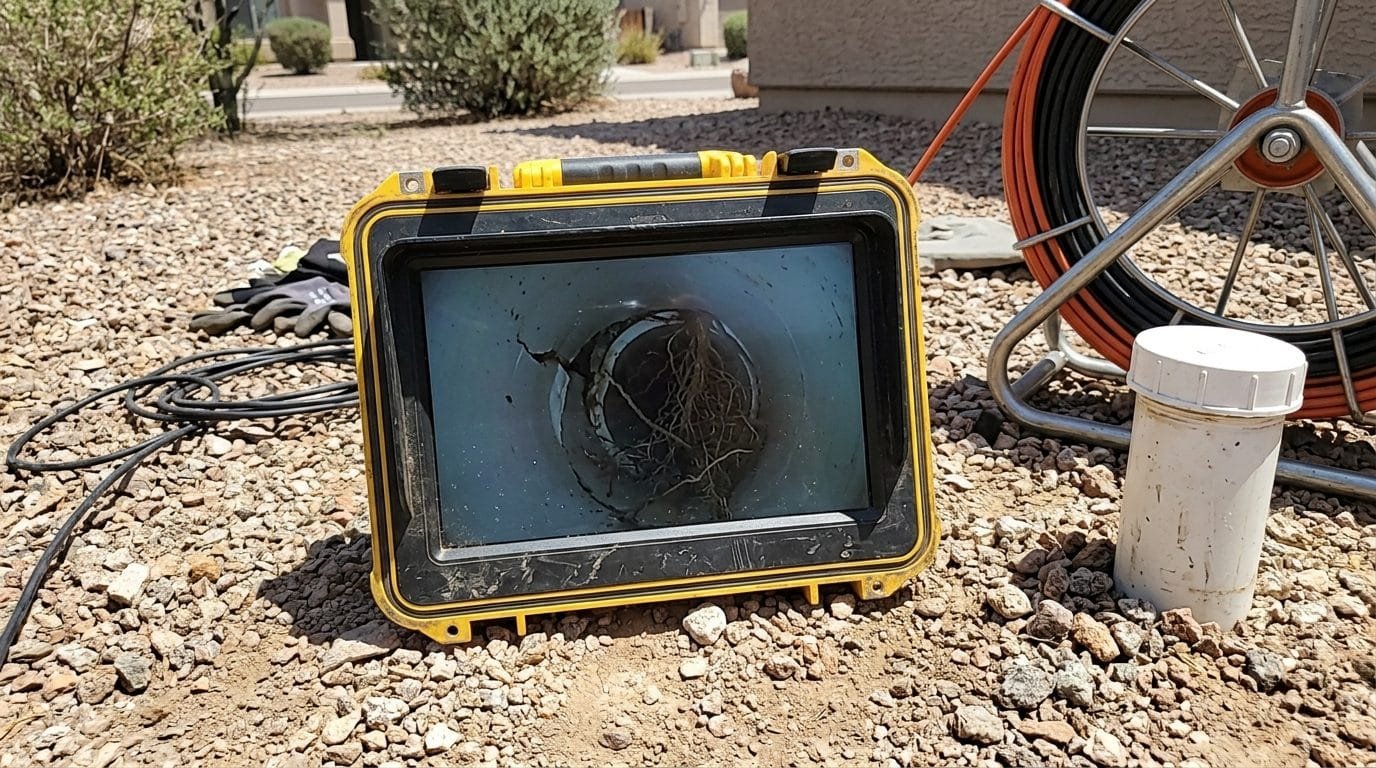
Roots at the joints
Tree and shrub roots grow toward moisture. When a clay joint cracks or loses its seal, a small amount of water and vapor escapes into the soil, and fine roots follow it back into the pipe. Once inside, they spread into a mat that catches paper and waste. Cutting them out clears the line for a while, but the opening in the joint is still there, so they grow back. Our guide to getting tree roots out of a sewer line covers the removal options in detail.
Cracks and broken sections
Clay is hard but brittle. Shifting soil, the weight of a driveway or vehicles, and pressure from growing roots can crack the pipe wall. A hairline crack may only leak. A larger crack can let soil fall into the line, and a section that breaks apart can eventually collapse.
Offset or separated joints
When the ground settles, one length of clay pipe can drop or shift so it no longer lines up with the next. This is called an offset joint. Even a small offset creates a ledge that catches waste and paper. A joint that has pulled fully apart leaves a gap where wastewater leaks into the soil.
Bellies (sagging sections)
A belly is a low spot where part of the line has sunk below the rest. Water and waste settle in the dip instead of flowing through, which leads to slow drains and repeat clogs. Read more about why a bellied sewer pipe forms and how it is fixed.
Warning signs include slow drains throughout the house, gurgling toilets, main-line clogs that keep coming back and a soggy patch of yard along the sewer line. For a wider look at what can go wrong with older sewer lines, including cast iron, see our guide to common sewer problems.
How do you fix a clay sewer line without digging?
Most damaged clay lines can be fixed without digging a trench, as long as the pipe still holds its shape. The right repair depends on what the camera shows and how much of the line is affected.
Step 1: Clean the line and inspect it
Roots, scale and debris are cleared first so the pipe walls are visible and a liner can seat properly. Then the line is inspected again on camera to confirm the full extent of the damage.
Step 2: Choose the repair
Spot repair. If the damage is limited to one joint or one short section, that area can be repaired on its own. Depending on the problem, this can mean a short liner installed at just that spot from inside the pipe, or a small excavation to replace one piece. Spot repairs make sense when the rest of the line looks sound on camera.
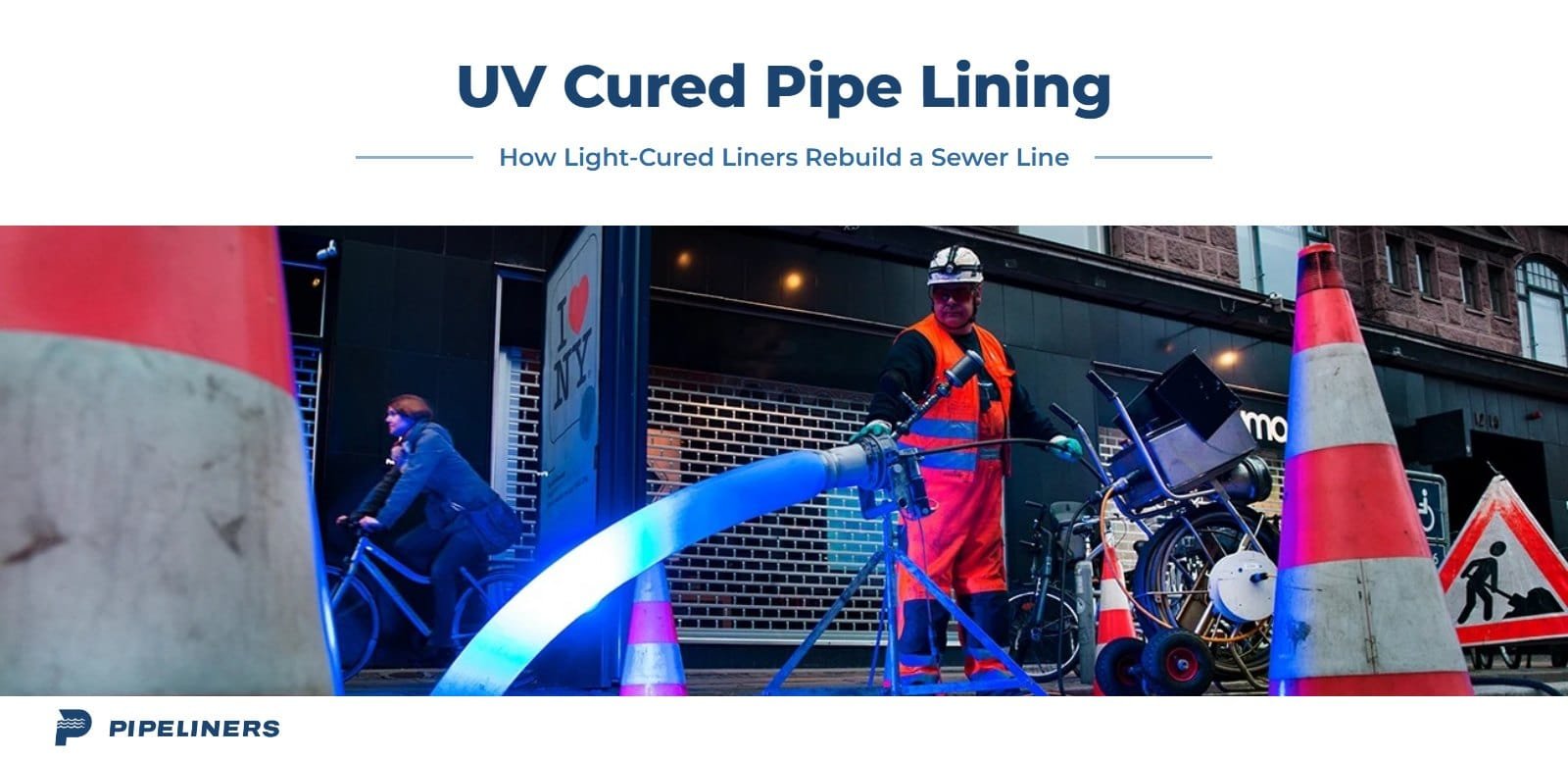
Full-length CIPP lining. When cracks, roots and leaking joints show up along the whole run, lining the pipe from end to end is usually the better fix. A resin-saturated liner is pulled into the old clay pipe and pressed against its walls, then cured into a hard, smooth new pipe inside the old one. Pipeliners cures liners with UV LED light. The finished liner has no joints, so there are no gaps left for roots to find. Learn more about cured-in-place pipe (CIPP) and how the process works.
Replacement. If the line has failed in too many places to line, or a section has collapsed, the damaged pipe is replaced. Sometimes that means replacing one bad section and lining the rest.
The big advantage of the trenchless options is what they leave alone: your yard, driveway, landscaping and trees. For a full walkthrough, see our guide to repairing a sewer line without digging.
When won’t lining work on a clay sewer line?
Lining will not work when the old pipe no longer has enough shape to support a liner. A liner needs a continuous pipe to form against. These conditions usually rule it out, at least for the affected section:
- A collapsed section. If the clay has caved in, there is no open pipe to line through.
- A badly offset joint. A severe offset can block the liner or leave it with a ledge that still catches waste.
- Missing pipe. If whole pieces of clay have broken away, the liner has nothing to hold it in place.
- A deep belly. A liner follows the shape of the old pipe, so it will not lift a sagging section back to grade.
In most of these cases, the answer is a combination: dig at the one failed spot, repair it, then line the rest of the clay line from the inside. Our comparison of cracked vs collapsed sewer pipes explains how to tell the two apart. A camera inspection is the only way to know which situation you are in.
Clay sewer lines in older Phoenix-area neighborhoods
Across the Valley, older neighborhoods still have clay sewer laterals running under them, sometimes on the same street as homes with newer plastic pipe. Two houses next door to each other can have very different lines, which is why a camera inspection matters more than the age of the house.
In the established parts of Glendale, clay and cast iron laterals are a frequent cause of root clogs and cracked joints, and many of those lines are good candidates for trenchless sewer repair in Glendale. Older streets in Avondale see the same pattern, and homeowners there can often avoid a trench with no-dig sewer repair in Avondale.
Large lots with mature trees add root pressure to any clay line, which is a common story in Paradise Valley. Farther south, older downtown streets mix clay and other older pipe materials with newer subdivisions, so sewer line repair in Casa Grande starts with finding out which kind of line you actually have.
Frequently asked questions
Is clay sewer pipe bad?
Clay sewer pipe is not bad in itself. Fired clay holds up well against wastewater. Its weak points are the many joints between sections, which can crack, shift or lose their seal and let roots in.
Can you line a clay sewer pipe?
Yes. Clay lines are often good candidates for CIPP lining, as long as the pipe still holds its shape. A collapsed or badly offset section usually needs to be repaired first, and then the rest of the line can be lined.
Should I replace my clay sewer line if nothing is wrong?
Not necessarily. If a camera inspection shows the joints are tight and there are no roots, cracks or sags, there may be nothing to fix yet. An inspection gives you a baseline, so you can watch for changes instead of guessing.
How do tree roots get into a clay sewer line?
Roots enter through cracks and loose joints, where small amounts of water and vapor leak into the soil. Once inside, they keep growing and catch waste. Cutting them out clears the line for a while, but sealing the joints with a liner is what keeps them out.
Find out what is going on inside your clay line
If you have an older home, repeat clogs or roots that keep coming back, the next step is seeing inside the pipe. Schedule a sewer camera inspection with Pipeliners, and we will show you the footage and explain whether your line can be repaired from the inside with no trench through your yard. Crews are available 24/7 for backups that cannot wait. Call 480-535-6503.
Last updated: September 2026. Written by Jake Shaker, Pipeliners.