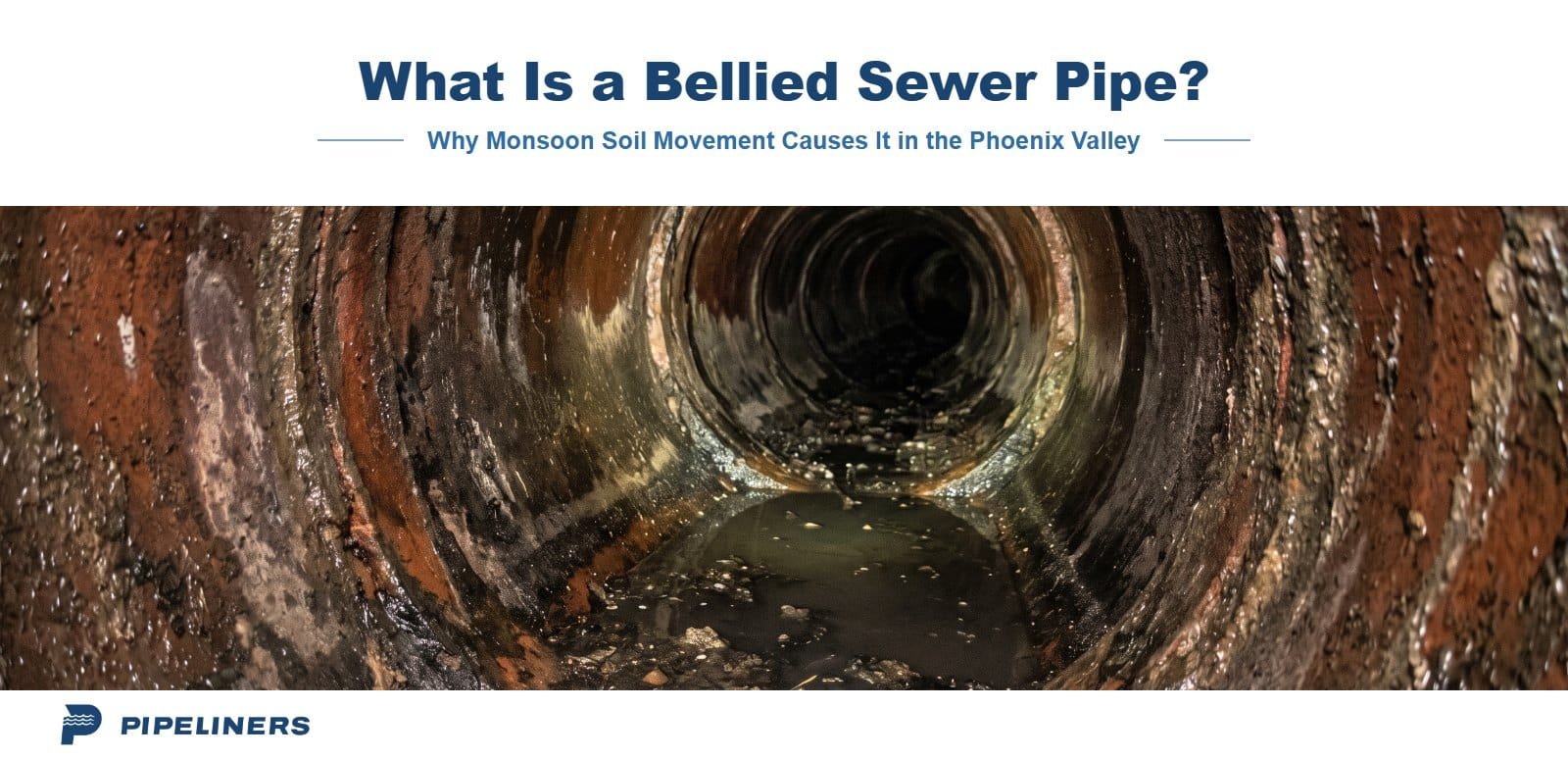

A belly in a sewer line, also called a bellied sewer pipe, is a section of line that has sagged into a low spot, so water and waste collect there instead of flowing straight out to the sewer. In the Phoenix Valley, the main cause is soil movement: our clay and caliche ground shrinks in the dry heat and swells when monsoon rain soaks in, and that constant push-and-pull can drop a pipe out of its proper slope. A belly will not fix itself, but it usually can be repaired without digging up your yard.
In short: the dip catches solids and grease, so a bellied line shows up as a drain that keeps clogging in the same place no matter how many times it is cleared. A camera inspection confirms it, and trenchless lining usually fixes it with little or no digging.
Key Takeaways
- A belly is a sag in the pipe, not a clog. The pipe shape is wrong, so snaking only helps until the low spot fills back up.
- Arizona clay and caliche soil shrink and swell with the wet-dry monsoon cycle, a leading cause of sagging and cracked sewer lines here.
- The tell-tale sign is a drain that clogs repeatedly in the same spot, often flaring up in monsoon season.
- Only a camera inspection confirms a belly, and most minor bellies can be cleaned and sealed with trenchless pipe lining instead of excavation.
What does a belly in a sewer line actually mean?
Picture a sewer line that is supposed to run at a steady downhill slope. A belly is a spot where the pipe has sunk, forming a shallow U. Water slows down in that dip, and solids and grease settle there instead of washing through. Over time that low spot catches more and more debris, which is why a bellied line shows up as a drain that keeps clogging in the same place no matter how many times it is cleared.
It is different from a simple clog. A clog is something stuck in an otherwise good pipe. A belly is the pipe shape being wrong, so clearing it only helps until the dip fills back up. Newer homes get them too. In Anthem, where most houses went up from 1999 on, a low spot is one of the usual reasons sewer line replacement in Anthem, AZ comes up.
Why does Arizona soil cause bellied pipes?
Because Valley soil moves. Our ground is heavy on clay and caliche, which shrink and shift in the long dry heat and then swell when monsoon rain finally soaks in. That seasonal shrink-swell, plus erosion from heavy monsoon downpours washing soil out from under a pipe, can pull a buried line out of its slope. Arizona monsoon runs June 15 through September 30 and drops a big share of the year rain in a short window, per NOAA, and the desert sun-baked, hard-packed ground sheds that rain fast instead of absorbing it evenly, according to Arizona State Parks. All that uneven wetting and drying is hard on a pipe that needs to hold a steady grade.
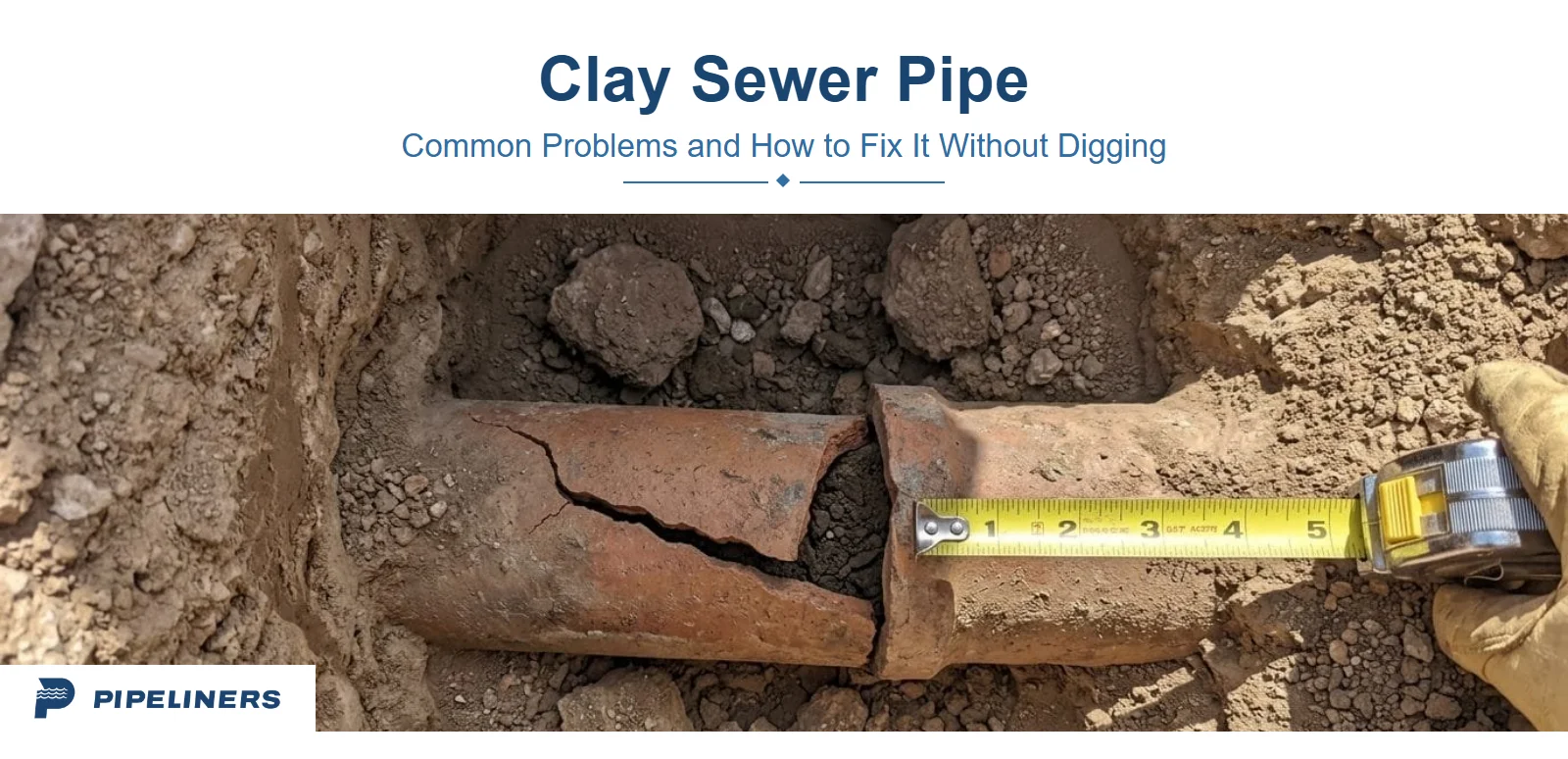
Older lines feel it most. Homes built before the 1980s often have clay or cast iron sewer pipe that has already shifted and cracked over decades.
What are the warning signs of a bellied sewer pipe?
- A drain that clogs repeatedly in the same place, even right after it is cleared.
- Slow drainage that gets worse over months, not all at once.
- Gurgling and waste that seems to sit in the line.
- Backups that flare up in monsoon season, when soil movement is at its peak.
Because these overlap with other sewer problems, the only way to confirm a belly is a camera inspection. It shows the standing water pooled in the dip, which no amount of snaking will cure.
| Bellied (sagging) pipe | Simple clog |
|---|---|
| The pipe has lost its slope and holds standing water | The pipe is fine; something is stuck inside it |
| Clogs come back in the same spot again and again | Clears and usually stays clear |
| Snaking and jetting help only temporarily | Snaking or jetting solves it |
| Confirmed by camera; fixed by re-sloping or lining | Confirmed and fixed by clearing |
How do you fix a bellied pipe without digging?
It depends on how severe the sag is. A minor belly can often be cleaned out and then sealed and reinforced from the inside with trenchless pipe lining, which restores a smooth, seamless interior so debris stops collecting. A deep or fully collapsed belly may need a small amount of excavation at just the low spot before lining. Either way, the goal is the same: restore proper flow and seal the line so soil movement and roots cannot keep re-opening the problem. It is the same approach we use on the cracked and corroded pipes common in older Mesa and Tempe neighborhoods, and it ties directly into the wider monsoon-season pipe problems that Valley homes see every summer.
Frequently asked questions
How do I know if I have a bellied sewer pipe in my Mesa home?
The classic sign is a drain that clogs again and again in the same spot no matter how often it is cleared. A camera inspection confirms it by showing water pooling in the low section.
Can a bellied pipe be fixed without digging up my yard?
Often yes. A minor belly can be cleaned and lined from the inside. Only a severe or collapsed sag usually needs a small dig at that one spot before lining.
Does monsoon season really move sewer pipes in the Phoenix Valley?
Our clay and caliche soil shrinks in the dry heat and swells with monsoon rain, and heavy downpours can erode soil from under a pipe. That seasonal movement is a leading cause of bellied and cracked lines here.
Will hydro jetting fix a bellied pipe in Tempe?
Jetting clears the debris a belly collects, which helps temporarily, but it cannot change the pipe shape. The lasting fix restores the line slope and seals it from the inside.
See what is really going on in your line
If a drain keeps clogging in the same spot, a belly is a likely cause, and it will only get worse as the soil keeps moving. Schedule a sewer camera inspection with Pipeliners USA and we will show you exactly what is happening underground and the no-dig options to fix it.