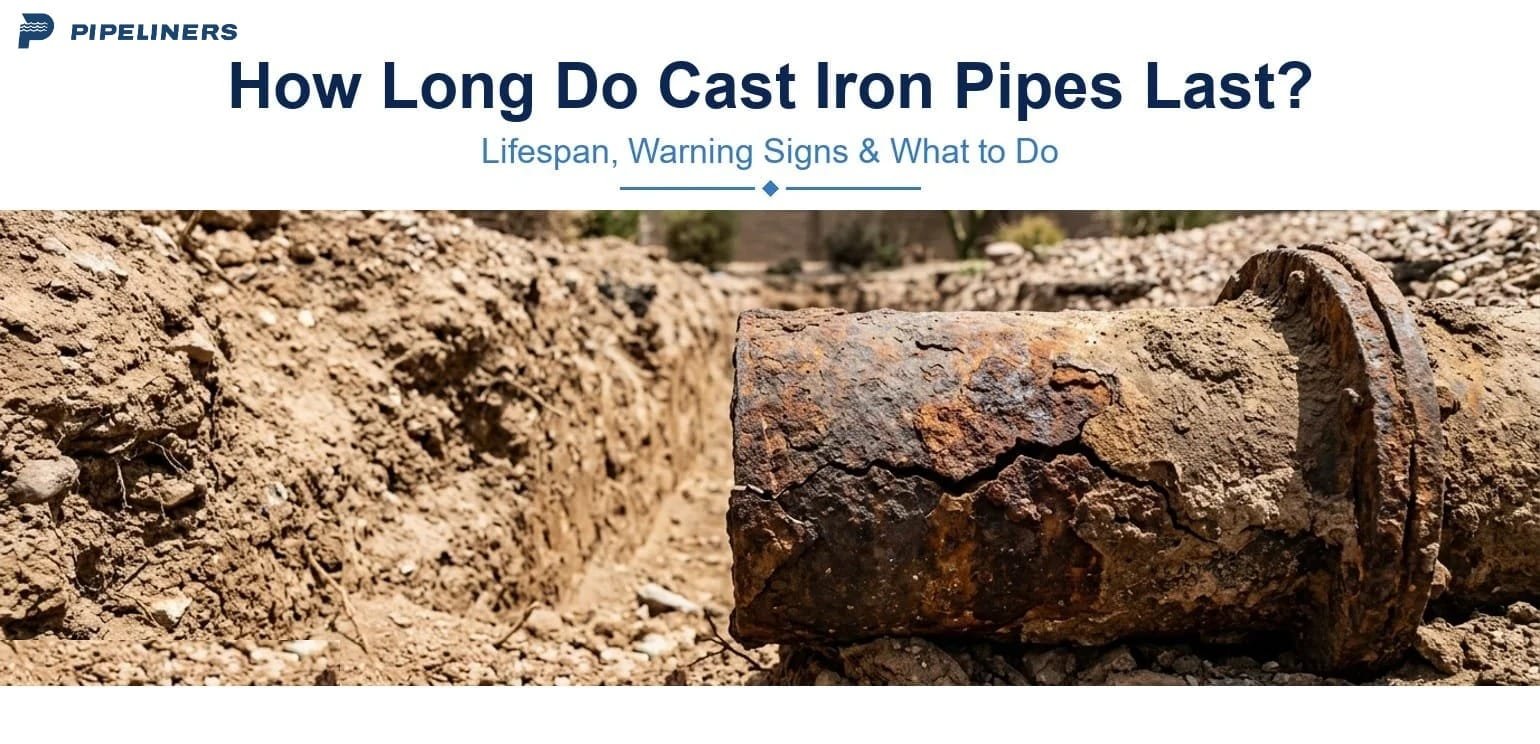

Quick answer: Cast iron pipes typically last 50 to 100 years, but many start to fail decades sooner. How long do cast iron pipes last in your home depends on your water, your soil, and how the pipes were installed. In the Phoenix area, hard water and caliche soil can wear them down faster than the maximum lifespan suggests.
If your house was built before the mid-1980s, there is a good chance your drain and sewer lines are cast iron. The good news is that you have options long before you need to dig up your yard or floors. This guide explains the real lifespan, the warning signs of aging pipes, and what to do when they reach the end.
Key Takeaways
- Cast iron pipes usually last 50 to 100 years, but many run into problems decades sooner.
- Hard water, acidic soil, and harsh drain chemicals all shorten their life.
- Many older Phoenix homes still have cast iron drain and sewer lines.
- Age plus repeated clogs, slow drains, or backups is a strong sign the pipes are wearing out.
- When cast iron fails, trenchless lining is often a faster, less invasive fix than full replacement.
How long do cast iron pipes last on average?
On average, cast iron pipes last 50 to 100 years. In normal home use, many cast iron systems need attention well before the top of that range. That is a wide window because the number depends heavily on local conditions, not just the metal itself.
Here is the part that surprises many homeowners: a pipe rated to last 75 years can start leaking or cracking decades early. Corrosion can start early, and a poorly installed system can fail long before a well-installed older one does.
So age is a guide, not a guarantee. If your home is older, it is smart to know the condition of your pipes before a small problem becomes a big one.
How long do cast iron sewer pipes last underground?
Buried cast iron sewer lines are usually the first part of a cast iron system to give out, often well before the 50 to 100 years the material can reach. The horizontal line that runs out to the street carries water and waste every day, and that constant use wears it faster than the pipes inside the walls.
The wear is uneven. Water and waste run along the bottom of a horizontal pipe, so the bottom corrodes and thins first while the top can still look solid. Vertical drain and vent stacks inside the house do not hold standing water the same way, so they usually outlast the buried line.
Underground lines also deal with roots, ground movement and the weight of soil and driveways above them, and they are the hardest part of the system to see. A camera inspection of the buried sewer line is the only reliable way to know how much life it has left.
How does cast iron compare to other pipe materials?
Cast iron is durable, but it does not last as long as modern plastic pipe. The table below shows typical lifespans for common home drain and sewer materials so you can see where cast iron stands.
| Pipe material | Typical lifespan | Common use |
|---|---|---|
| Cast iron | 50 to 100 years | Older drain and sewer lines |
| Clay (vitrified) | 50 to 60 years | Older underground sewer lines |
| Galvanized steel | 40 to 50 years | Older water supply lines |
| PVC plastic | 50 to 100 years | Modern drain and sewer lines |
| ABS plastic | 50 to 80 years | Modern drain and waste lines |
The takeaway is simple. Cast iron can match plastic at its best, but it corrodes from the inside out, while plastic does not. That inside corrosion is what shortens its life in real homes.
What shortens the life of cast iron pipes?
Several everyday factors wear cast iron down faster than its maximum lifespan. The biggest ones are corrosion from water and soil, plus how the pipe was treated over the years.
Common causes of early failure include:
- Hard water. Mineral-heavy water, which is common across the Phoenix metro, builds up inside pipes and speeds up corrosion.
- Acidic or moist soil. Soil chemistry and ground moisture attack the outside of buried cast iron.
- Harsh chemical drain cleaners. Repeated use of strong chemicals eats away at the pipe walls.
- Age and constant use. Decades of waste and water flow slowly thin the metal from the inside.
- Tree roots and ground movement. Roots and shifting soil can crack already-weakened pipes.
In Arizona, the mix of hard water and caliche soil means cast iron often ages on the faster end of the range. That does not mean your pipes are failing today, but it is a good reason to keep an eye on them.
How can I tell if my cast iron pipes are near the end of their life?
The clearest sign is age combined with repeated drainage problems. If your home is 50 years or older and you keep having the same issues, your cast iron pipes may be wearing out.
Watch for these patterns:
- Slow drains that come back soon after being cleared
- Frequent or repeated backups
- Gurgling sounds from drains or toilets
- Sewage smells inside or around the home
- Rusty or discolored water from drains
- Patches of unusually green or sunken grass over the sewer line
One or two of these can have simple causes. Several of them together, in an older home, point to aging pipes. For a fuller rundown of leak symptoms, see our guide to the warning signs your sewer pipes may be leaking.
The only way to know for sure is to look inside the pipe with a camera. A camera inspection shows corrosion, cracks, and buildup so you are not guessing.
Is it failing, or just clogged?
A single clog after years of trouble-free drains is often just a clog. The pattern that points to failing cast iron is a drain that backs up again within weeks of being cleared, or a camera view that shows rust flakes, heavy scale or a rough, thinning pipe wall. Scale can be cleaned out, but a pipe wall that has corroded through cannot be cleaned back to health.
When did builders stop using cast iron pipes?
Builders in the U.S. moved from cast iron to plastic drain pipe (ABS and PVC) mostly during the 1970s and into the 1980s, and the exact timing varied by builder and local code. In the Phoenix area, a home built before the mid-1980s has a good chance of cast iron drain and sewer lines, while newer homes usually have plastic. To know for sure, look at an exposed drain pipe near the water heater or a cleanout, or have the line checked with a camera.
What are my options when cast iron pipes fail?
When cast iron reaches the end of its life, you generally have three paths: cleaning, trenchless lining or full replacement. The right choice depends on how damaged the pipe is.
Cleaning and descaling removes the rust scale that builds up inside cast iron and narrows the pipe. It helps when the pipe wall is still sound, and it is also the first step before lining. See when pipe descaling is necessary.
Trenchless pipe lining creates a new, smooth pipe inside the old one without digging up your yard or floors. A liner is placed inside the existing pipe and hardened in place, sealing cracks and corrosion. It is usually faster and less disruptive than replacement. Learn how it works on our trenchless pipe lining in Phoenix page. For the buried line out to the street, see our trenchless sewer repair service.
Full replacement removes the old pipe and installs new pipe. This is the better choice when a pipe is collapsed, badly misaligned, or too far gone to line.
Not sure which fits your situation? Our breakdown of reline vs replace options for drain and sewer pipes walks through how to decide.
What should Phoenix homeowners do next?
If your home is older and you have noticed any warning signs, the smart first step is a camera inspection. It tells you the true condition of your pipes before you spend money on a fix you may not need yet.
You can schedule a free sewer inspection to see exactly what is happening inside your lines. Knowing the condition early gives you time to plan, instead of reacting to an emergency backup.
Frequently Asked Questions
How long do cast iron pipes last in a house?
Cast iron pipes in a house typically last 50 to 100 years, though many begin failing decades sooner depending on water quality, soil, and use. Age alone is not a guarantee, so condition matters more than the number.
Can old cast iron pipes be repaired instead of replaced?
Yes. In many cases, trenchless lining can restore an aging cast iron pipe by creating a new pipe inside the old one, without full excavation. Replacement is usually only needed when the pipe is collapsed or too damaged to line.
What is the average age when cast iron pipes start to fail?
There is no single age. Many cast iron pipes start showing problems decades before the 100 years they can reach, and hard water and harsh chemicals can push failure earlier still.
Do cast iron pipes fail faster in Arizona?
Often, yes. The Phoenix area’s hard water and caliche soil can speed up corrosion both inside and outside cast iron pipes, which can shorten their useful life.
How do I know if my home has cast iron pipes?
Homes built before the mid-1980s commonly have cast iron drain and sewer lines. A plumber can confirm it quickly, and a camera inspection shows both the material and its current condition.
Is it worth replacing cast iron pipes before they fail?
If pipes are old and showing repeated problems, addressing them early is usually cheaper than emergency repairs after a backup or leak. A camera inspection helps you decide whether to act now or keep monitoring. Here is when you need a plumbing inspection and what it checks.
Find out how much life your cast iron line has left
Pipeliners runs sewer camera inspections across the Phoenix Valley and shows you the footage, so you can see the condition of your cast iron line before deciding on cleaning, lining or replacement. Schedule a sewer camera inspection or call 480-535-6503.
Last updated: September 2026.