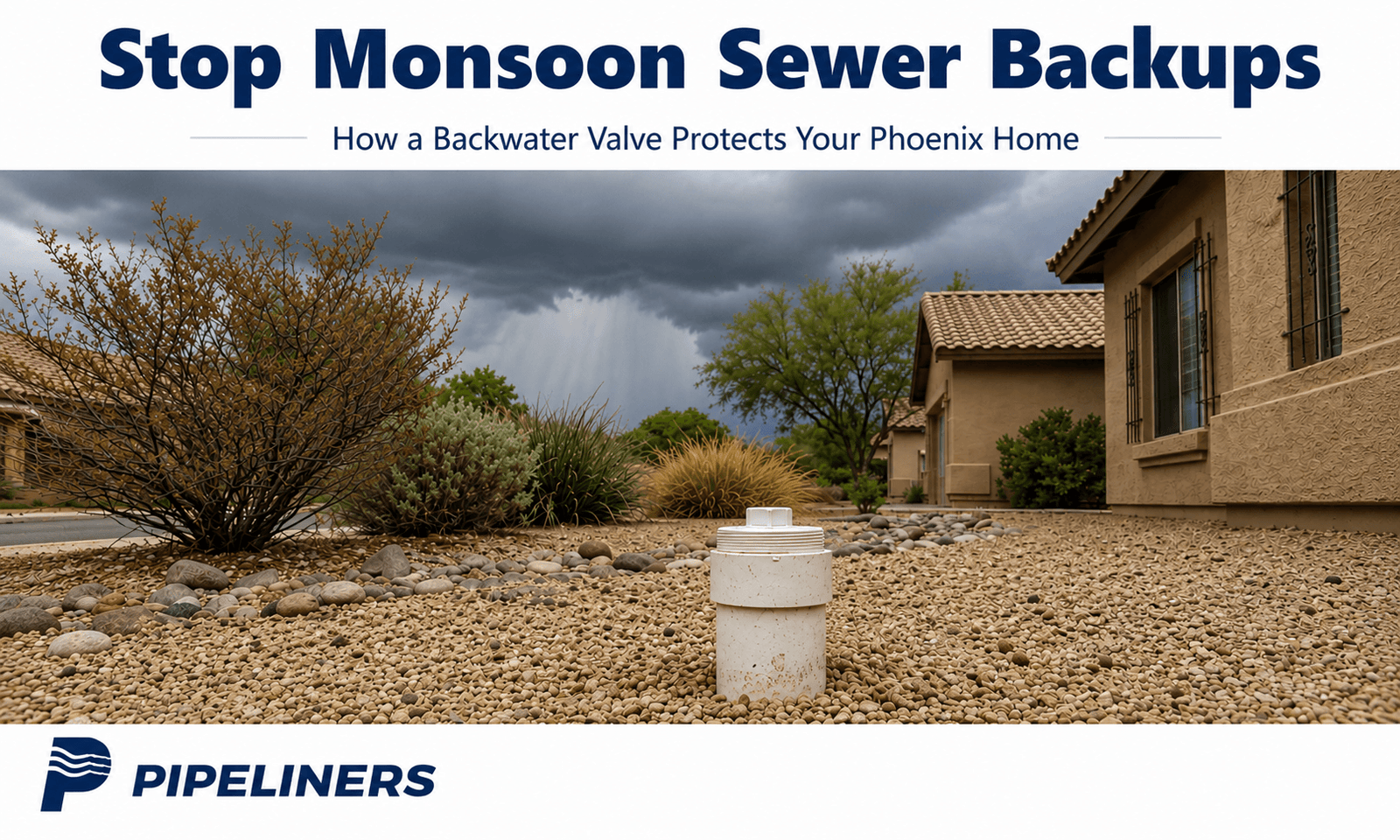

Quick answer: A backwater valve is a one-way gate installed on your main sewer line that lets wastewater flow out of your home but slams shut if sewage or stormwater tries to flow back in. For Phoenix homeowners, it is the single most effective device for stopping a monsoon-season sewer backup from pushing raw sewage up through your lowest drains and into your home.
In short: when a summer storm overwhelms the city sewer main, gravity can reverse and send everything in that pipe toward the lowest connected drain, which is often a shower, floor drain, or toilet in your house. A properly installed and maintained backwater valve closes automatically during that surge and reopens once the pressure clears. Here is how it works, why Valley homes are especially exposed, and how to tell if you need one.
Key Takeaways
- A backwater valve is a one-way check valve on your main sewer line that blocks sewage from flowing back into the house.
- Phoenix monsoon storms can overload the municipal sewer system, and that surcharge is a leading cause of home sewer backups.
- FEMA recommends backwater valves as a flood-mitigation measure, and many homeowners install one after a first backup rather than before.
- The valve needs a simple annual check to keep the flap and gate clear of debris.
- It can usually be added at an existing cleanout or with a small, targeted access point, not a trench across your whole yard.
What Is a Backwater Valve and How Does It Work?
A backwater valve (also called a backflow or sewer check valve) is a fitting installed inline on your home’s main sewer lateral, the pipe that carries wastewater from your house to the city sewer. Inside the valve is a hinged flap and a floating gate. Under normal conditions the flap hangs open so water and waste drain out freely. If flow reverses, the rising water lifts the gate and the flap snaps closed, sealing the line so nothing can travel back toward your fixtures. When the pressure drops, the flap falls open again and normal drainage resumes.
Because it works on gravity and water pressure alone, a quality backwater valve needs no power and no homeowner intervention during a storm. It simply reacts to the direction of flow.
Why Are Phoenix Homes at Risk for Sewer Backups?
Sewer backups are not random. According to the U.S. EPA, sanitary sewer overflows are commonly caused by blockages, line breaks, and stormwater or groundwater infiltrating and overloading the system. Phoenix stacks several of these risks on top of each other during the summer.
The biggest one is the monsoon. When an intense storm dumps rain on the Valley’s hard, largely paved surfaces, the water cannot soak in. As the USGS explains, urbanization and impervious surfaces send far more runoff into the drainage system than natural ground would. That surge can surcharge the sewer main, and when the main is full, the excess looks for the nearest low outlet, sometimes a drain inside your home. These monsoon-season pipe problems are exactly why we see a spike in sewer backups during monsoon storms across the Phoenix area.
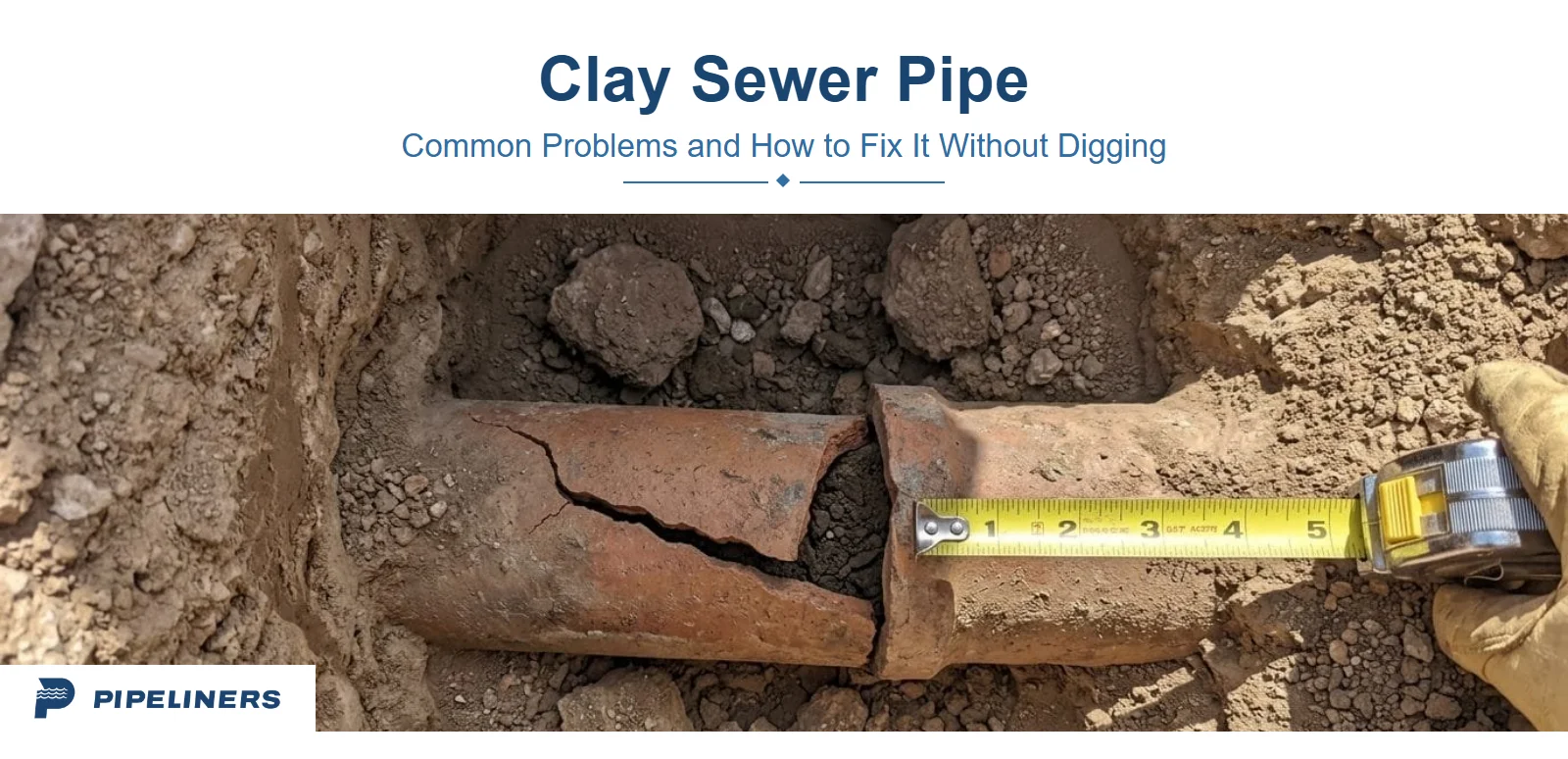
Local conditions make it worse. Many Valley lots are relatively flat, so sewer laterals run at a shallow slope with little margin before flow reverses. Aging clay and cast-iron lines, tree-root intrusion, and bellied (sagging) pipe sections all restrict flow and make a backup more likely when the system is under stress. If you want the full picture, see our overview of common Phoenix sewer line problems.
How a Backwater Valve Prevents Monsoon Sewer Backups
The scenario a backwater valve is built for is a surcharged city main. Without protection, when the public sewer fills past capacity, wastewater can travel back down your lateral and up through your lowest fixtures. With a valve in place, that reverse flow is what triggers it to close. Your home is sealed off from the overloaded main until the surge passes, while your own drains stay protected. The table below shows the difference during a typical monsoon surge.
| During a monsoon surge or city main backup | Home WITH a backwater valve | Home WITHOUT one |
|---|---|---|
| City sewer main surcharges | Valve closes, home sealed off | Wastewater can flow back in |
| Lowest drains (showers, floor drains, toilets) | Stay protected | First place sewage surfaces |
| Homeowner action during the storm | None needed, it is automatic | Scramble to contain the mess |
| Aftermath | Normal cleanup, if any | Sewage remediation and damaged flooring |
| Ongoing need | Simple annual valve check | Repeated exposure every storm season |
It is worth being clear about what a backwater valve does not do. It protects against backups coming from the city side of your line. It does not fix a blockage between the valve and your fixtures, and it does not replace fixing a collapsed or root-choked lateral. Think of it as the last line of defense that works alongside a healthy sewer line, not a substitute for one.
Signs You Might Need a Backwater Valve
- You have had sewage back up into a tub, shower, or floor drain, especially during or right after a storm.
- Your home sits lower than the street or than neighboring properties.
- You have finished living space, a basement, or valuable belongings near floor level.
- Your neighborhood has older sewer infrastructure or a history of backups during monsoon season.
- You have recurring slow drains that hint at a partial blockage or a sagging line.
If any of these sound familiar, the first step is a sewer camera inspection to confirm the condition of your line and the best place to install a valve.
Where Is a Backwater Valve Installed, and Is It Disruptive?
A backwater valve is installed on the main sewer lateral, usually as close to where the line leaves the house as practical, and often at or near an existing cleanout. That placement lets it protect every fixture downstream of the valve. Installation typically means accessing one spot on the line rather than excavating the whole run, and where an existing cleanout can be used, the footprint is small. If your line also needs repair, the same access point can often be used to address both, and a deteriorated section can be handled with trenchless sewer repair to keep digging to a minimum.
Do Backwater Valves Need Maintenance?
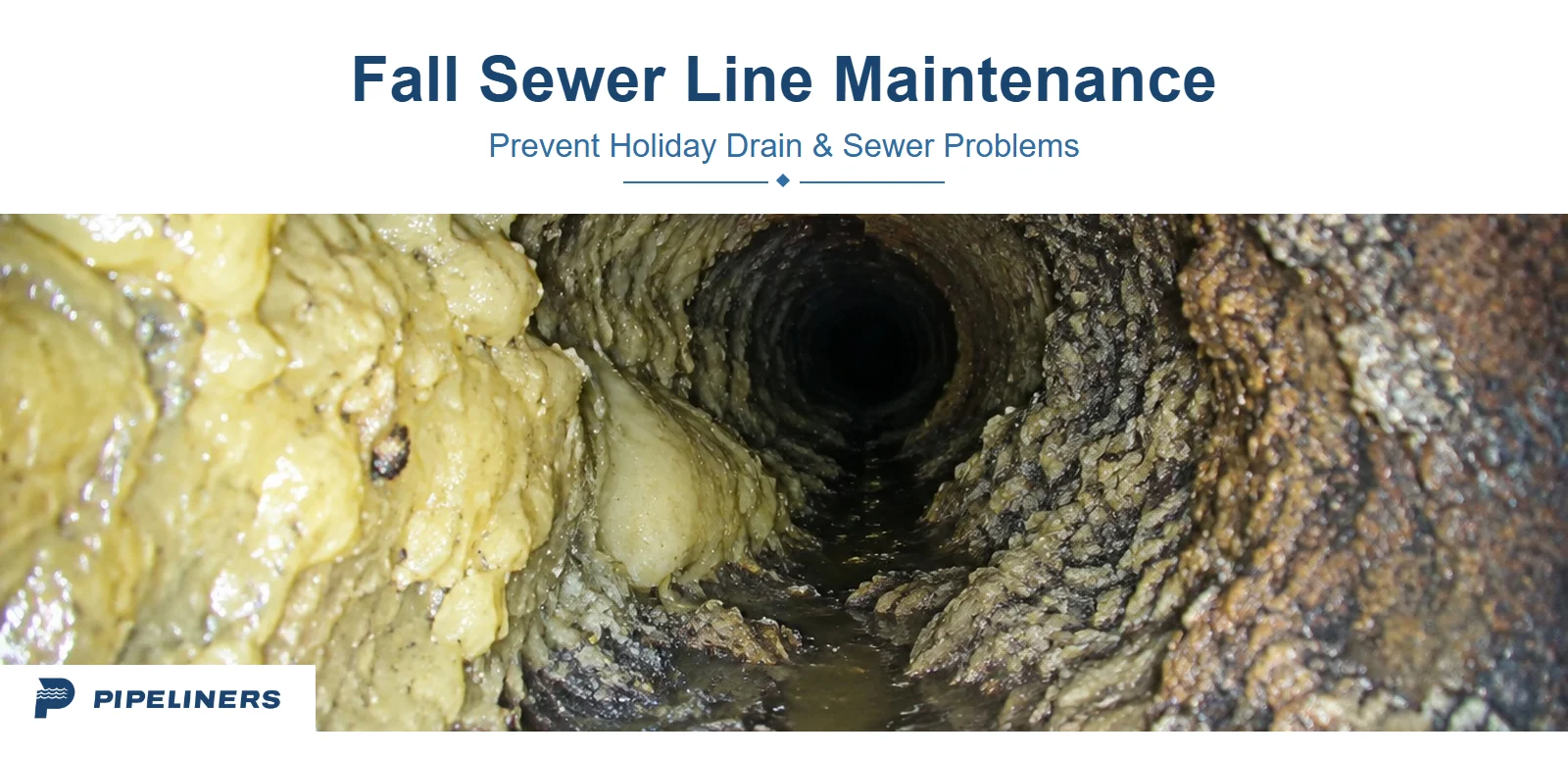
Yes, but it is minimal. Because the flap and gate sit in the flow of wastewater, debris, grease, or wipes can occasionally keep the valve from sealing fully. A quick annual check, ideally before monsoon season, confirms the access cap is accessible, the flap moves freely, and nothing is caught in the seat. Keeping grease and non-flushable items out of your drains year-round goes a long way toward keeping the valve working when you need it most. Our fall sewer line maintenance guide covers what to keep out of your drains before the holidays.
Frequently Asked Questions
What is a backwater valve?
It is a one-way valve installed on your main sewer line. It lets wastewater drain out of your home normally, but closes automatically if sewage or stormwater tries to flow back in from the city sewer.
Do I really need a backwater valve in Phoenix?
If your home has ever had a storm-related backup, sits low relative to the street, or is in an area with older sewer lines, a backwater valve is worth serious consideration. Monsoon surcharges are a leading cause of Valley sewer backups, and the valve is designed for exactly that situation.
Where is a backwater valve installed?
On the main sewer lateral, usually near where the line leaves the house and often at an existing cleanout. That location protects all the fixtures downstream of the valve.
Will a backwater valve stop every sewer backup?
No. It stops backups coming from the city side of your line, which covers the monsoon surcharge scenario. It does not clear a blockage between the valve and your fixtures, so a healthy, unobstructed sewer line is still important.
Can a backwater valve be installed without digging up my whole yard?
In most cases, yes. It is added at a single access point on the line, often an existing cleanout, rather than by excavating the full run. If the line also needs repair, trenchless methods can keep digging to a minimum.
How often should a backwater valve be checked?
About once a year, ideally before monsoon season, to make sure the flap moves freely and the seat is clear of debris. Keeping grease and non-flushable items out of your drains helps it seal properly.
Is a backwater valve worth it compared to the cost of a backup?
A single sewage backup can mean professional remediation, ruined flooring, and lost belongings. A backwater valve is a one-time, low-maintenance safeguard against that, which is why FEMA lists it among recommended flood-mitigation measures.
Protect Your Home Before the Next Monsoon Storm
If you have dealt with a backup before, or you just do not want to find out the hard way, a backwater valve is one of the smartest investments a Phoenix homeowner can make. Contact the team at Pipeliners for a sewer camera inspection and we will show you whether a backwater valve is right for your line and where it should go.
Call us today at (480) 535-6503. Proudly serving the Phoenix Valley and surrounding areas.