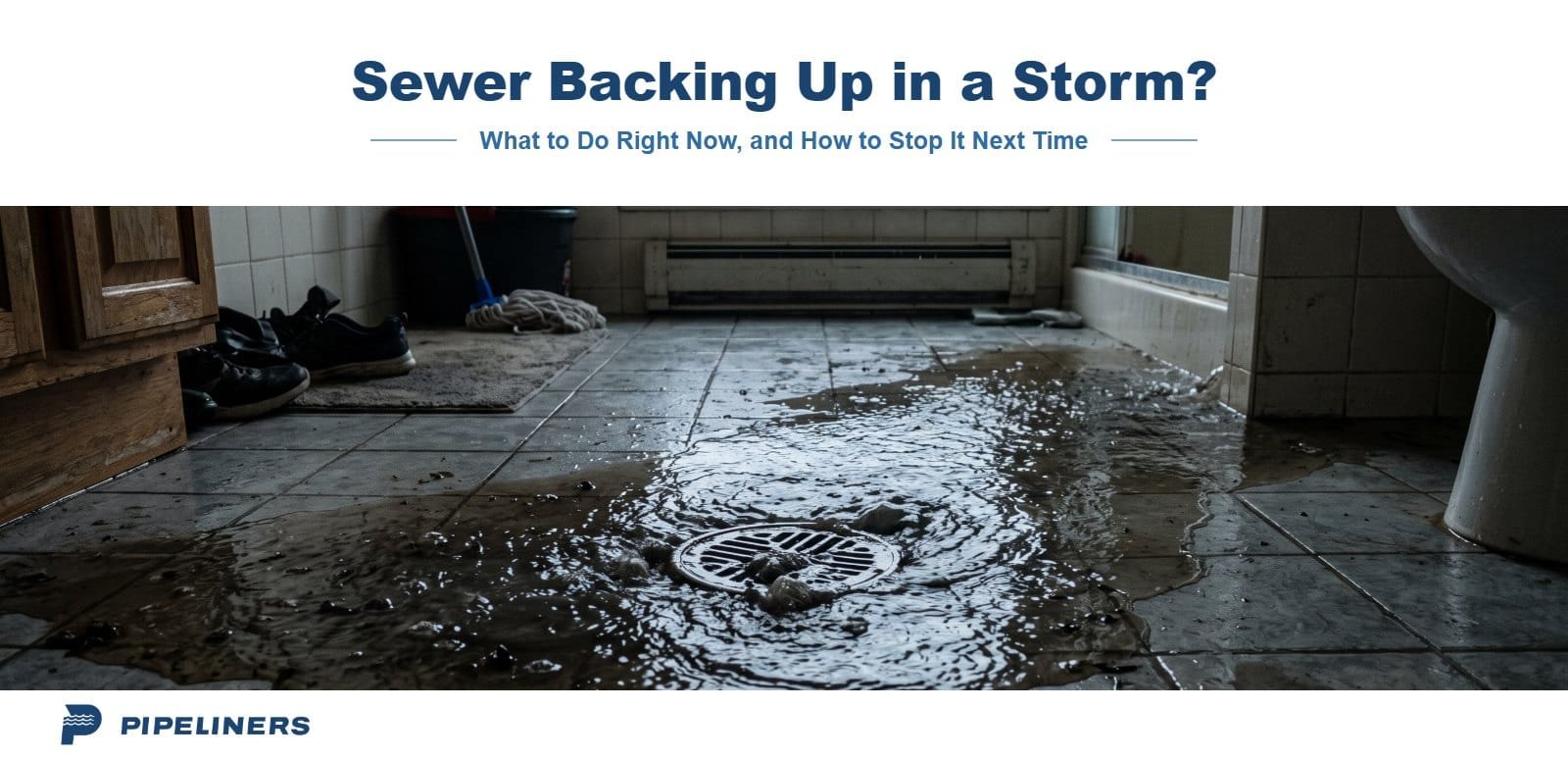

If you have a sewer backup in your home during a monsoon storm, do three things first: stop running water everywhere in the house, keep people and pets away from the contaminated area, and get the line cleared. A storm-season backup is a health hazard, not just a mess, and the steps you take in the first few minutes protect both your family and your home.
In short: clearing the backup gets you through the storm, but the real fix is finding and sealing the pipe damage that let the storm in, so the next monsoon does not repeat it.
Key Takeaways
- Stop all water use immediately so you do not add to the backup, and keep people and pets out of the contaminated area.
- Treat sewage as a biohazard: wear protective gear, keep cuts covered, and remove porous materials that soak it up.
- In Valley homes on a slab, the backup usually surfaces at the lowest fixture, often a first-floor shower or floor drain.
- The lasting fix is a camera inspection plus trenchless lining to seal the cracks and roots letting storm water in.
What should I do the moment a sewer backs up?
- Stop using water immediately. Every flush, shower, or running tap adds to the backup. Ask everyone to stop until it is handled.
- Keep people and pets out of the affected area. Sewage is the most contaminated category of water.
- If water is near outlets or rising, cut power to that area only if you can reach the breaker safely without standing in water.
- Do not force it with a plunger or chemicals during an active storm backup; that can make a main-line problem worse.
- Get the line cleared, then have it inspected so the cause gets fixed, not just the symptom.
Is a sewage backup dangerous?
Yes, treat it as a biohazard. Sewage and floodwater carry bacteria and viruses that cause illness. Per the CDC, minimize skin contact, keep cuts covered, never eat or drink anything that touched the water, and wear rubber boots, gloves, and eye protection if you must be near it. The CDC also advises drying the area within 24 to 48 hours to limit mold, and warns never to mix bleach with ammonia when cleaning. Porous materials that soak up sewage, like drywall, carpet, and padding, usually have to be removed rather than cleaned.
| Do | Do not |
|---|---|
| Stop all water use in the house | Keep flushing or running taps |
| Keep children and pets clear of the area | Wade through or touch the water bare-handed |
| Wear gloves, boots, and eye protection | Mix bleach with ammonia when cleaning |
| Get the line cleared, then inspected | Rely on a plunger or chemicals during the storm |
Why do Arizona sewers back up in monsoon storms?
Because the storm exposes damage that was already there. Heavy monsoon rain gets into a cracked, root-invaded, or bellied sewer line faster than it can drain, and the extra water pushes back up through the lowest drains, usually a first-floor shower or floor drain, since most Valley homes are on a slab with no basement. Arizona monsoon peaks mid-July through August and the desert hard-packed ground sheds heavy rain fast rather than soaking it in, per Arizona State Parks, which is exactly the flash-flood pressure that overwhelms a weak line. Our main monsoon pipe problems guide covers the underground causes in depth.
How do I stop it from happening again?
Clearing the backup gets you through the storm; it does not fix the pipe. The lasting solution is a camera inspection to find exactly where rain and roots are getting in, followed by trenchless pipe lining to seal those cracks and joints from the inside, with no digging up the yard. Once the line is sealed, the same storm water and root pressure that caused the backup has nothing left to push through. Homeowners across Mesa and Queen Creek, with their older lines and monsoon soil movement, are exactly who this happens to, and who benefits most from sealing the line before the next storm. For homes that back up whenever the city main is overwhelmed, adding a backwater valve gives you a one-way barrier that blocks that reverse flow automatically.
Frequently asked questions
What is the first thing to do if sewage backs up in my Mesa home during a storm?
Stop running all water so you do not add to the backup, keep everyone away from the area, and get the line cleared. Do not wade in or try to clear it yourself during an active storm backup.
Is it safe to stay in the house after a sewer backup?
Stay out of the contaminated area until it is cleaned and disinfected. Sewage carries bacteria and viruses, so keep children and pets away and wear protective gear if you must be near it.
Why does my sewer only back up when it storms in Queen Creek?
That almost always means rainwater is getting into a cracked, root-damaged, or bellied line faster than it can drain. The storm does not create the problem; it exposes damage that is already in the pipe.
How do I keep a monsoon backup from happening again?
Have the line inspected with a camera, then sealed from the inside with trenchless lining. That closes the cracks and joints letting rain and roots in, so the next storm has no way to back the line up.
Fix the cause before the next storm
Once the mess is cleared, the smart next step is finding out why it happened. Schedule a sewer camera inspection with Pipeliners USA and we will show you where the storm water is getting in and seal the line so it does not back up again.