
If your sewer line keeps backing up, smells bad, drains slowly, or has been damaged by roots, you may be wondering if there is a way to fix it without tearing up your yard. For most homeowners, the biggest worry is not the repair itself. It is the digging: the trench, the broken concrete, the lost landscaping and the days of disruption. The good news is that sewer line repair without digging is possible in most cases. With trenchless drain pipe repair, a damaged sewer line can be restored from the inside instead of being dug up and replaced.
Can a sewer line be repaired without digging?
Yes, in most cases. If the old pipe still holds its shape, a crew can clean it and cure a new liner inside it through a cleanout or one small access point. Your yard, driveway and slab stay in place. A pipe that has fully collapsed or lost its path may still need that section dug up.
Key takeaways
- No-dig sewer repair, also called trenchless repair, fixes the pipe from the inside through small access points instead of a long open trench.
- Pipeliners restores sewer and drain lines with a cured-in-place liner hardened with UV LED light, and restores water lines with ePIPE.
- A camera inspection always comes first, so the repair matches what is actually in the pipe.
- Pipeliners drain liners are rated to last 50+ years and carry a 20-year transferable warranty.
- No-dig repair costs up to 30% less than digging and replacing the line, and most jobs take a couple of days.
- A fully collapsed or badly misaligned section may still need to be dug up.
What is no-dig sewer repair?
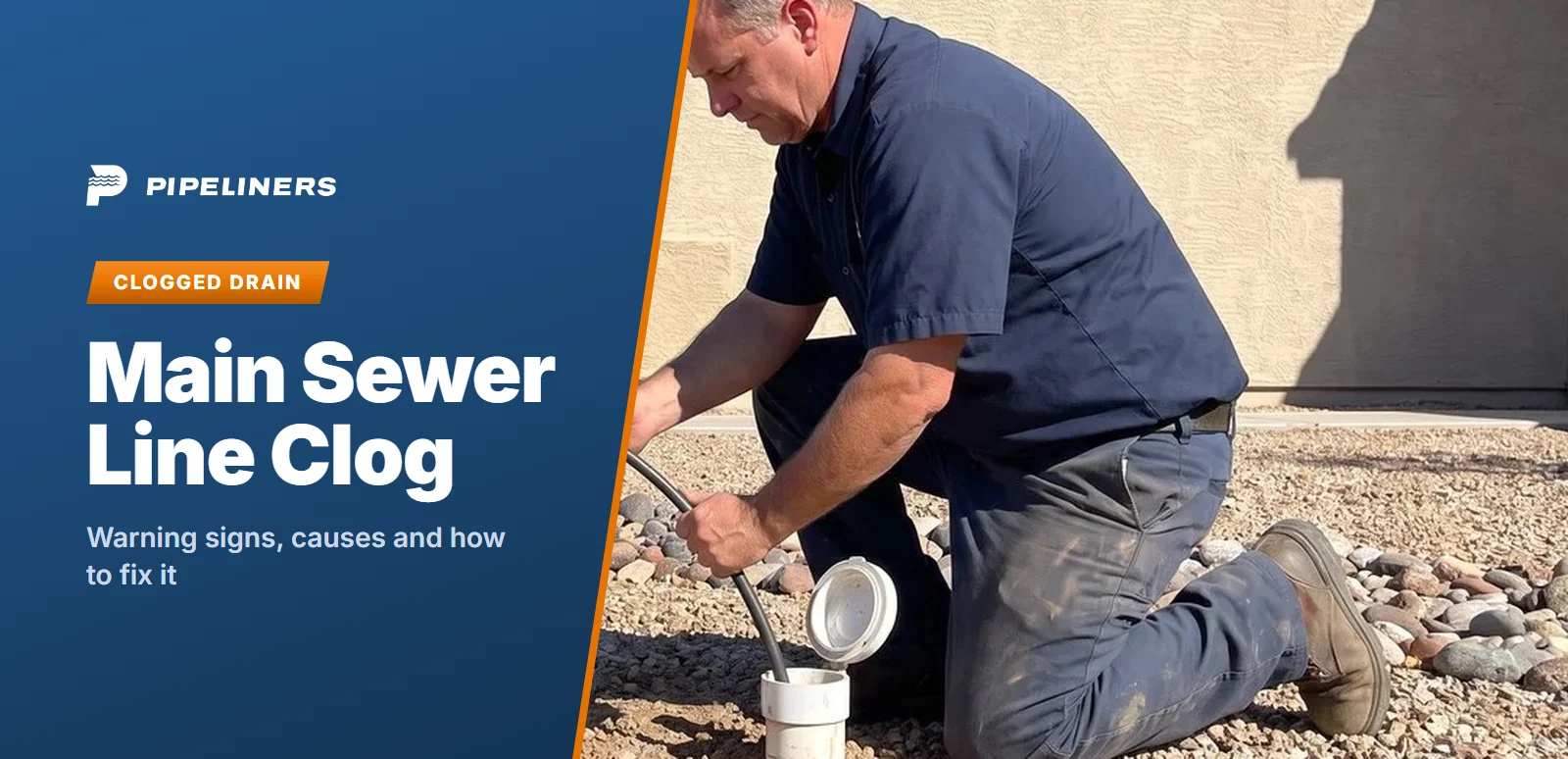
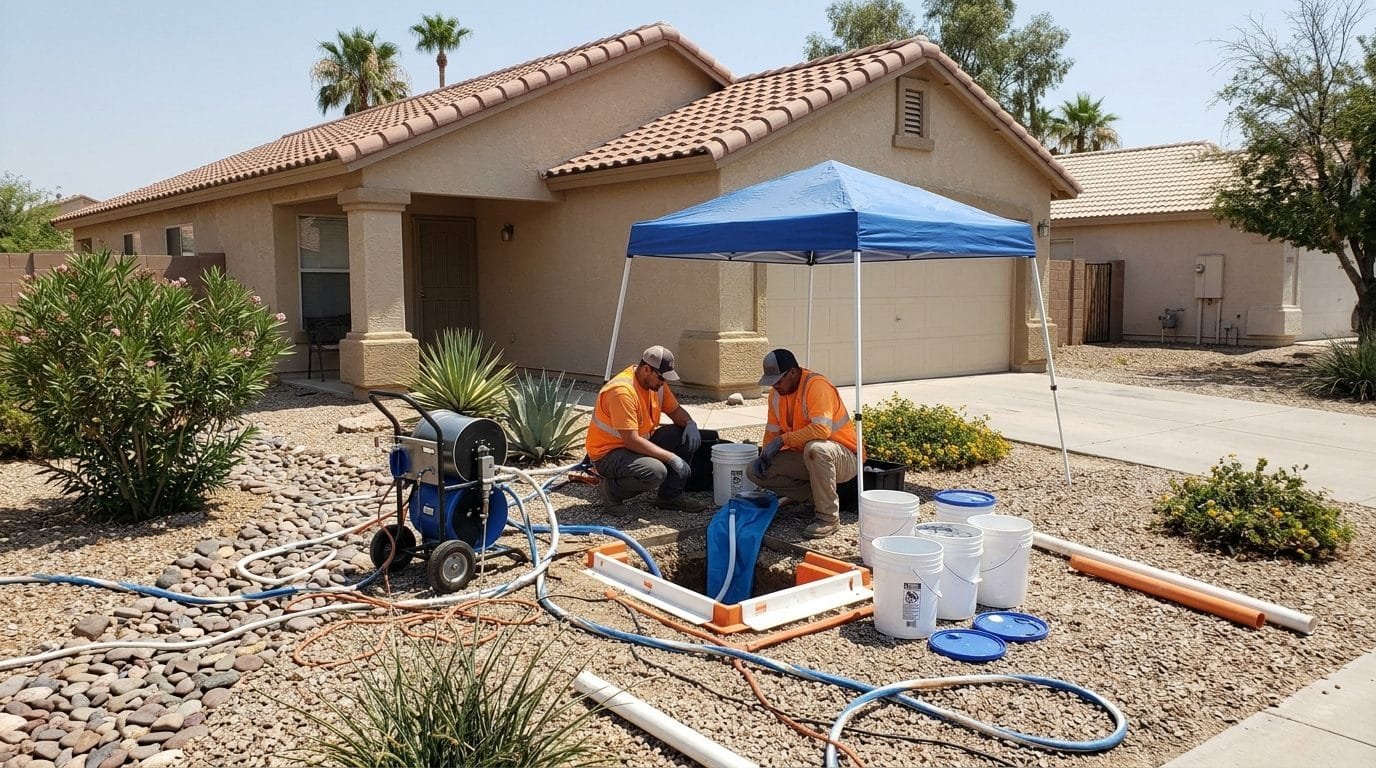
No-dig sewer repair is a way to fix a damaged sewer line without excavating the whole pipe. Instead of digging a trench through your yard, driveway, patio or floor, the crew works through an existing cleanout or one small access point and repairs the pipe from the inside.
It is used for cracked sewer pipes, leaking joints, root intrusion, scaled and corroded cast iron, and sewer lines that run under concrete or landscaping. You get a working pipe again, and the surface above stays mostly untouched.
How does sewer line repair without digging work?
Most jobs follow the same five steps:
- Camera inspection. A small waterproof camera is sent down the line to find cracks, roots, scale, bellies or breaks. See how a sewer camera inspection works.
- Cleaning. The pipe is cleared of roots, grease, sludge and scale with hydro jetting, so the liner can bond to the old pipe walls.
- Liner installation. A resin-soaked liner is pulled or inverted into the damaged pipe and inflated against the old walls.
- Curing. Pipeliners cures the liner with UV LED light, which hardens the resin in place instead of waiting hours for it to set on its own. See how UV curing works.
- Final camera check. One more camera pass confirms the liner sits tight against the old pipe and nothing blocks the flow.
The result is a smooth, jointless pipe inside the old one, with no open joints for roots to get through. To go deeper on how the liner and resin work, read our guide on CIPP lining or see how plumbers use cured-in-place pipe to avoid digging and demolition.
Does the sewer line need to be cleaned before it is lined?
Yes, in most cases. Roots, grease, sludge, sand and scale keep a liner from bonding correctly. Hydro jetting uses high-pressure water to scour the inside of the pipe, and the camera goes back in afterward to make sure the line is ready.
When is no-dig repair a good fit?
No-dig repair works when the pipe is damaged but still has a clear, continuous path. It is a good fit for:
- cracked or leaking sewer pipes
- root-damaged lines
- aging cast iron, clay or Orangeburg pipe
- corroded drain lines
- sewer lines under concrete, driveways, patios, pool decks or the slab
- recurring backups caused by damage in the pipe
When is digging still needed?
A liner needs the old pipe as a form. If there is not enough pipe left, there is nothing to line. Digging may still be needed when:
- the pipe has fully collapsed
- large sections are missing
- the line has a severe belly or sag
- a section has shifted badly out of line
This is why it helps to know the difference between cracked vs collapsed sewer pipes. A cracked pipe can usually be lined; a collapsed section may need to be replaced. Often only that one section is dug, and the rest of the line is lined.
No-dig repair vs digging and replacing: how do they compare?
| No-dig repair | Digging and replacing | |
| Digging | Little to none; one small access point or a cleanout | A long open trench |
| Yard, driveway and slab | Mostly untouched | Often torn up and rebuilt |
| Time on site | Most jobs take a couple of days | Several days or more, plus restoration |
| Total cost | Up to 30% less than dig-and-replace | Higher once landscaping and concrete are rebuilt |
| Best for | Cracked, leaking, root-damaged or corroded pipe that still holds its shape | Collapsed, missing or badly misaligned sections |
If you are weighing the two, see CIPP vs traditional sewer line replacement and our guide to reline vs replace.
What are the pros and cons?
Pros:
- Little to no digging, so your yard, driveway and floors stay intact.
- Faster than digging and replacing.
- A jointless liner blocks roots and stops leaks at the old joints.
- Lower total cost once cleanup and restoration are counted.
- Long-lasting: liners are rated for 50+ years.
Cons:
- It will not work on a pipe that has fully collapsed or lost its path.
- A severe belly may still need a section dug up.
- It needs trained crews and specialized equipment, so it is not a DIY job.
What affects the cost of no-dig sewer repair?
Every line is different, so the only way to get a real number is an inspection. The main cost factors are:
- Pipe length and diameter. Longer and wider lines need more liner and more time.
- Depth and access. Deeper pipes and tight access points take more work.
- Pipe condition. Heavy roots or scale mean more cleaning before lining.
- Permits. Some cities require them, and Pipeliners pulls the permits.
Start with a free sewer inspection to find out what your line needs.
Can no-dig repair be done under concrete or a slab?
Yes. This is where no-dig repair helps the most. Sewer lines that run under a driveway, a patio, a pool deck or the slab floor can be lined from a cleanout, so nothing has to be broken out to reach the damaged section. A camera inspection confirms the pipe is in good enough shape to line.
Does no-dig repair work on water lines too?
Yes, with a different process. Sewer and drain lines get a cured-in-place liner. Copper water lines, which carry pressure, get an epoxy coating instead. The pipes are dried and cleaned, then the epoxy is blown through and cured, sealing pinhole leaks from the inside. ePIPE restoration carries a 10-year warranty, and the coating is certified safe for drinking water. Learn about ePIPE restoration.
Why do Phoenix and Mesa homeowners choose no-dig sewer repair?
Many Valley homes are built on a slab, with the sewer line running under the floor, the driveway or mature desert landscaping. When that line fails, digging it out means breaking concrete and tearing up the yard.
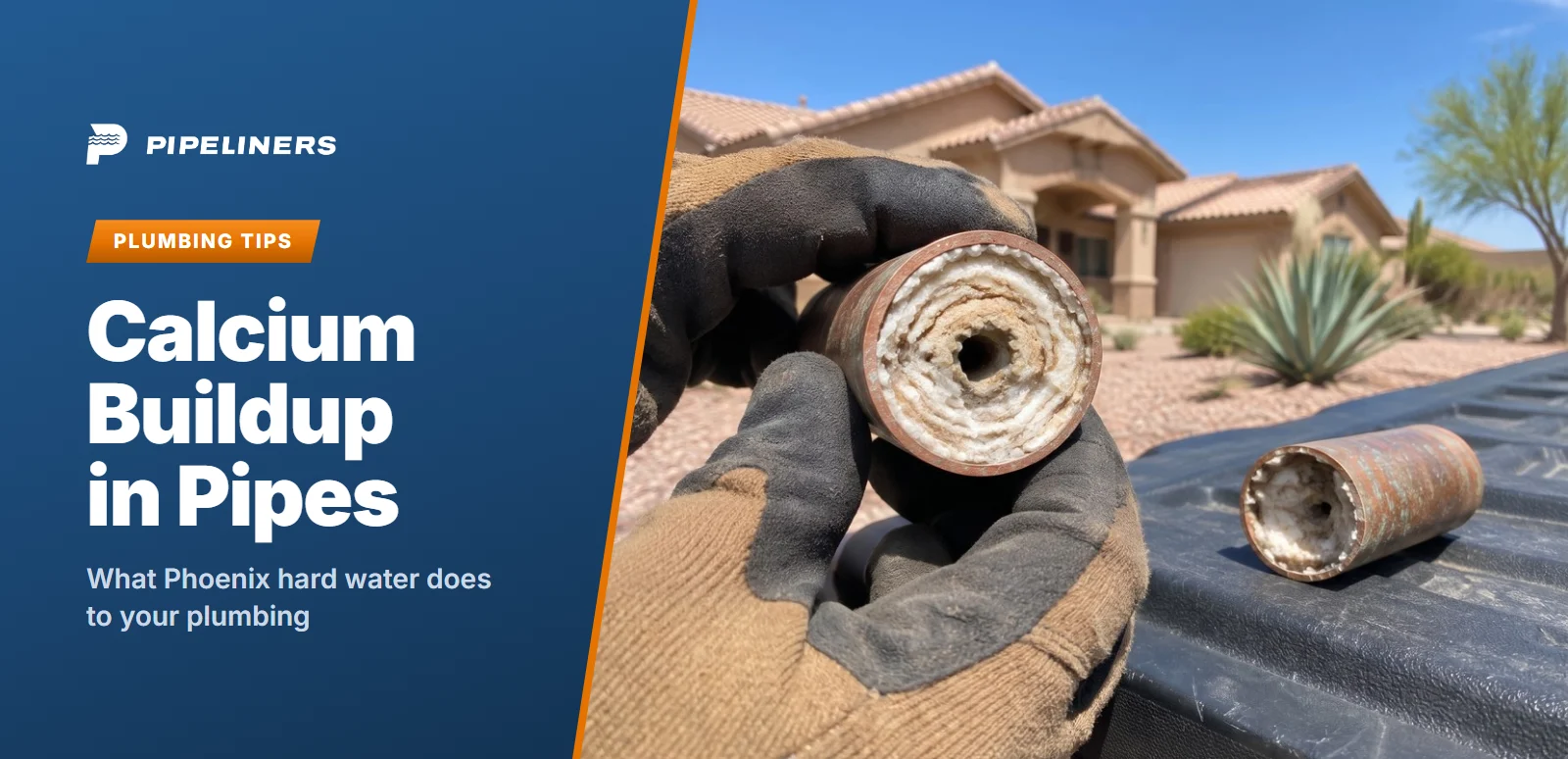
The pipes themselves are aging too. Older Phoenix homes, mostly built before 1950, often have clay or Orangeburg sewer pipe, and many Mesa homes from the 1950s to the 1970s, and Sun City homes from the same era, have cast iron. Phoenix’s hard water leaves scale that narrows pipes, and hard caliche soil and monsoon-season ground movement put extra stress on old joints.
No-dig repair handles all of these from the inside. If you are looking for trenchless sewer repair in Phoenix or pipe repair in Mesa, a camera inspection is the place to start. For a look at every option, see our guide to sewer relining methods in Phoenix.
Signs you may need sewer line repair
- recurring sewer backups
- gurgling drains
- slow drains throughout the house
- sewer odors inside or outside
- wet or sunken spots in the yard
- water backing up into tubs or showers
- frequent clogs
- roots found in the sewer line
- older cast iron, clay or Orangeburg sewer pipe
These signs do not always mean the whole line needs replacing. In most cases, a camera inspection shows whether the pipe can be repaired without digging.
Frequently asked questions about sewer line repair without digging
Can sewer line repair really be done without digging?
Yes, in most cases. If the pipe still holds its shape, it can be cleaned and lined from the inside through a cleanout or one small access point. The pipe must be stable enough to support the liner.
What is the best no-dig sewer repair method?
For a sewer or drain line, a cured-in-place liner is the most common no-dig method. Pipeliners cures its liners with UV LED light. It restores the pipe from the inside without removing it from the ground.
Can lining fix tree roots in a sewer line?
Yes, once the roots are removed. Hydro jetting clears the roots first, then the liner seals the old joints so roots cannot get back in.
Is sewer line repair without digging always possible?
No. If the pipe is fully collapsed, missing sections, or badly sagging, that section may need to be dug up and replaced. Often the rest of the line can still be lined.
Can no-dig repair fix a sewer line under concrete?
Yes. It is one of the best uses for it. The line is lined from a cleanout, so the driveway, patio or slab floor above stays in place. A camera inspection confirms the pipe condition first.
How long does sewer line repair without digging take?
Most jobs take a couple of days. The exact time depends on the length of the pipe, how much cleaning it needs, and how many sections are lined.
Is no-dig sewer repair cheaper than digging?
In most cases, yes, once you count cleanup. It costs up to 30% less than digging and replacing the line, because there is no landscaping, driveway or concrete to rebuild.
How long does a lined sewer pipe last?
Pipeliners drain liners are rated to last 50+ years and carry a 20-year transferable warranty.
How do I know if I need lining or replacement?
A sewer camera inspection is the best way to know. It shows whether the pipe is cracked, clogged, corroded, bellied or collapsed, and where.
Call Pipeliners for sewer line repair without digging
If you need sewer line repair without digging, Pipeliners can inspect your pipe and show you whether it can be lined. Pipeliners serves Mesa, Phoenix and the greater Phoenix Valley with no-dig pipe restoration for homes and businesses.
Call Pipeliners now at +1 480-447-5345 to ask about no-dig sewer repair options.