How Do You Know if You Have a Sewer Line Leak?
Quick answer: A sewer line leak usually shows up as sewage odors, gurgling or slow drains, repeat clogs in the lowest drain, damp floors, or soggy, sunken ground along the line. Because the pipe is buried, a sewer camera inspection is the reliable way to confirm the leak and pinpoint where it is.
Most sewer line leaks start small and stay hidden underground for months. The longer one runs, the more soil it washes out and the bigger the repair gets. Below are 14 signs of a leaking sewer pipe, a quick way to tell a sewer leak from a water line leak, and what to do next.
Key takeaways
- Sewer leak signs are about smells, drains and wet or sinking ground.
- A higher water bill, a running meter or low pressure points to a water line leak instead.
- A camera inspection finds the exact spot before anything is dug up.
- Many leaking sewer lines can be lined from the inside without trenching the yard.
What are the 14 warning signs of a leaking sewer pipe?
- Sewage odors inside or in the yard. A sewage or rotten-egg smell near floor drains, in a bathroom, or outside along the path of the line means gas or wastewater is escaping through a crack or open joint. See what a sewer smell in the house means.
- Gurgling toilets and drains. Bubbling after you flush or run water means air is being pushed through the line. A crack, a bellied section or a partial blockage is a common cause.
- Slow drains all through the house. One slow sink is usually a local clog. When tubs, showers and toilets all drain slowly at the same time, the problem is in the main sewer line.
- Backups in the lowest drain. Sewage tends to come up first at the lowest fixture, such as a ground-floor shower, tub or toilet. Repeat backups there point to the main line, not the fixture.
- Clogs that keep coming back. If a drain is cleared and clogs again within weeks, roots or a broken section are often catching debris. A camera inspection shows which one it is.
- Water or sewage around the cleanout. The cleanout is the capped pipe outside where the sewer line can be reached. Standing water or sewage around it means the line is backing up or leaking nearby.
- Damp or spongy floors. Moisture coming up through flooring, or a damp spot on carpet with no spill, can come from a drain line leaking under or beside the slab.
- Mold, mildew or a musty smell. Steady moisture from a leaking drain line feeds mold on walls, baseboards and cabinets near plumbing.
- Stains or peeling paint near drain lines. Dark rings, bubbling paint or soft drywall along a wall that carries drain pipes can mean a slow leak behind it.
- A green patch in dry landscaping. In Valley yards with gravel and desert plants, a strip of weeds or unusually green growth along the sewer path is a classic sign. Leaking wastewater is feeding it.
- Soggy ground or puddles when it hasn’t rained. Wet soil or pooled water in the same spot, with no rain or irrigation, can mean the line is leaking underground.
- Sunken soil or small sinkholes. Leaking water washes soil away from the pipe. The ground over the line can settle, dip or open into a hole.
- Cracks in the slab, driveway or patio. When the soil under concrete is washed out or soaked, the concrete can crack or shift. New cracks near the sewer path are worth checking.
- Rats, roaches and other pests. Rats and roaches follow sewer lines and can get in through breaks. A sudden jump in pests around the house or yard can be a sign of a broken line.
Is it a sewer line leak or a water line leak?
Some of the most common “leak” signs come from the water supply side, not the sewer. Water that leaves your home through the drains has already passed the meter, so a sewer leak alone does not raise your water bill.
| What you notice | Most likely points to |
|---|---|
| Sewage smell, gurgling drains, repeat clogs | Sewer line leak or damage |
| Wet or sunken ground along the sewer path | Sewer line leak |
| Higher water bill with no change in use | Water line leak |
| Water meter moves with every tap off | Water line leak |
| Low water pressure at every tap | Water line leak |
| Brown, yellow or rusty tap water | Corroding water lines |
| Sound of running water with everything off | Water line leak |
If your signs are on the water side, our leak detection service finds the leak with pressure, acoustic and thermal testing. Corroded water lines can then be restored from the inside with ePIPE, which carries a 10-year warranty.
What should you do if you think your sewer line is leaking?
- Write down the signs. Note which ones you see, where, and how long they have been going on.
- Go easy on the drains. If drains are backing up, run as little water as you can. If sewage comes into the house, keep people and pets away from it and call right away.
- Book a sewer camera inspection. A camera run through the line shows cracks, separated joints, roots and sagging sections, and exactly where they are, so only the problem area is worked on.
- Choose the repair. If the pipe still holds its shape, a cured-in-place liner can seal cracks and leaking joints from the inside, often without trenching the yard. See how to repair a sewer line without digging. A collapsed section usually has to be dug up at that spot first.
Pipeliners pulls the permits for the work. Our liners are built to last 50+ years, and our drain lining carries a 20-year warranty. To keep up with simple monthly checks, see our plumbing maintenance guide for homeowners.
Think your sewer line is leaking? Call Pipeliners at 480-535-6503 to schedule a camera inspection.
Frequently asked questions about sewer line leaks
Can a sewer line leak be fixed without digging?
Often, yes. If the camera shows the pipe still holds its shape, a cured-in-place liner can seal cracks and leaking joints from the inside. A collapsed section usually has to be dug up and replaced first. See how to repair a sewer line without digging.
How do you find where a sewer line is leaking?
A sewer camera inspection shows the inside of the line and exactly where cracks, separated joints and roots are, so only the problem area is worked on.
What causes a sewer line to leak?
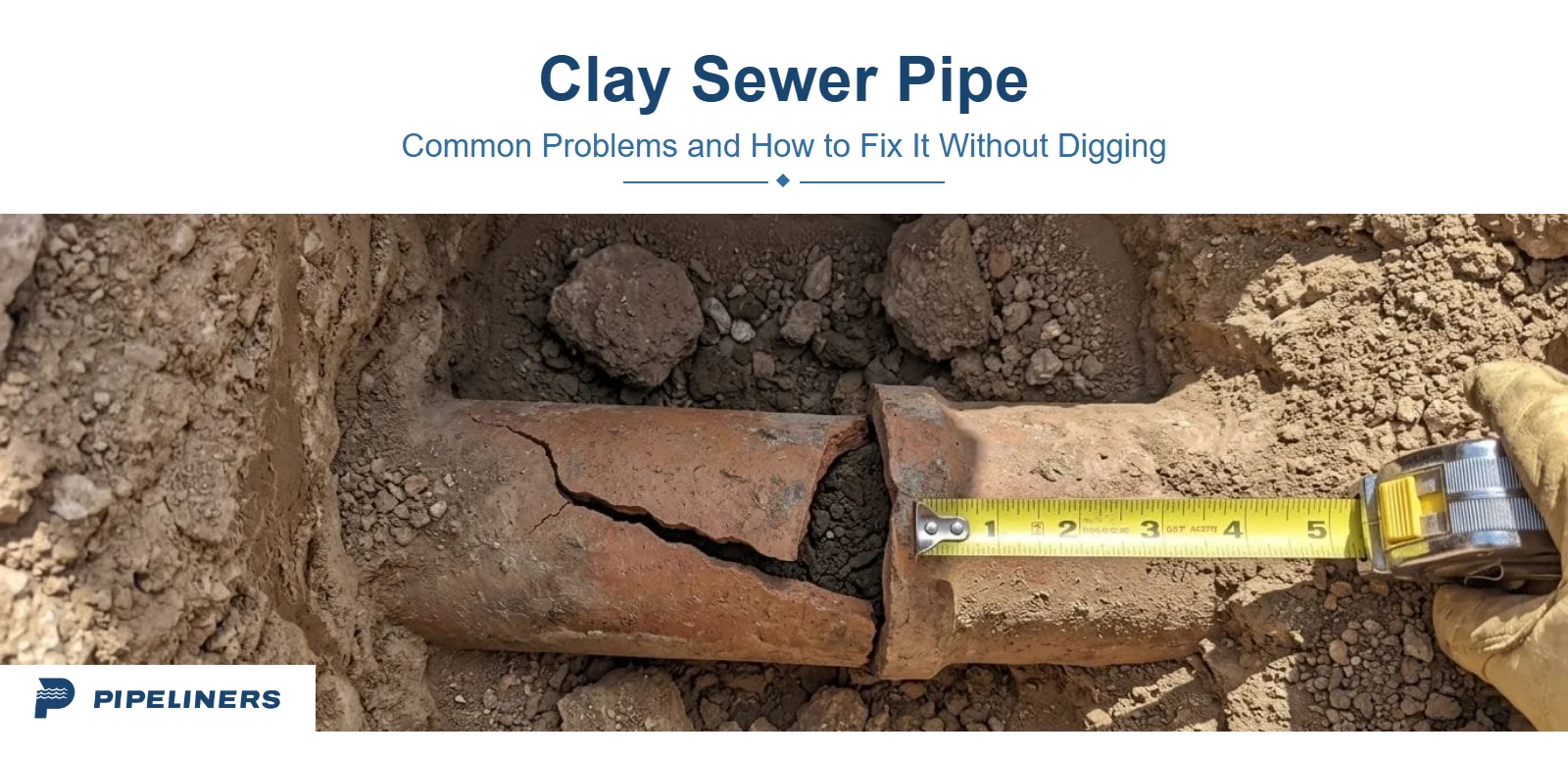
The most common causes are tree roots growing into joints, cracked or corroded clay and cast iron pipe, and joints that shift as the soil settles.
Is a leaking sewer line an emergency?
A slow leak is not usually an emergency, but it gets worse over time and can wash out the soil under slabs and walkways. Sewage backing up into the house needs attention right away.
Can a sewer line leak raise my water bill?
Not on its own. Water leaving through the sewer has already passed the meter, so a sewer leak does not add to the bill. A higher bill with no change in use usually means a leak on the water supply side, which a leak detection visit can find.