Quick answer: Pipe descaling is necessary when mineral scale or rust buildup narrows a pipe enough to cause slow drains, repeat clogs, low water pressure or discolored water. It is also the first step before a pipe is lined, because a liner or coating needs a clean pipe wall to bond to.
Key takeaways
- Pipe descaling removes hard buildup (rust scale, mineral scale and grease stuck to it) from inside a pipe so it flows at full size again.
- Cast iron drain lines are the most common candidate, because the iron rusts from the inside and forms rough, crusty scale.
- Clogs that come back soon after snaking, slow drains at several fixtures and gurgling are the usual warning signs.
- Descaling restores flow but does not rebuild a thin or cracked pipe wall. When the camera shows damage, lining the pipe comes next.
- Every pipe that will be lined is descaled first, because a liner needs a clean wall to bond to.
What is pipe descaling?
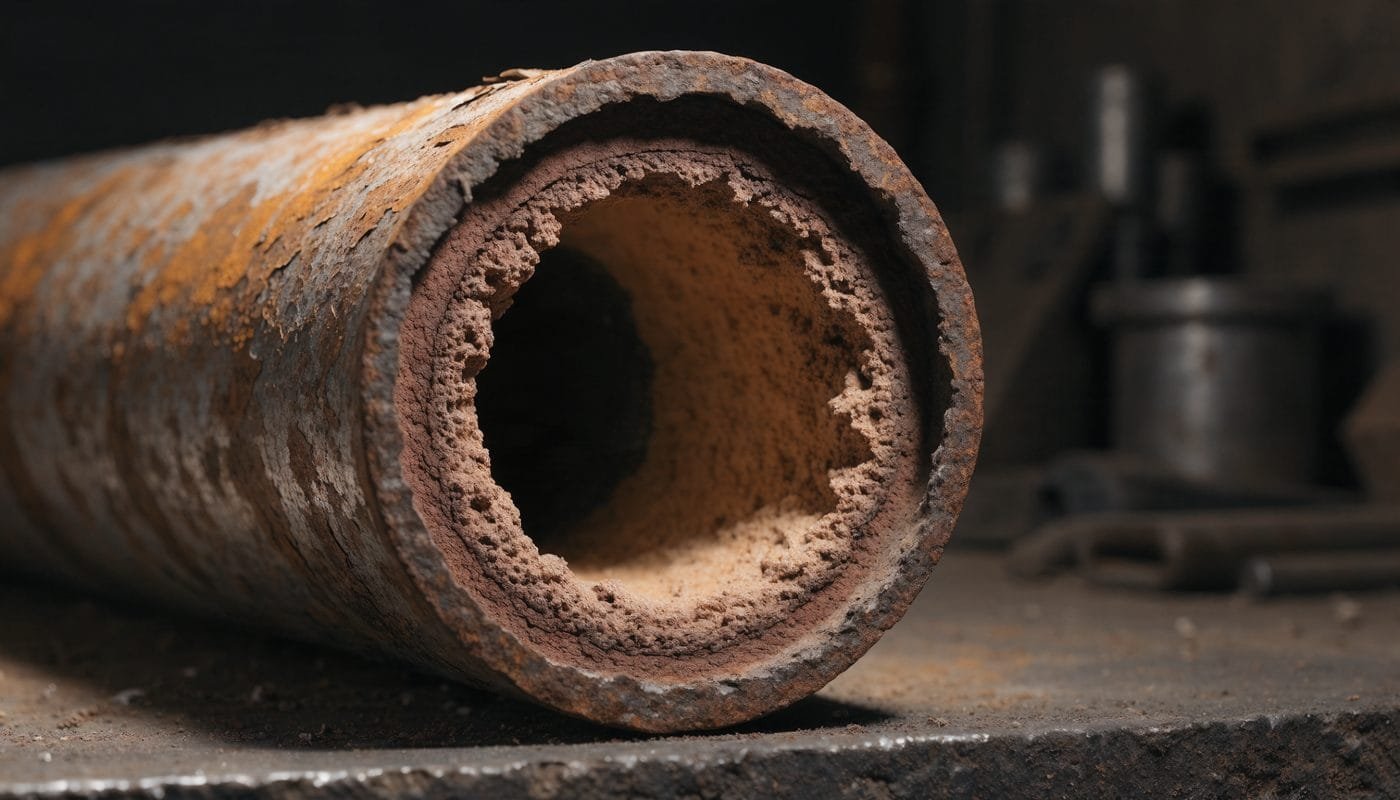
Pipe descaling is the process of cutting or scouring hardened buildup off the inside wall of a pipe. The goal is to bring the pipe back to its full opening, so water and waste move through without catching. It is different from clearing a clog. A snake punches a hole through a blockage, while descaling removes the layer that made the blockage form in the first place.
Two kinds of buildup show up most often in Valley homes. In cast iron drain and sewer lines, the iron slowly rusts and forms rough scale that narrows the pipe and snags paper and grease. In water supply lines, minerals in the water leave a hard deposit over time. The City of Phoenix water FAQ explains that Phoenix tap water is hard because of calcium and magnesium picked up from the soils the source water travels through. The city treats hardness as an appearance issue, not a safety one, but that same mineral content is what collects inside pipes and fixtures.
What causes scale to build up inside pipes?
- Rust in cast iron. Cast iron corrodes from the inside. The rust forms bumps and ridges on the pipe wall, and those ridges catch waste as it passes.
- Hard water minerals. Calcium and magnesium settle out of the water and harden on pipe walls, especially where water is heated.
- Grease and soap. Kitchen grease and soap scum stick to rough scale and harden, so a scaled drain narrows faster than a smooth one.
- Age. The longer a metal pipe has been in service, the more buildup it tends to carry. See how long cast iron pipes last for what to expect from an older line.
What are the signs a pipe needs descaling?
The signs usually look like a clog that will not stay fixed:
- Slow drains at more than one fixture, not just one sink.
- Clogs that come back within weeks of snaking the line.
- Gurgling from drains or toilets as water pushes past a narrowed section. Here is what gurgling drains can mean.
- Sewer odors, because waste caught on scale sits in the line. Our guide to sewer smell in the house covers the other causes.
- Low water pressure or grit at faucets, on the water supply side.
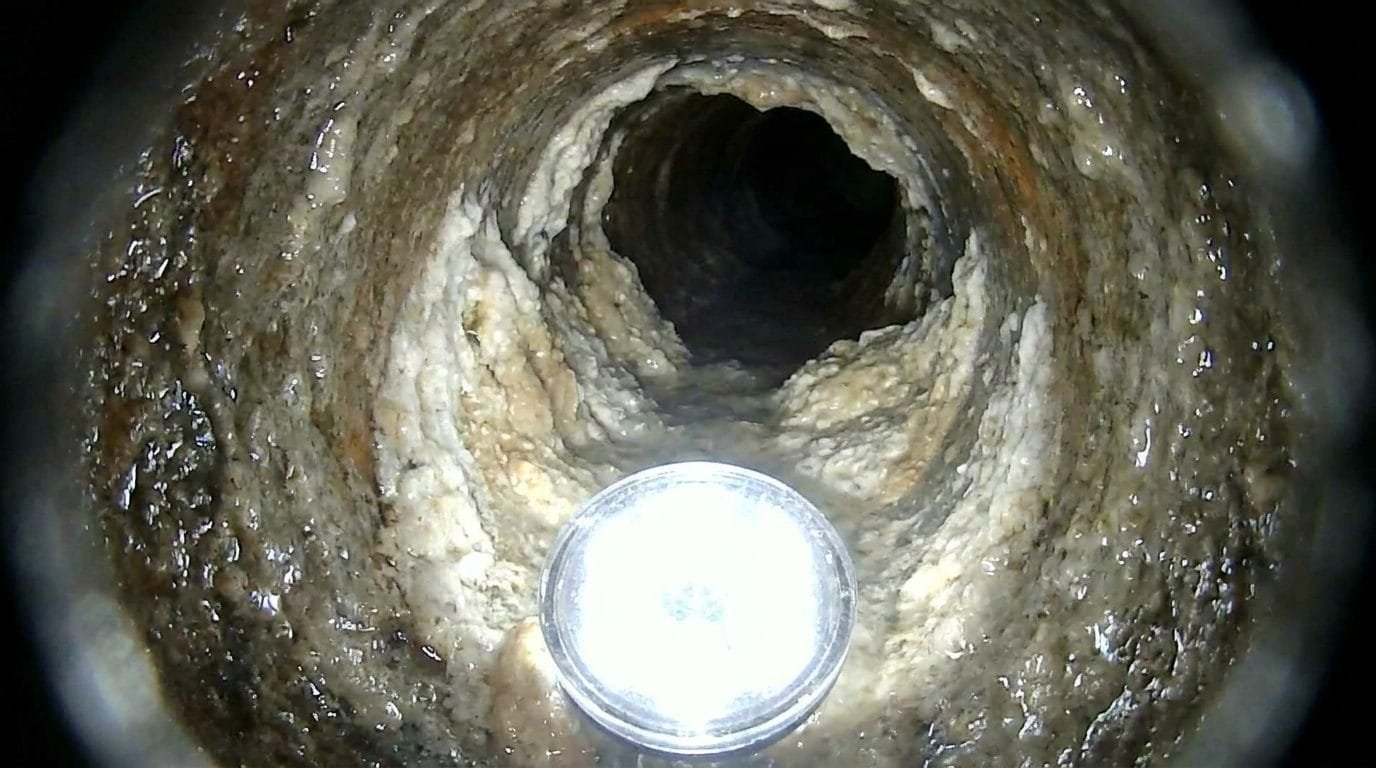
The only way to confirm scale is a camera inspection. On video, a scaled cast iron pipe looks rough and lumpy instead of smooth, and the open space in the middle is visibly smaller than the pipe itself.
| Symptom | What it usually means | Next step |
|---|---|---|
| Clog returns weeks after snaking | Scale or roots catching waste | Camera inspection, then descaling |
| Slow drains at several fixtures | Main line narrowed by scale | Camera inspection of the main line |
| Rough, lumpy pipe wall on camera | Rust scale in cast iron | Descale, then inspect the clean wall |
| Holes or cracks after descaling | Pipe wall worn thin | Line the pipe |
| Low pressure at every faucet | Buildup or corrosion in supply lines | Inspect the supply lines; ask about epoxy restoration |
How is pipe descaling done?
- Camera inspection. A camera goes into the line through a cleanout to show how much scale there is and where it sits.
- Descaling. Scale is removed with a rotating mechanical cutting head or with high-pressure water. Hydro jetting scours grease and softer deposits, while hard rust scale on cast iron usually needs a cutting head.
- Flushing. Loosened scale and debris are flushed out of the line.
- Second camera pass. The pipe is inspected again, now that the true wall is visible.
That second look matters. Scale can hide holes, cracks and thin spots, so a pipe that looked merely dirty before descaling can turn out to need repair. Finding that out before any liner goes in is the whole point of the second inspection.
Is descaling enough, or does the pipe need lining?
Descaling is enough when the camera shows a sound pipe wall once the scale is gone. The drain flows at full size again, and the buildup has to start over from a clean surface.
When the clean wall shows holes, cracks, missing pieces or heavy pitting, descaling alone will not hold, and lining comes next. For drain and sewer lines, Pipeliners installs an epoxy-saturated liner that is pressed against the old pipe and cured with UV LED light, forming a new pipe inside the old one with a 50-year life expectancy. Learn more about trenchless drain pipe repair. For corroded water supply lines, the ePIPE restoration process dries the pipes with heated air, cleans them with an air and sand mixture, and coats them with epoxy.
Either way, descaling comes first, because a liner or coating needs a clean wall to bond to. If you are weighing restoration against new pipe, our guide to repiping vs relining compares the two.
Can you descale pipes yourself?
Not really. Chemical drain openers can loosen a soft clog, but they do not remove hard rust scale, and harsh chemicals are hard on old metal pipe. A rental snake punches a hole through the clog and leaves the scale in place, which is why the clog comes back. Descaling cast iron takes cutting equipment and a camera to see what the tool is doing.
What you can do is slow the buildup. Keep grease out of kitchen drains, and on the water supply side, a softener reduces mineral deposits. The City of Phoenix says softeners are a personal choice rather than a safety need, and that they should be maintained to the manufacturer’s instructions.
Frequently asked questions about pipe descaling
How often should cast iron pipes be descaled?
There is no fixed schedule. It depends on how fast scale builds up in your line, which a camera inspection shows. A drain that clogs again within weeks of being snaked is usually due. Lining the pipe after descaling covers the rough cast iron with a smooth new wall.
Does pipe descaling damage the pipe?
Descaling guided by a camera removes buildup, not sound pipe. It can expose weak spots the scale was covering, which is why the line is inspected again afterward. Those spots were already there; descaling makes them visible so they can be repaired.
Is pipe descaling the same as hydro jetting?
Not exactly. Hydro jetting uses high-pressure water and works well on grease, sludge and softer buildup. Hard rust scale on cast iron often needs a mechanical cutting head. Many jobs use both.
Do pipes need to be descaled before they are lined?
Yes. A liner or epoxy coating needs a clean wall to bond to. Scale left in the pipe can stop the liner from seating properly, so descaling and a camera check always come first.
Not sure if your pipes need descaling?
If your drains keep clogging no matter how often they are snaked, the next step is seeing inside the line. Schedule a sewer camera inspection with Pipeliners, and we will show you the footage and explain whether descaling, lining or both make sense. Crews are available 24/7 for backups that cannot wait. Call 480-535-6503.
Last updated: September 2026. Written by Scott Vincent, Pipeliners.