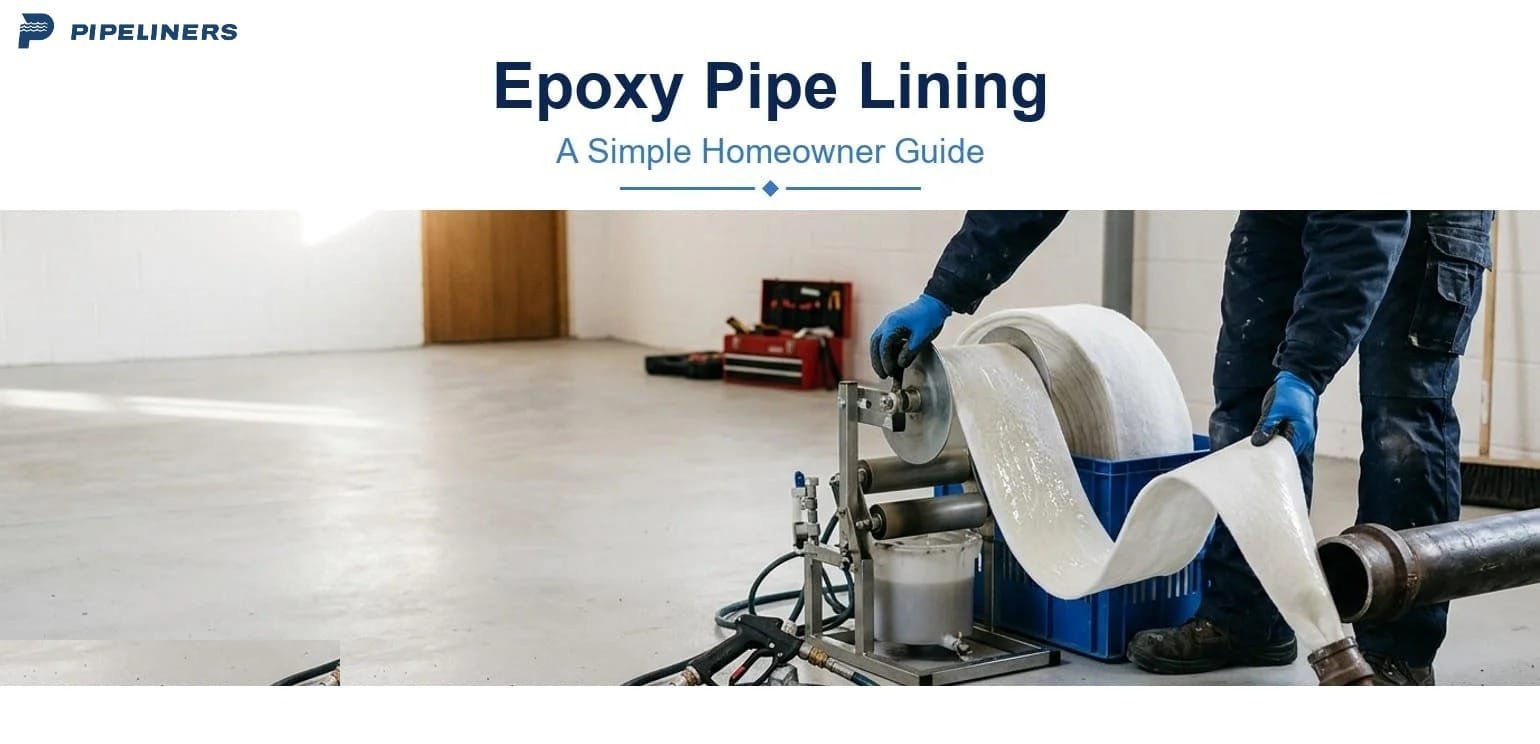

Quick answer: Epoxy pipe lining is a no-dig repair that coats the inside of a damaged pipe with a strong epoxy resin, forming a smooth new pipe inside the old one. It seals cracks, leaks, and corrosion without tearing up your yard, walls, or floors. The hardened lining can last 50 or more years when it is installed correctly.
If you have an aging or leaky pipe, you may worry about jackhammers, torn-up landscaping, and a huge bill. Epoxy pipe lining offers a calmer path. This guide explains what it is, how it works, where it fits, how long it lasts, and whether it really holds up against full pipe replacement.
Key Takeaways
- Epoxy pipe lining rebuilds a pipe from the inside, so little or no digging is needed.
- It works on water lines, drain lines, and sewer lines.
- A properly installed lining can last 50 or more years.
- Cost depends on pipe length, diameter, condition, and how easy the pipe is to reach.
- For many pipes, lining is just as durable as replacement and far less disruptive.
What is epoxy pipe lining?
Epoxy pipe lining is a trenchless repair method that restores a pipe by coating or lining its inside with epoxy resin instead of digging the old pipe out. Epoxy is a tough, glue-like material that hardens into a solid, waterproof surface.
The result is often called a “pipe within a pipe.” The new lining seals over cracks, gaps at joints, pinholes, and rough corroded spots. Once it cures (hardens), water flows through fresh epoxy, not the damaged metal or clay underneath.
There are two common forms of this repair:
- Epoxy coating: A thin layer of epoxy is applied to the inside walls of the pipe. This is common for smaller water supply lines.
- Cured-in-place pipe (CIPP): A soft liner soaked in resin is placed inside the pipe and hardened into a strong new wall. To see this method step by step, read our guide on what CIPP lining is.
How does the epoxy pipe lining process work?
The epoxy pipe lining process works in a few clear steps, and most jobs are finished in a day. Here is the simple version:
- Inspection. A small camera is sent through the pipe to find cracks, leaks, and buildup.
- Cleaning. The pipe is cleaned to remove rust, roots, scale, and grime so the epoxy can stick well.
- Drying or prep. The pipe is dried or prepared so the resin bonds to a clean surface.
- Applying the epoxy. Epoxy is coated onto the walls, or a resin-soaked liner is placed inside the pipe.
- Curing. The epoxy hardens into a smooth, seamless new surface.
- Final check. A second camera pass confirms the lining is solid and the pipe is sealed.
Because the work happens inside the existing pipe, crews usually need only a small access point rather than a long trench.
Where is epoxy pipe lining used?
Epoxy pipe lining is used in three main places around a home: water lines, drain lines, and sewer lines. The best method depends on the pipe’s size and job.
- Water supply lines: Epoxy coating can seal pinhole leaks and stop corrosion in copper or galvanized pipes. For drinking-water pipes specifically, see our ePIPE potable water restoration page.
- Drain lines: Lining seals cracks and leaks in kitchen and bathroom drains.
- Sewer lines: CIPP lining is a strong fit for sewer pipes damaged by age, shifting soil, or tree roots.
In Phoenix, hard water and decades-old pipes are common, and monsoon-season ground movement can stress buried lines. Lining repairs those problems without trenching across mature desert landscaping. To compare all the no-dig options, see our overview of pipelining methods in Phoenix.
What are the benefits of epoxy pipe lining?
The main benefit of epoxy pipe lining is that it fixes pipes with little or no digging, which saves your property and your time. Key advantages include:
- No major digging. Your yard, driveway, and floors usually stay intact.
- Fast. Many repairs are completed in a single day.
- Durable. The cured lining resists corrosion, leaks, and root intrusion.
- Smoother flow. The seamless surface can improve flow and reduce future clogs.
- Less mess and cost. Skipping a large excavation often lowers cleanup and restoration expenses.
How long does epoxy pipe lining last?
A properly installed epoxy pipe lining can last 50 or more years. Industry standards from groups such as NASSCO support a 50-year service life for cured-in-place pipe when it is installed and cured correctly (NASSCO).
Several things affect how long a lining lasts:
- Pipe prep. Skipping root removal or cleaning before lining can shorten its life.
- Pipe condition. A pipe that is collapsed or badly out of shape may need replacement instead.
- Installer skill. Correct mixing, application, and curing matter a great deal.
- Maintenance. Avoiding harsh clogs and grease buildup helps any pipe last longer.
What affects the cost of epoxy pipe lining?
The cost of epoxy pipe lining depends mostly on the pipe itself and how hard it is to reach. The biggest factors are:
- Length of the pipe being lined.
- Diameter (wider pipes need more material).
- Condition of the existing pipe and how much cleaning it needs.
- Access to the pipe, since hidden or deep pipes take more work.
- Method, such as a thin epoxy coating versus a full CIPP liner.
Every home is different, so the most accurate way to know your price is an inspection. You can start with a free sewer inspection to see the actual condition of your pipe before deciding anything.
Is epoxy pipe lining as good as replacing the pipe?
For most pipes that are still structurally sound, epoxy pipe lining is just as durable as replacement and far less disruptive. Replacement is sometimes the right call, such as when a pipe has fully collapsed. But for cracks, leaks, corrosion, and root damage, lining usually solves the problem without the demolition.
Here is a side-by-side look:
| Feature | Epoxy Pipe Lining | Traditional Pipe Replacement |
|---|---|---|
| Digging | Little or none | Trenches, often large |
| Time to finish | Often one day | Several days |
| Property damage | Minimal | Yard, floors, or walls disturbed |
| Lifespan | 50+ years | 50+ years |
| Cleanup and restoration | Usually lower | Usually higher |
| Best for | Cracks, leaks, corrosion, roots | Collapsed or badly broken pipes |
Common myths about epoxy pipe lining
Let us calmly clear up a few worries homeowners often have:
- “It is not durable.” A correctly cured lining is seamless and corrosion-resistant, with a 50+ year design life.
- “It is not safe for drinking water.” For potable water lines, epoxy systems can use resins certified to NSF/ANSI 61, the health-effects standard for materials that touch drinking water (NSF). Always confirm the product used is rated for potable water.
- “It does not really work.” Lining is a proven, widely used method backed by industry standards and decades of field use.
Frequently asked questions about epoxy pipe lining
Is epoxy pipe lining safe for drinking water pipes?
Yes, when the product is rated for potable water. Epoxy systems for drinking-water lines can use resins certified to NSF/ANSI 61, the standard for materials that contact drinking water. Ask your installer to confirm the product is potable-rated.
How long does epoxy pipe lining take to install?
Many epoxy pipe lining jobs are completed in a single day. Larger or harder-to-reach pipes can take longer, but the work is usually much faster than digging out and replacing a pipe.
Does epoxy pipe lining reduce water flow?
No, in most cases it improves flow. The new lining is smooth and seamless, which can reduce snags and buildup compared with a rough, corroded old pipe.
Can any pipe be lined with epoxy?
Most pipes that are still structurally sound can be lined, including water, drain, and sewer lines. A pipe that has fully collapsed or lost its shape may need replacement instead, which a camera inspection can determine.
How much does epoxy pipe lining cost?
Cost depends on the pipe’s length, diameter, condition, and how easy it is to reach. Because every home is different, an inspection is the only accurate way to get a price for your specific pipe.
Is epoxy pipe lining better than replacing the pipe?
For most pipes that are still sound, lining is just as durable as replacement and far less disruptive. Full replacement is mainly needed when a pipe is collapsed or beyond repair.
Ready to find out if epoxy pipe lining is right for your pipes?
The best next step is to see what is actually happening inside your pipe. A quick camera inspection shows the real condition and the right fix, with no guessing. Schedule your free sewer inspection and get clear answers before any work begins. Pipeliners coats water lines with ePIPE, an epoxy system certified to NSF/ANSI 61 for drinking water, and restores drain and sewer lines with UV-cured liners across the Phoenix Valley. Call 480-535-6503.
Last updated: September 2026.