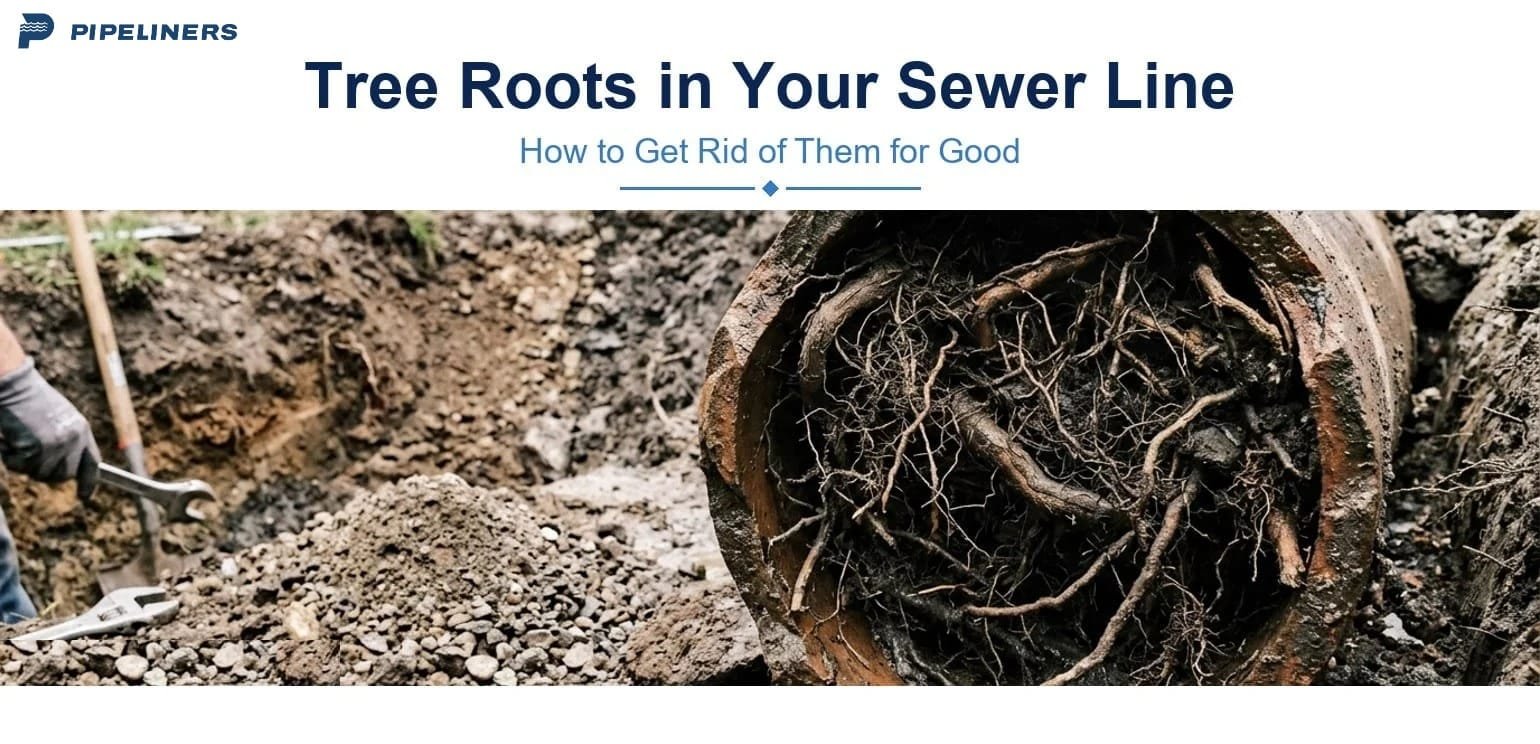

Quick answer: To get rid of tree roots in a sewer line, a pro cuts the roots out first with a mechanical cutter (augering) or high-pressure water (hydro jetting), then clears the debris. Store-bought foaming root killers only buy a little time. The permanent fix is to seal the cracks and joints the roots came through, usually with trenchless pipe lining, so roots cannot grow back inside.
In short: cut the roots out, then close the door they used to get in. Cutting alone is a repeat problem. Sealing the pipe is what actually ends it.
Key Takeaways
- Cut first, then seal. Removing roots clears the clog today. Sealing the pipe stops them from returning.
- Hydro jetting and mechanical augering are the two main removal methods. A pro picks based on how bad the blockage is.
- DIY foaming root killers are short-term only. They slow regrowth but never repair the crack or joint letting roots in.
- Trenchless pipe lining is the permanent fix. It creates a smooth, sealed pipe inside your old one with no full yard dig.
- In Phoenix, roots chase water. Desert tree roots find the moisture inside your sewer line, so prevention matters here.
What Are the Signs of Tree Roots in a Sewer Line?
Roots rarely announce themselves until the line is partly blocked. Watch for:
- Slow drains or gurgling toilets across more than one fixture. See what gurgling drains can mean.
- Clogs that come back in the same spot a few weeks after clearing.
- A sewer smell inside or near the cleanout. See sewer smell in house.
- Soggy, sunken or unusually green patches of yard over the sewer line. A sinkhole means the pipe may already be broken, so keep people off that area.
- An older home with mature trees near the line. Roots find the joints in clay and cast iron pipe first.
A camera inspection is the only way to confirm roots and see how far they have gone.
What Is the Best Way to Get Rid of Tree Roots in a Sewer Line?
The best way to get rid of tree roots in a sewer line is a two-step approach: professionally remove the roots, then repair the pipe so they cannot return. Removal handles the clog you have right now. The repair is what keeps it from happening again next year.
Here is why both steps matter. Roots enter through tiny cracks or loose joints in your pipe, chasing the water and nutrients inside. If you only cut the roots, the opening is still there, and the roots grow right back through it, often within a year or two. Sealing that opening is the real solution.
How Do You Remove Tree Roots From a Sewer Line? (Step by Step)
Removing tree roots from a sewer line follows a clear order. A professional usually works through these steps:
- Inspect with a camera. A small waterproof camera is sent down the line to find the roots, locate the cracks or joints, and check how bad the damage is.
- Cut the roots out. Using a mechanical cutter (augering) or hydro jetting, the roots are sheared off and pulled away from the pipe walls.
- Flush the debris. Loose roots and gunk are washed out so the pipe drains freely again.
- Re-inspect. The camera goes back in to confirm the line is clear and to see the openings the roots used.
- Seal the pipe. To prevent regrowth, the cracks and joints are sealed, most often with trenchless pipe lining.
If you only want to know whether roots are your problem in the first place, our guide on how to identify tree roots in your sewer line walks through the warning signs.
What Are the Methods to Remove Tree Roots From a Sewer Line?
There are three common methods, and they are not equal. Two are professional removal methods that work, and one is a DIY stopgap.
Mechanical Augering (Root Cutting)
A motorized cable with a spinning blade is fed into the pipe. The blade chews through the roots and clears the clog. It works well for a fast fix, but it can leave behind root tips that regrow, and it does not repair the pipe.
Hydro Jetting
A specialized nozzle blasts water through the line at high pressure, slicing roots and scrubbing the pipe walls clean. It removes more than a cable can and leaves the pipe cleaner, which is why many pros prefer it for heavy root growth. You can read more on our hydro jetting page.
Foaming and Chemical Root Killers (DIY)
These are the products you find at the hardware store. You flush a foam or chemical down the toilet, and it kills roots on contact. They can slow regrowth for a while, but they do not clear a serious clog and they never fix the crack. Use them as a short-term helper, not a cure.
Removal Methods Compared
| Method | How it works | How long it lasts | DIY or pro |
|---|---|---|---|
| Mechanical augering | Spinning blade on a cable cuts roots | Months to a couple of years | Pro (some DIY snakes) |
| Hydro jetting | High-pressure water slices and flushes | Longer than augering, but roots still return through cracks | Pro |
| Foaming root killer | Chemical foam kills roots on contact | Weeks to months | DIY |
| Trenchless pipe lining | Seals cracks and joints permanently | The permanent fix | Pro |
Why Are DIY Tree Root Products Only a Short-Term Fix?
DIY root products are short-term because they treat the symptom, not the cause. A foaming root killer might burn back the roots inside your pipe, but the crack or open joint that let them in is still wide open. New roots simply grow back through the same gap.
Think of it like pulling a weed and leaving the root in the ground. It looks gone, then it returns. For a real, lasting result, the pipe itself has to be repaired.
What Is the Permanent Fix for Tree Roots in a Sewer Line?
The permanent fix is to seal the pipe so roots have no way in, and the most common method is trenchless pipe lining. A resin liner is inserted into your old pipe and hardened in place, creating a smooth, jointless pipe inside the old one. With no cracks and no open joints, roots have nothing to grow through.
The big advantage is that it is trenchless, meaning no digging up your whole yard. That matters in Phoenix, where tearing out mature landscaping and hardscape gets expensive fast. See your options on our pipelining methods for Phoenix homes page, or learn the details on the what is CIPP lining page.
How Do You Prevent Tree Roots From Coming Back?
You prevent root regrowth by removing the way in and being smart about what you plant. A few steps go a long way:
- Seal the pipe. This is the single most effective step. No openings, no regrowth.
- Plant trees away from your sewer line. The EPA advises keeping trees a safe distance from your system so roots do not grow into the pipes. (EPA)
- Schedule routine camera inspections. Catching a small root before it becomes a clog saves money.
- Know your desert plants. In Arizona, drought-tolerant trees still send roots searching for water, and a leaking sewer line is a magnet.
Why Are Tree Roots Such a Problem in Phoenix?
Tree roots are a big problem in Phoenix because the desert is dry, and roots go wherever the water is. Your sewer line carries a steady supply of moisture and nutrients, so even hardy desert trees will push roots toward tiny leaks. That makes sealing your pipe especially important in Arizona.
Frequently Asked Questions
How do I get rid of tree roots in my sewer line myself?
You can try a foaming root killer from the store, which kills roots on contact and slows regrowth for a short time. It will not clear a serious clog or repair the pipe, so it is a temporary helper at best. For a real fix, a professional needs to cut the roots out and seal the line.
Does hydro jetting remove tree roots?
Yes. Hydro jetting uses high-pressure water to slice through roots and flush them out, and it scrubs the pipe walls cleaner than a cable can. It is a strong removal method, but roots can still return through cracks unless the pipe is sealed afterward.
How long until tree roots grow back in a sewer line?
If you only cut the roots and leave the crack or joint open, roots often return within a year or two. The exact timing depends on the tree and the season. Sealing the pipe with trenchless lining is what stops the cycle for good.
What kills tree roots in a sewer line permanently?
No chemical kills roots in a sewer line permanently, because the opening they grow through stays there. The permanent solution is to seal that opening, usually with trenchless pipe lining that creates a smooth, jointless pipe inside your old one.
Can roots damage a sewer line beyond repair?
Sometimes. Heavy root growth can crack or collapse a pipe over time. Even badly damaged lines can often be repaired trenchless without a full dig, but the longer you wait, the more likely a bigger fix becomes. A camera inspection tells you where things stand.
Should I call a professional for tree roots in my sewer line?
Yes, for anything beyond a minor slow drain. A pro can find the roots with a camera, remove them properly, and seal the pipe so they do not come back. DIY products only buy a little time and can hide a growing problem.
Ready to Stop Tree Roots for Good?
Cutting roots clears today’s clog. Sealing your pipe is what ends the problem. If you are dealing with slow drains, gurgles, or backups in the Phoenix area, the first step is simply finding out what is going on inside your line.
Schedule a free sewer inspection and we will send a camera down your line, show you exactly what we find, and walk you through your options. No obligation.