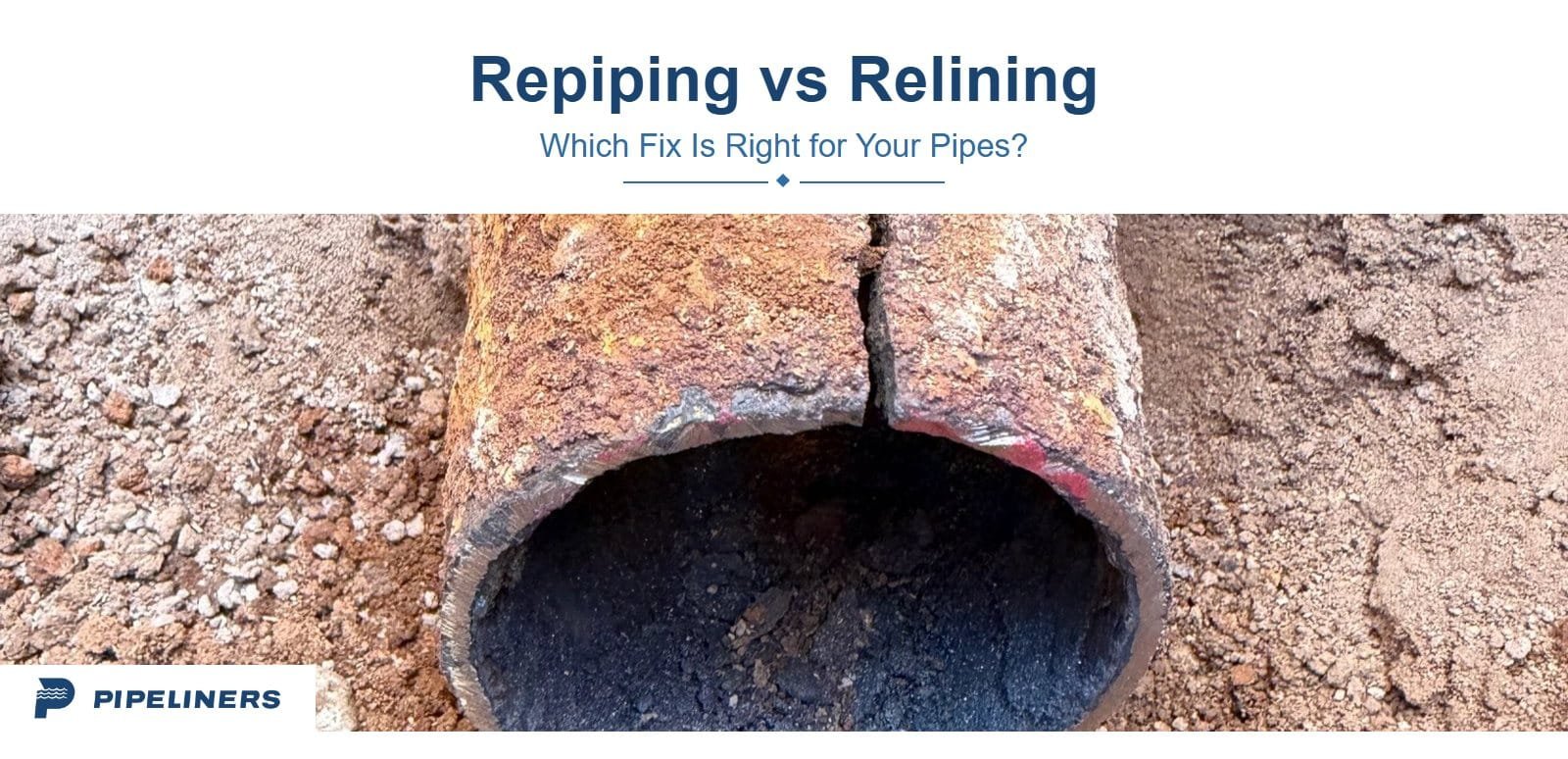

Repiping vs Relining: What Is the Difference?
Quick answer: In repiping vs relining, repiping replaces the plumbing in your home with new pipe, which means opening walls, floors or ground to reach it. Relining restores the pipes you already have from the inside, with little demolition. Relining is often faster and less disruptive; repiping is still the answer when a pipe is too far gone to restore.
“Relining” covers two different jobs. On water supply lines, the pipes that bring pressurized water to your faucets, it means coating the inside of the pipe with epoxy. On drain and sewer lines, it means installing a cured-in-place liner. This guide compares both with replacement so you can see which fits your pipes.
Key takeaways
- Repiping removes or bypasses old pipe and runs new pipe, usually PEX or copper for water lines. Walls and floors are opened and patched afterward.
- Relining keeps the old pipe in place and restores it from the inside: an epoxy coating for water lines, a cured-in-place liner for drains.
- Relining suits pipes that are corroded, leaking or cracked but still hold their shape. Repiping suits pipes that are collapsed, missing sections or made of polybutylene.
- The biggest savings from relining usually come from the repairs you avoid: drywall, flooring, concrete and landscaping.
| Repiping | Relining | |
|---|---|---|
| What happens to the old pipe | Replaced with new pipe | Stays in place and is restored from inside |
| Walls, floors and yard | Opened to reach the pipe, then patched | Small access points in most cases |
| Water supply lines | New PEX or copper | ePIPE epoxy coating |
| Drain and sewer lines | Dig up and replace the line | Cured-in-place liner cured with UV LED light |
| Typical time | A few days for an average home | Often a day or two for a drain line |
| Best for | Collapsed or missing pipe, polybutylene, remodels | Corrosion, pinhole leaks, cracks and root entry |
How does repiping work?
Repiping replaces the pipe itself. For water supply lines, a whole house repipe usually takes a few days for an average home and follows the same basic steps:
- Inspection. The existing system is checked to map the pipe runs and confirm the pipe cannot be saved.
- Access. Openings are cut in walls, ceilings or floors wherever the new pipe has to run.
- New pipe. New PEX or copper lines are run to every fixture and connected.
- Testing and patching. The new system is pressure tested, then the openings are closed and patched.
For drain and sewer lines, replacement usually means digging a trench, or cutting through a slab, to take out the damaged pipe and lay new pipe in its place.
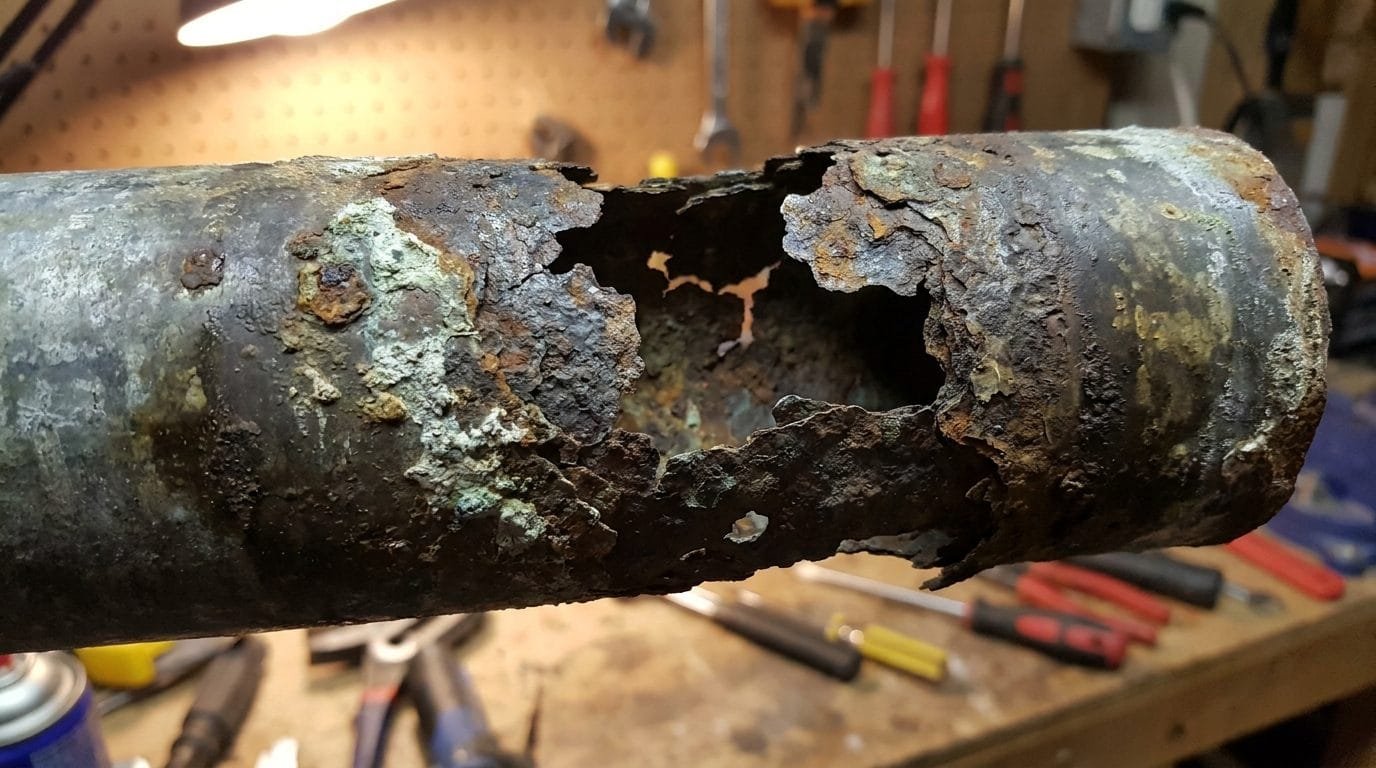
How does relining work?
Relining water supply lines with epoxy
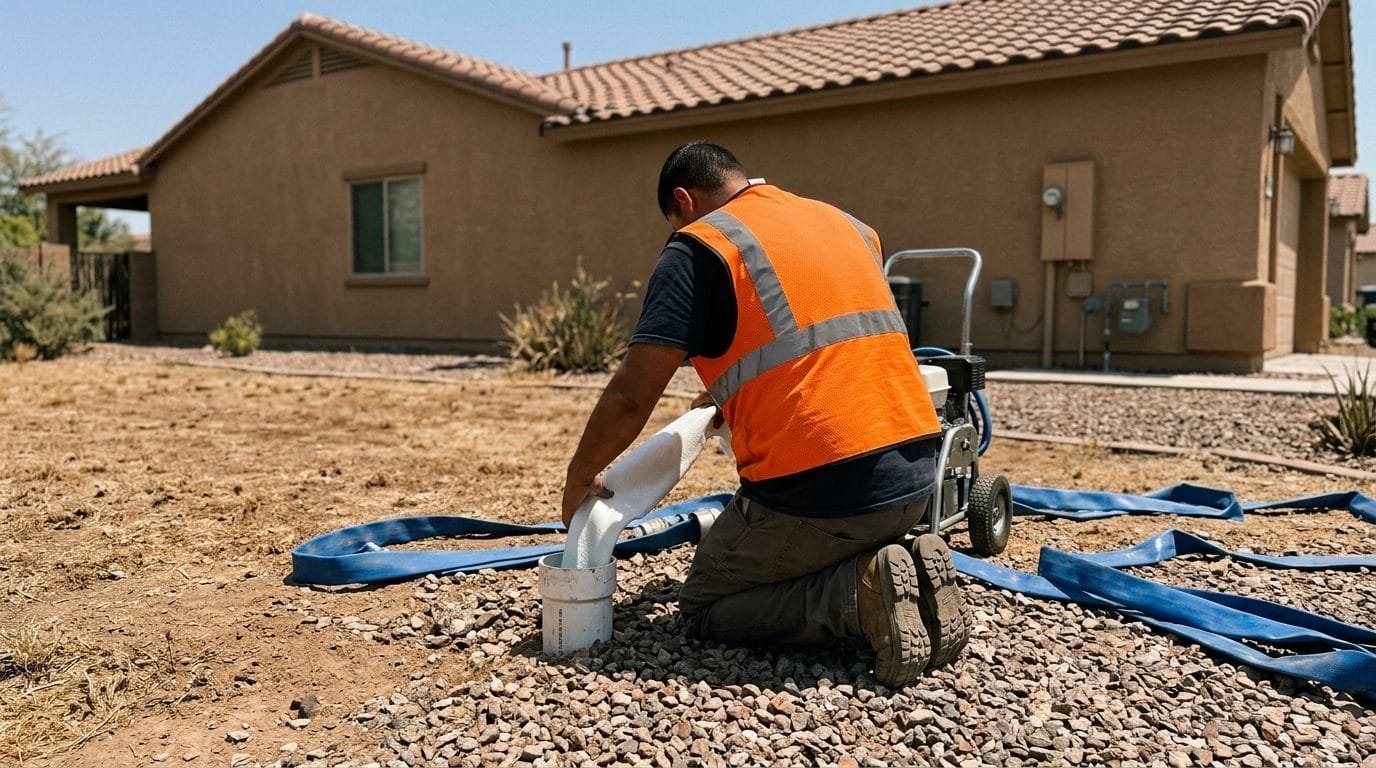
The ePIPE restoration process restores the pipes already inside your walls. Air hoses are connected to the isolated plumbing system, and the pipes are dried with preheated, filtered air. They are then cleaned with an air and sand mixture that scours rust and scale off the inside surface, so the epoxy can bond. Finally, epoxy is applied to coat the inside of the pipes. Once it cures, the pipes are reassembled, flushed and pressure tested. The coating is NSF/ANSI 61 certified for drinking water.
Relining drain and sewer lines with a cured-in-place liner
For drains, the line is inspected with a camera and cleaned first, including pipe descaling where rust scale has built up. A flexible tube saturated with epoxy is then pulled into the old pipe, inflated against its walls and cured with UV LED light. A robotic cutter reopens the branch connections from inside the new liner, and a final camera pass confirms the result. The finished liner has a 50-year life expectancy. Read more about UV-cured liners and trenchless drain pipe repair.
When is repiping the better choice?
- The pipe has collapsed or is missing pieces. A liner or coating needs a continuous pipe to form against.
- A drain line has a deep sag. A liner follows the shape of the old pipe, so it will not lift a low section back to grade.
- You have polybutylene supply pipe. It is one of the signs you need to repipe.
- The walls are already open. During a major remodel, the main cost of repiping (opening and patching walls) is already being paid.
When is relining the better choice?
- The pipes run under a concrete slab. Relining avoids breaking up floors to reach them. Our guide to slab leaks in Phoenix explains why this matters in Valley homes.
- You have repeat pinhole leaks. They mean the pipe is corroding from the inside. See what causes pinhole leaks in copper pipes.
- Your water is discolored or your pressure has dropped. Rust and scale inside the pipe are common causes, and both are cleaned out before the pipe is coated.
- A drain line is cracked or letting roots in but still holds its shape. A liner seals the cracks and joints from the inside.
Not sure which symptoms point where? Our list of signs your home needs pipe restoration walks through each one.
Does relining cost less than repiping?
Often, yes. On drain lines, Pipeliners’ lining work typically costs 20 to 30 percent less than digging, demolishing and replacing the pipe. On water lines, the savings come mostly from what relining leaves alone: no long runs of opened drywall, no torn-up flooring and no broken slab to repair afterward. The exact comparison depends on your pipes, which is why it starts with an inspection. For typical price ranges on drain work, see our breakdown of what drives the cost of lining a drain.
Frequently asked questions about repiping vs relining
Can every pipe be relined?
No. Relining needs a pipe that still holds its shape. A collapsed drain, a section with pieces missing or a deep sag has to be repaired or replaced first. Polybutylene supply pipe is usually replaced rather than restored. A camera inspection or pressure test shows which pipes qualify.
How long does relining last?
Pipeliners drain liners are cured with UV LED light and carry a 50-year life expectancy. The ePIPE epoxy coating for water supply lines forms a new pipe within a pipe that protects against further corrosion.
Is water safe to drink from relined pipes?
Yes. The ePIPE coating used on water supply lines is NSF/ANSI 61 certified for drinking water. After it cures, the pipes are reassembled, flushed and pressure tested before water service is restored.
Can I reline some pipes and replace others?
Yes, and it is common. A single failed section can be dug up and replaced while the rest of the line is relined from the inside. The camera footage shows where each approach makes sense.
Find out which option fits your pipes
The right answer depends on what is happening inside your pipes. Schedule an inspection with Pipeliners, and we will show you what we find and explain whether relining, repiping or a mix of both makes sense. Crews are available 24/7 for backups that cannot wait. Call 480-535-6503.
Last updated: September 2026.