

Looking for a Pipe Repair Company Serving Phoenix Arizona?
We are the Phoenix Valley's Pipelining Experts, Call Us Today!
Phoenix covers more ground than any city we work in, and the pipe under it spans a century. The bungalows of Willo, Encanto-Palmcroft, Coronado, F.Q. Story and Garfield went up between the 1900s and the 1940s on clay and cast iron laterals that have been cracking and drawing roots ever since. Arcadia’s 1950s ranch houses sit in the middle of that range, and newer ground like Ahwatukee and Desert Ridge is only now old enough for joints to start moving. Pipeliners rebuilds all of it from the inside, without opening the yard or the drive.
No Demolition Solution
No trenching across your Phoenix yard, driveway, or slab. We restore pipes in place with minimal surface disruption.
Up To 30% Cost Savings
Phoenix homeowners can save up to 30% versus dig-and-replace, with less concrete, sod, or hardscape restoration.
Eco-friendly Repairs
We rehabilitate your existing clay, cast iron, or Orangeburg lines from within instead of hauling century-old pipe to a landfill.
Minimal Interruption
Your Phoenix home or business stays open and livable while our crews work underground. No days lost to an open trench.
Serving Phoenix, AZ
Pipe Lining

Pipe lining gives Phoenix property owners a trenchless, no-dig way to rebuild cracked, leaking, or root-invaded sewer lines without tearing open a yard, driveway, or slab. It matters most in the historic districts — Willo, Encanto-Palmcroft, Coronado, F.Q. Story and Garfield — where bungalows built between the 1900s and the 1940s still run on original cast iron and clay laterals, with Orangeburg turning up where a mid-century replacement was made.
Relining rebuilds that pipe from within. A resin-saturated liner is drawn through the existing lateral and cured with UV LED light rather than ambient time or circulated hot water, so the cure happens in a controlled pass and can be checked on camera before the crew leaves. What you are left with is a jointless pipe inside the old one, and no trench cut through the caliche and expansive clay of the Salt River valley.
Pipe Lining Advantages

Built for Phoenix homes of every era
From a 1920s bungalow in Willo to a 1950s ranch in Arcadia or a newer house in Ahwatukee or Desert Ridge, an open trench costs the same thing every time: landscaping, driveway, irrigation. Lining works from inside the pipe instead, through one or two small access points, so the surface above it is never opened. Once the resin cures you have a jointless pipe with a 50-year design life, better flow, and a sealed barrier against the roots that mature Phoenix trees drive into old laterals.
ePipe Water Line Solutions
When a Phoenix water line breaks, and when it just keeps leaking.
A break announces itself: pressure drops, water shows up where it should not, and the job is an emergency. The slower failure is the one people live with — a pinhole leak patched, then another a few months later somewhere else entirely, because hard Valley water has been working on the copper along its whole length rather than at one spot.
For the slow version, ePIPE restores the system instead of chasing it leak by leak, without opening floors or walls. For the break, crews are available 24/7, and what the inspection finds is what decides whether the answer is a spot repair, a lining, or replacement.
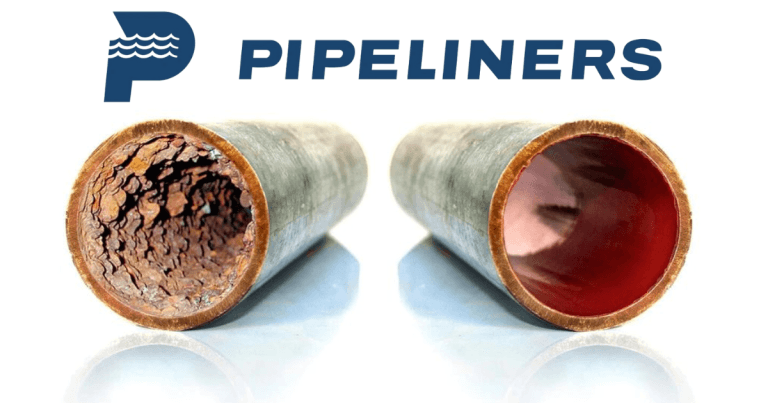
The process cleans the inside of the existing water piping, then applies a non-toxic epoxy barrier coating rated for potable water, sealing it against the corrosion and scale hard Phoenix water leaves behind. Because the work happens inside the pipe, nothing has to be opened: no demolition in a historic-district home where the plaster and trim are half the reason you bought it, and none in a downtown commercial space where the floor is the business.
Not every system is a candidate. The pipe material, its condition, the configuration, and where the leaks are actually coming from all get assessed before anything is recommended.
Frequently Asked Questions About Pipeliners' Plumbing Services in Phoenix, AZ
Why do tree roots keep coming back after my Phoenix sewer line has been cleaned?
Removing tree roots can restore flow, but cleaning does not necessarily repair the crack, loose joint, or other opening that allowed the roots into the sewer line.
The City of Phoenix identifies tree and shrub roots as a frequent cause of sewer backups. Roots seek water and can enter sewer lines through cracks or poorly sealed joints, eventually creating an obstruction inside the pipe.
If roots repeatedly return, the line should be inspected after cleaning. NASSCO states that properly installed CIPP lateral lining can provide a structural pipe within the existing line and protect against future root intrusion when the host pipe is suitable for rehabilitation.
How is a CIPP liner actually cured, and why does Pipeliners use UV light?
Pipeliners cures its liners with UV LED light. Once the resin-saturated liner is in position inside the host pipe, a light train is drawn through it, curing the resin in a controlled pass rather than waiting on ambient temperature or circulating hot water through the line.
The finished liner can then be checked with a camera before the crew leaves, which is the same post-installation inspection step described further down this page. How long the whole job takes still depends on the length of the run, the diameter, the number of bends, and what access is available.
Can CIPP pipe lining fix a sewer belly or sag?
Not necessarily.
CIPP can repair many structural defects, but the liner generally follows the existing route and profile of the host sewer pipe. A liner can rehabilitate cracks, leaks, corrosion, and other defects, but it does not automatically correct a section of pipe that has lost proper slope. Trenchless industry guidance distinguishes relining from replacement methods because a liner conforms to the existing pipe profile.
If standing water is caused by a significant sewer belly or poor grade, the affected section should be evaluated separately. Depending on the severity, correcting the slope may require a localized repair or another replacement method.
What is the difference between CIPP lining and pipe bursting for a damaged Phoenix sewer line?
CIPP lining rehabilitates the existing sewer by installing a resin-saturated liner inside it and curing the liner to form a new structural pipe.
Pipe bursting is different. It breaks or displaces the existing pipe while pulling a replacement pipe into its place. NASSCO describes pipe bursting as a method for replacing a lateral, and it can also be used when increasing the pipe size is necessary.
CIPP is often considered when the existing pipe still has a usable pathway and has generally maintained its shape. If the pipe is badly collapsed, severely deformed, or otherwise unsuitable for lining, pipe bursting, localized excavation, or traditional replacement may be more appropriate.
The correct method should be selected after inspecting the actual condition of the sewer line.
What happens if my damaged sewer line extends into a Phoenix street or alley?
The location of the damage matters.
The City of Phoenix states that property owners are generally responsible for cleaning and maintaining the sewer service line running from the building to its connection with the City’s sewer system. However, Phoenix also states that the City may repair a broken service-line section located within the public right-of-way under applicable City policy.
A sewer camera inspection can help document where the problem is located before major repair work begins.
If sewage appears to be overflowing from a City sewer manhole rather than from the property’s private plumbing, Phoenix Water Services should be contacted directly.
What access is needed to line a sewer running beneath a Phoenix driveway, patio, or landscaped area?
CIPP generally does not require excavating the entire length of the sewer line.
NASSCO explains that lateral CIPP can be installed from a house-side cleanout or from the sewer main, depending on the installation method. Some projects may require access through an existing cleanout, while others can require a small access pit.
This is why trenchless rehabilitation can be useful when a sewer runs beneath driveways, sidewalks, patios, landscaping, or other finished areas. It minimizes surface disruption compared with exposing the entire pipe through an open trench.
The exact access requirements depend on the pipe layout, length, bends, diameter, and available cleanouts.
Does installing a CIPP liner make the sewer pipe smaller and reduce its flow?
A CIPP liner does occupy some space inside the original pipe because the finished liner has a designed wall thickness.
However, hydraulic performance is considered as part of proper CIPP design. NASSCO’s CIPP specification guideline states that the installed liner should provide at least the full-flow capacity of the original pipe before rehabilitation. Engineers can account for both liner thickness and the hydraulic characteristics of the renewed interior surface when evaluating capacity.
For residential sewer laterals, the actual effect depends on the pipe diameter, liner design, existing buildup, and condition of the original pipe.
If my Phoenix home keeps developing pinhole leaks, can the water lines be restored instead of repeatedly spot-repaired?
Some water piping systems with recurring pinhole leaks or corrosion may be candidates for internal restoration instead of repeatedly opening walls or floors for individual repairs.
Pipeliners USA offers ePIPE water-line restoration for suitable systems affected by pinhole leaks, slab leaks, copper corrosion, low flow, and aging water lines. The process involves preparing the inside of the existing pipe and applying an internal epoxy barrier.
NSF’s official certification database lists ePIPE FRS as an NSF/ANSI/CAN 61-certified protective barrier material for drinking-water applications under its specified conditions of use.
Not every water system is a candidate, so the pipe material, condition, configuration, and source of the leaks should be evaluated first.
How should a CIPP sewer lining installation be checked after the work is finished?
A post-installation camera inspection is an important quality-control step.
NASSCO’s CIPP specification guideline calls for CCTV inspection after installation to document the finished liner and identify visible conditions such as cracks, bumps, bulges, gouges, debris, or problems around reconnected sewer services.
For a homeowner, before-and-after camera footage can provide useful documentation showing:
- The condition of the sewer before rehabilitation
- The completed liner
- Reopened connections
- The repaired section of pipe
- Any remaining conditions that may require attention
We work the same way. The recommendation follows the inspection, rather than starting from the assumption that every damaged pipe should be lined.
Can grease really cause a main sewer backup in a Phoenix home?
Yes. Grease and cooking oil can create serious sewer obstructions.
The City of Phoenix identifies coagulated grease and cooking oil as the largest cleaning problem within its sewer system. Warm grease may enter a drain as a liquid, but it can cool and solidify inside the sewer, contributing to blockages.
Phoenix recommends allowing grease and cooking oil to cool and disposing of it in the trash rather than pouring it into a drain.
If a private sewer line repeatedly develops heavy buildup, cleaning such as hydro jetting may be appropriate. If the blockage keeps returning, a camera inspection can determine whether roots, corrosion, cracks, or another structural problem is also contributing.
Can trenchless pipe repair work for Phoenix restaurants, apartments, and other commercial properties?
Yes, trenchless rehabilitation is used for both residential and commercial pipe systems when site and pipe conditions are suitable.
One of the primary advantages of trenchless technology is reducing surface excavation. NASSCO describes trenchless pipe rehabilitation as a way to renew underground pipelines while minimizing disruption compared with traditional excavation.
For commercial properties, less excavation can be especially valuable when sewer or drain lines run beneath parking areas, finished floors, tenant spaces, landscaping, or other areas where open-trench work could interfere with operations.
Pipeliners USA specifically serves both residential and commercial properties throughout the Phoenix Valley, with commercial customers typically concerned about downtime, tenant access, customer disruption, and project scheduling.
The amount of disruption still depends on the repair method and condition of the pipe, so a site and camera inspection should come before promising a specific project schedule.
Read our reviews here!
Learn more about our services here!
