
Quick answer: Monsoon sewer line damage in Arizona happens when violent summer storms drop heavy rain on hard, sun-baked soil that cannot absorb it, forcing water into cracked joints and overloading older clay and cast-iron sewer lines. The result is backups, yard odor, and pipe failure, most often at Phoenix homes built before modern PVC. A pre-season camera inspection, hydro-jetting, and a trenchless repair (CIPP lining or pipe bursting) stop the problem without digging up your yard.
In short: the Arizona monsoon does not create new plumbing problems so much as it exposes and accelerates the weak points already underground. Here is why it happens, the warning signs to watch, and how to get ahead of it.
Key takeaways
- Arizona’s monsoon runs roughly June 15 through September 30, and that window is when sewer backups spike.
- Three forces drive the damage: expansive clay soil that swells and shrinks, stormwater flooding into cracked joints, and debris speeding up clogs.
- Older Phoenix-area homes with clay or cast-iron pipe are the most exposed.
- Prevention beats emergencies: inspect and clear the line before the season, and consider a backwater valve.
- Trenchless repair fixes the line permanently without tearing up the yard, driveway, or foundation.
What causes monsoon sewer line damage in Arizona?
Arizona monsoons damage sewer lines because a large volume of rain arrives fast on ground that cannot soak it up, and that water finds the path of least resistance into aging pipe. The National Weather Service defines the Arizona monsoon as June 15 through September 30, and the Arizona State Climate Office notes these storms can deliver a big share of the year’s rain in a handful of events. Three mechanisms do the real damage:
- Expansive clay soil. Phoenix-area soils are rich in clay that swells when it finally gets water and shrinks as it dries. That movement shears rigid clay and cast-iron pipe and pulls joints apart.
- Hydraulic overload. Stormwater infiltrates cracks and open joints, filling the line faster than it can drain and pushing sewage back toward the house.
- Debris and sediment. Runoff carries grit and organic matter that settles in the pipe and turns a minor restriction into a full clog.
The U.S. EPA describes this stormwater intrusion into sanitary sewers as infiltration and inflow, and it is a well-documented cause of overflows and backups during heavy rain.
What are the warning signs of monsoon sewer damage?
The clearest warning sign is a backup or slow drain that appears only during or right after a storm. Because the damage is underground, the symptoms show up at the fixtures and in the yard before you ever see the pipe. Watch for:
- Multiple drains gurgling or draining slowly at the same time.
- A sewage or sulfur odor in the yard after rain.
- Water pooling, or soil sinking, in a line running from the house to the street.
- Toilets or tubs that back up only when it rains hard.
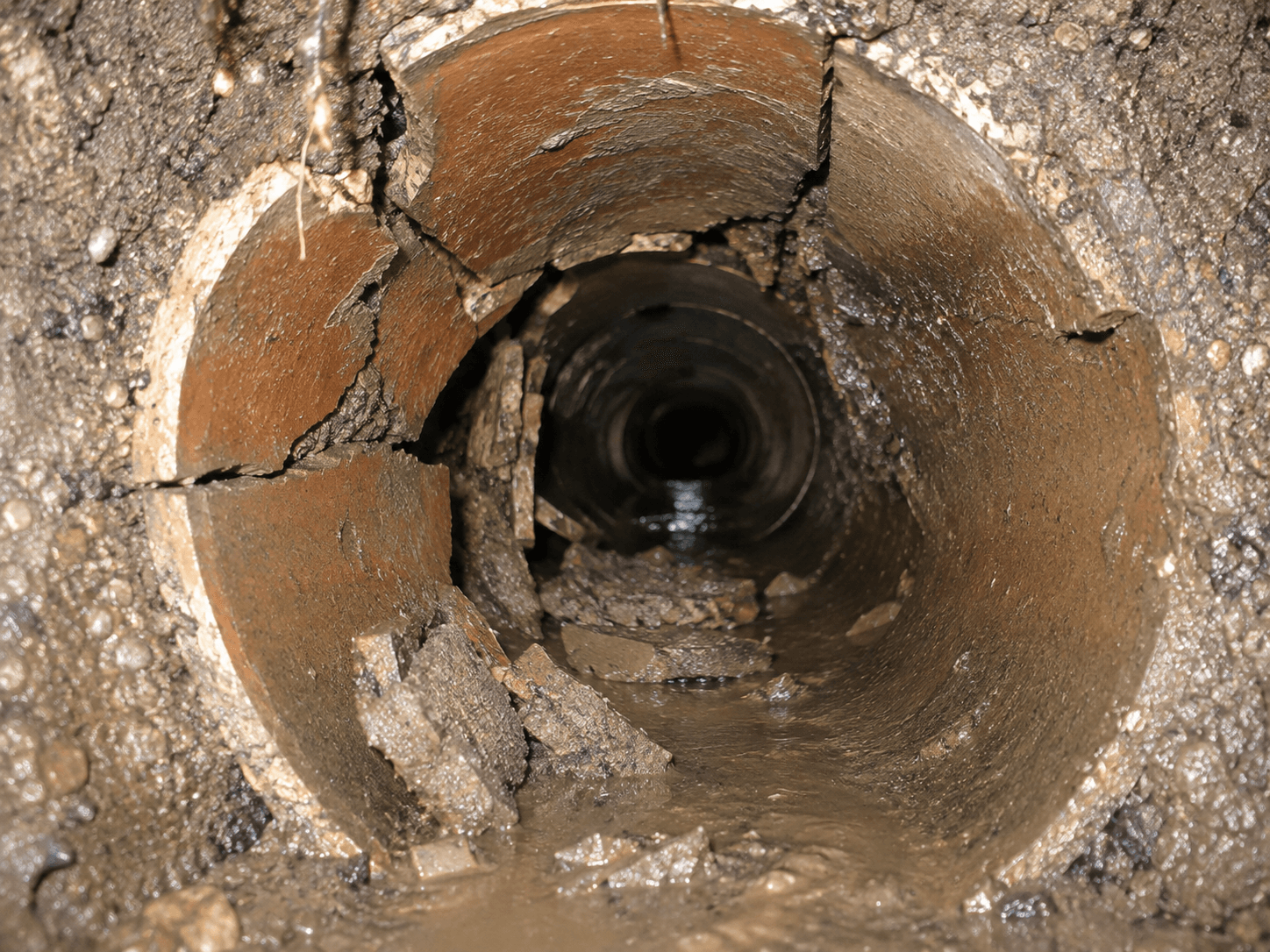
One symptom can be a coincidence. Two or more, tied to storms, usually means stormwater is getting into your line and it is time for a sewer camera inspection.
How can homeowners prevent monsoon sewer backups?
You prevent monsoon sewer backups by clearing and sealing the line before the season and by keeping storm water away from it. A short pre-monsoon checklist:
- Get a pre-season camera inspection. A scope finds cracks, root intrusion, and belly sections before the first storm exposes them.
- Clear buildup with hydro-jetting. High-pressure water removes roots, grease, and sediment so the line has full capacity when rain hits. See our hydro jetting service.
- Check the cleanouts and consider a backwater valve. A backwater (backflow) valve is designed to stop sewage from reversing into the home during an overload.
- Grade surface water away from the line. Redirect downspouts and low spots so runoff is not pooling over the pipe path.
What is the best repair for a storm-damaged sewer line?
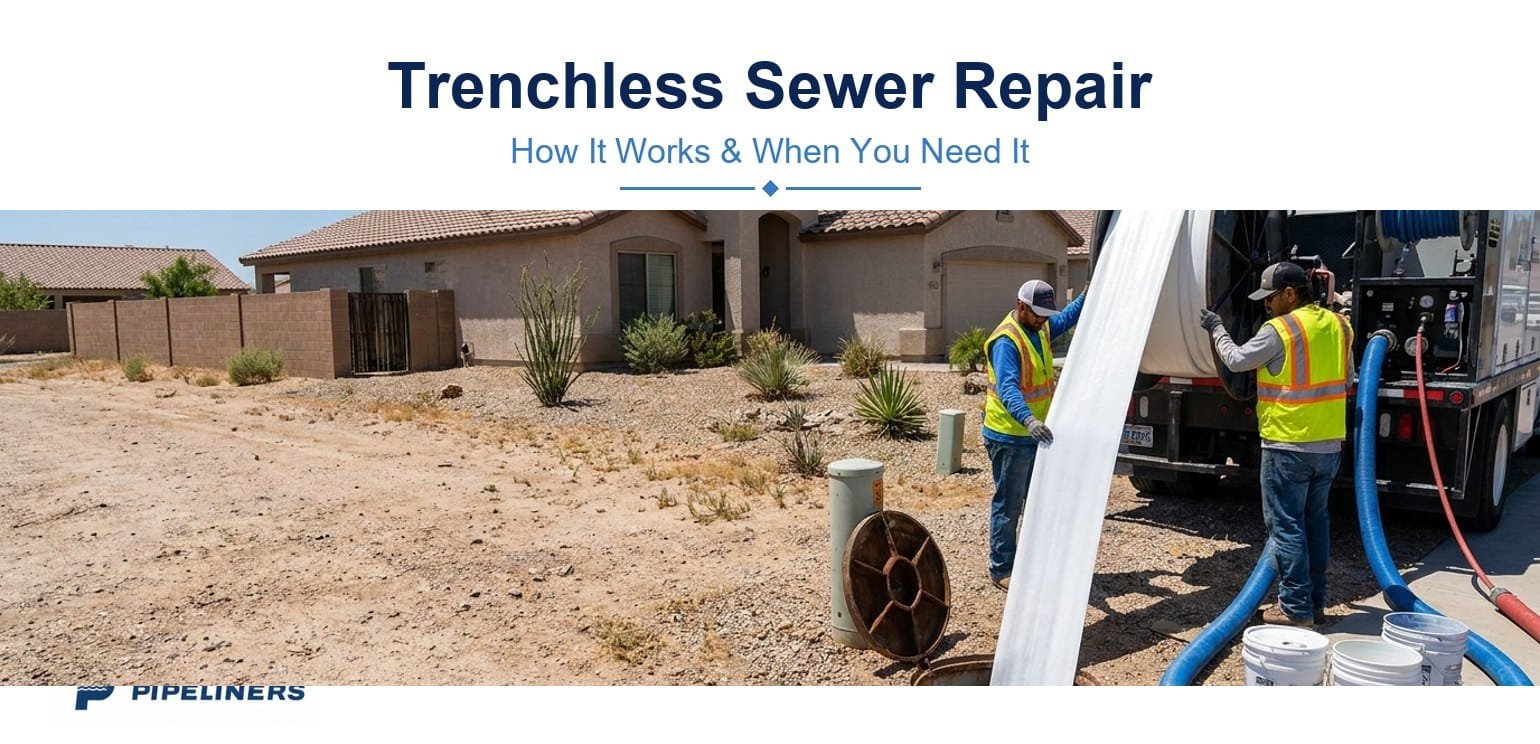
For most storm-damaged lines, a trenchless repair is the best fix because it rebuilds the pipe from the inside without excavating the yard. First an emergency crew stops the active backup. Then, once the line is scoped, one of two permanent methods is matched to the damage:
| Method | How it works | Best for |
|---|---|---|
| CIPP (cured-in-place) lining | A resin-saturated liner is inserted and cured, hardening into a seamless, joint-free new pipe inside the old one that seals out infiltration. | Cracked or leaking pipe that is still structurally intact enough to line. |
| Pipe bursting | A bursting head breaks the old pipe outward while pulling a new one through the same path. | Collapsed or fully failed lines that are too far gone to line. |
Both approaches avoid digging up the driveway, foundation, or landscaping, restore full flow, and are built to last for decades. Learn more about our trenchless sewer repair and ePIPE pipe restoration options.
When should you call for emergency sewer service?
Call for emergency sewer service the moment sewage is backing up into the home, because standing wastewater is a health hazard and the overload is still building. Stop running water at every fixture (no flushing, laundry, or dishwashers) to reduce what the line has to carry, then call a crew. For non-emergency cases such as repeat rain-tied backups, yard odor, or soil sinking over the line, book an inspection promptly. A small crack this July can become a collapsed line by next summer.
Frequently asked questions
Does heavy rain really cause sewer backups in Phoenix?
Yes. Heavy rain causes backups when stormwater infiltrates cracked joints and floods the line faster than it can drain, a process the EPA calls infiltration and inflow. Older Phoenix homes with clay or cast-iron pipe are the most vulnerable, which is why backups cluster during the monsoon.
How much does trenchless storm drain repair cost in Arizona?
Trenchless repair cost depends on the pipe's length, diameter, depth, and how damaged it is, so pricing is set after a camera inspection rather than over the phone. The trade-off many homeowners weigh is that trenchless work avoids the added cost of tearing up and rebuilding driveways, foundations, and landscaping that open-trench digging requires. Request a quote for an exact figure.
Is a backwater valve worth installing before monsoon season?
For homes that have backed up during past storms or sit on a low point in the sewer system, a backwater valve is a strong safeguard because it is designed to block sewage from reversing into the house during an overload. It is best sized and placed after an inspection confirms your line's layout.
How long does trenchless sewer repair last?
Trenchless repairs are engineered as long-term solutions. A cured-in-place liner forms a seamless, corrosion-resistant pipe inside the old one, and pipe bursting installs entirely new pipe, so both are built to last for decades under normal residential use.
Can you inspect my sewer line before the monsoon starts?
Yes. A pre-season sewer camera inspection is the single best way to catch cracks, root intrusion, and weak joints before the first storm, and it lets us clear the line with hydro-jetting if buildup is found. Booking in late spring gives you time to fix anything the scope reveals.
Get ahead of the next storm
Do not wait for the first backup of the season. If your Arizona home has had rain-tied backups, yard odor, or sinking soil over the line, schedule a free inspection with Pipeliners and let us scope the line before the monsoon does.
By Jake Shaker, Pipeliners