
Looking for a Pipe Repair Company Serving Sun City Arizona?
We Are Sun City's Pipelining Experts, Call Us Today!
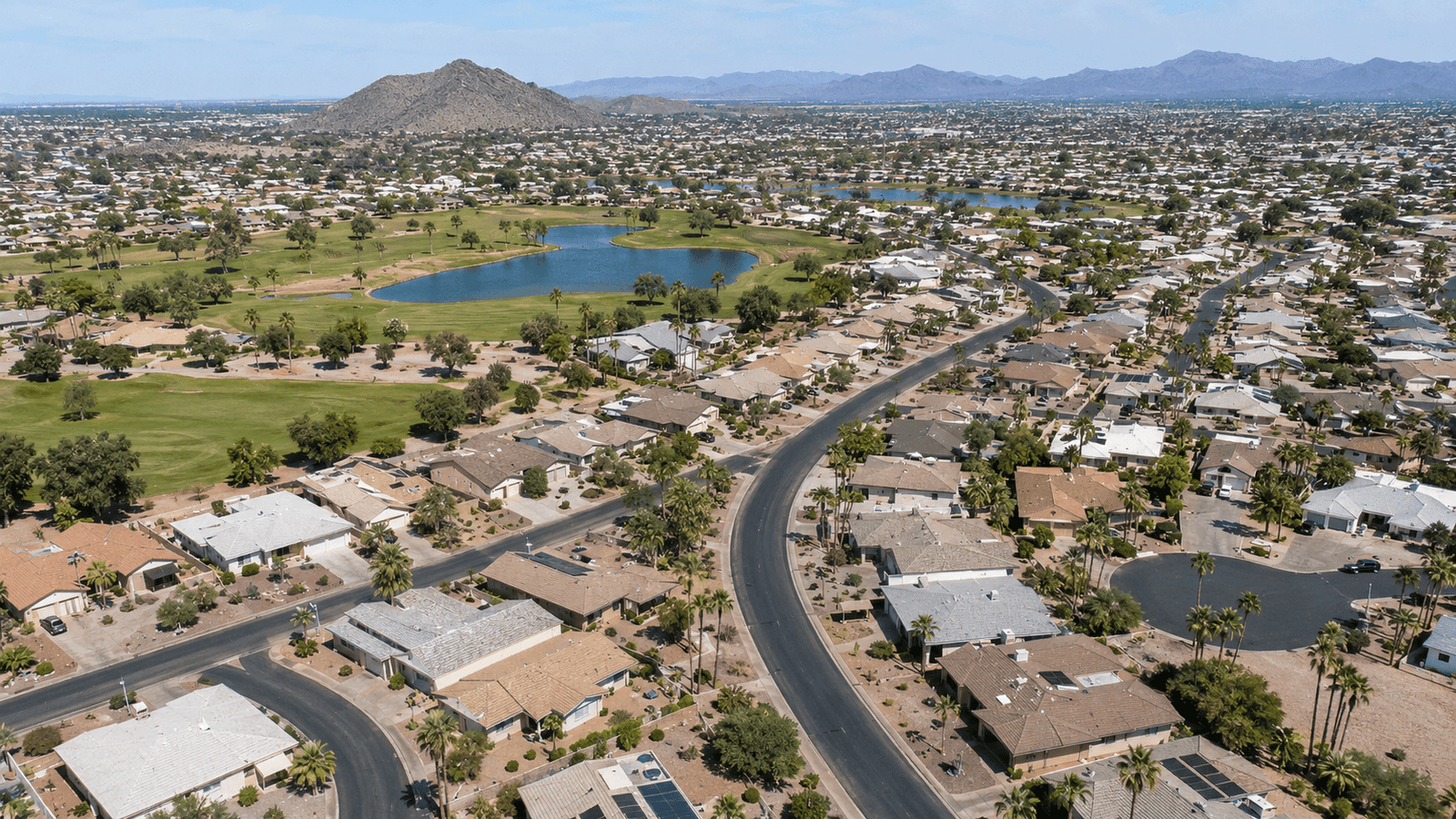
Sun City is the original Del Webb active-adult community, and nearly every house in it was built between 1960 and 1978. The earlier streets were plumbed in galvanized steel and copper took over later in the run, so both are now somewhere between fifty and sixty-five years old. Sewer laterals of that age crack and let roots in, while the supply side thins from the inside until pinholes start. For sewer line repair in Sun City, AZ or a thinning copper supply line, Pipeliners rebuilds either one from within the pipe already there, so nothing is opened up in the house or the yard.
No Demolition Solution
No trenching across your Sun City yard, patio, or slab. We restore pipes in place with minimal surface disruption.
Up To 30% Cost Savings
Sun City homeowners can save up to 30% versus dig-and-replace, with less concrete, sod, or hardscape restoration.
Eco-friendly Repairs
We restore aging cast iron, clay, and Orangeburg pipes from within, reducing waste and avoiding unnecessary excavation.
Minimal Interruption
Your Sun City home stays livable and low-stress while our crews work underground. No torn-up yard for you to deal with.
Serving Sun City, AZ
Pipe Lining

Pipe lining gives Sun City homeowners a trenchless, no-dig way to rebuild cracked, leaking, or root-invaded sewer lines without tearing open a yard, patio, or slab. It is an ideal match for Sun City, the original Del Webb active-adult community, where nearly every home was built between 1960 and 1978 and still runs on original cast iron drain lines and clay or Orangeburg sewer laterals now 50 to 65 years old and reaching the end of their life. We insert an epoxy-saturated liner into the existing pipe and cure it in place with UV LED technology, forming a seamless new pipe inside the old one. The result is a fully restored line, with no jackhammering through your slab or landscaping, that can last for decades, which matters when you plan to stay in your home for years to come.
Pipe Lining Advantages

The low-stress repair Sun City homeowners want
For retirees on a fixed income, a torn-up yard and a five-figure dig-and-replace bill are exactly what you do not want. Pipe lining rehabilitates your pipe from the inside through one or two small access points, so there is no open trench across your yard, no destroyed patio, and no lengthy restoration. Once the epoxy liner cures, you get a jointless pipe with a 50-year design life, restored flow, and lasting protection against roots from mature citrus and shade trees, all at a fraction of the disruption of conventional replacement.
Hydro jetting in Sun City
Jetting is worth understanding here because it is often the cheapest thing that will fix the problem, and on a fixed income that matters. Sun City lines date from 1960 onward and sit under mature citrus and shade trees, so what usually narrows them is root entry at the joints combined with decades of scale on cast iron. High-pressure water takes both back to the pipe wall along the entire run. On a line whose walls are still sound, that is the whole job and there is nothing further to buy. It is only when the camera goes back in afterwards and finds a crack or a separated joint that the conversation turns to lining, and by then you have seen the reason for it yourself.
ePipe Water Line Solutions
Copper repipe, galvanized lines, and what 1960s plumbing left behind.
Del Webb built the original Sun City between 1960 and 1978, and the houses were plumbed to the standards of their day. Galvanized steel supply lines were still common in the earlier years; copper took over later on. Both are now somewhere between fifty and sixty-five years old, and both have spent that time carrying very hard water.
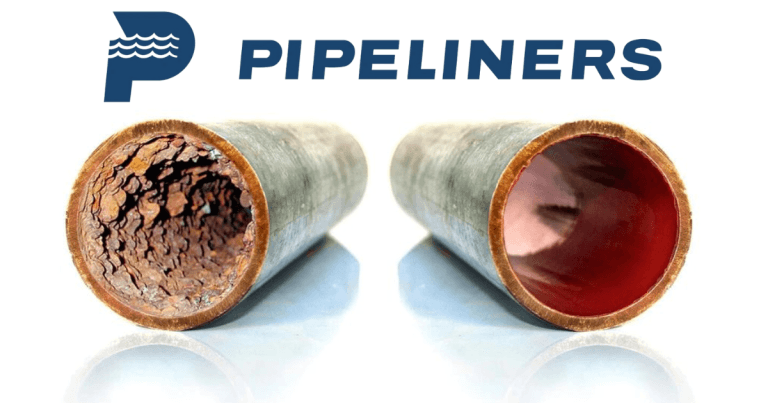
Galvanized rusts inward until the pressure drops and the water discolours. Copper thins until the wall gives out at its weakest point, and the weakest point moves.
A whole-house repipe answers either by replacing the system; ePIPE answers it by cleaning and coating what is already in the walls. Which one fits depends on what the pipe has left to build on, and that is what the inspection establishes.
The coating is applied once the line has been cleaned and dried, and it bonds to the pipe rather than sitting loose inside it. What that changes for the household is the water itself: a coated line stops carrying rust and scale out of the pipe wall and into the taps.
All of it runs through the existing system, so nothing in a finished Sun City house has to be opened up to reach the pipe. Where a line has deteriorated past the point of holding a coating, we say so rather than apply one anyway.
Frequently Asked Questions About Trenchless Pipe Repair in Sun City, AZ
Should I have the sewer line inspected before buying or remodeling an older Sun City home?
A sewer camera inspection can be worthwhile when purchasing or renovating an older property, especially when there is no clear history of previous sewer repairs.
Sun City began development in 1960 and was largely built out by 1978. That does not mean every home’s sewer line is original, but it does mean many properties are old enough that previous repairs, pipe deterioration, root intrusion, or changes to the plumbing system may have occurred over time.
A camera inspection can document the condition of the line and identify problems such as cracks, obstructions, deposits, roots, deformation, or structural damage before a homeowner commits to a major renovation or pipe-repair method. NASSCO recognizes CCTV inspection as an important part of sewer condition assessment and rehabilitation planning.
EPCOR inspects sewer mains in Sun City. Does that mean the sewer line from my house has already been inspected?
Not necessarily.
EPCOR’s publicly described Sun Cities Wastewater Assessment program focuses on inspecting sewer mains and manholes using robotic video cameras.
A home’s sewer lateral is a separate section of piping connecting the property to the larger wastewater system. If you are experiencing recurring backups, slow drains, sewer odors, or another problem inside your property, a separate lateral camera inspection may still be appropriate.
EPCOR confirms that Sun City wastewater customers are served through its Sonoran wastewater system.
Is Sun City West the same as Sun City when it comes to plumbing?
Not quite, and the difference is the build date. Del Webb built the original Sun City between 1960 and 1978. Sun City West came afterwards, between 1978 and 1997. Roughly two decades separate them, and plumbing practice changed across that gap.
It shows up in what fails. Houses in the original Sun City are more likely to have galvanized supply lines and cast iron or clay drains. The later Sun City West houses generally moved to copper supply and plastic drain lines, which fail in their own ways rather than by corroding. We work in both, but a camera inspection is looking for different things depending on which side of 1978 your house sits.
Can CIPP pipe lining fix a sewer line that has a belly or poor slope?
CIPP can rehabilitate structural defects in many sewer lines, but it does not normally correct the existing slope or grade of the pipe.
NASSCO’s rehabilitation guidance specifically notes that with CIPP, the existing line and grade remain.
If a low section of sewer pipe is holding significant standing water because the pipe has settled, simply installing a liner may not correct the drainage problem. The severity of the belly should be evaluated with a camera inspection and other measurements.
A localized excavation or another repair method may be needed when the pipe’s alignment or grade must physically be corrected.
Can CIPP lining handle bends or transitions between different pipe materials?
In many situations, yes.
NASSCO’s 2025 Pipeline Rehabilitation Matrix states that CIPP systems can navigate multiple 45-degree and 90-degree bends depending on the specific system and pipe configuration. CIPP may also accommodate slight diameter changes, misalignment, and transitions between different pipe materials.
This can be useful in older plumbing systems where a sewer line may not be perfectly straight or where previous repairs introduced different pipe materials.
However, every project should be evaluated individually. Severe deformation, excessive offsets, obstructions, or large reductions in the pipe opening can prevent proper liner installation.
Will I have to stop using sinks, toilets, and drains while a sewer liner is being installed?
Usually, there will be a period when wastewater flow through the pipe must be stopped or controlled.
NASSCO’s lateral CIPP specifications state that existing sewage flows may need to be temporarily stopped, diverted, or bypassed while rehabilitation work is underway.
For a residential project, the contractor should explain beforehand when toilets, sinks, showers, washing machines, or other fixtures cannot be used.
The length of the interruption depends on the pipe, liner system, curing method, access, and project conditions. Homeowners should not be promised a universal downtime before the sewer line has been evaluated.
If my sewer line runs beneath the slab or patio, will the entire surface have to be opened?
Not necessarily.
One of the main advantages of CIPP is that the liner is installed inside the existing sewer pipe, reducing the need to excavate the full length of the line.
NASSCO states that residential lateral CIPP may be installed through a cleanout, an access pit, or in some applications from the main sewer.
That makes trenchless rehabilitation particularly useful when damaged pipes run beneath slabs, patios, driveways, landscaping, or other finished areas.
Some excavation can still be necessary if there is no usable access point or if part of the pipe is collapsed or otherwise unsuitable for lining. Pipeliners USA’s core approach is to restore pipes from the inside whenever conditions allow, helping customers avoid unnecessary demolition and excavation.
What is the difference between CIPP sewer lining and ePIPE water-line restoration?
They are two different restoration methods for different plumbing systems.
CIPP pipe lining is primarily used to rehabilitate sewer and drain pipes. A resin-saturated liner is installed inside the existing pipe and cured to create a new structural pipe within the old line. NASSCO describes CIPP as a structural rehabilitation technology for deteriorated pipelines.
ePIPE restoration is designed for suitable pressurized water-line systems. Pipeliners USA uses it for problems such as pinhole leaks, copper corrosion, slab leaks, aging water lines, and situations where conventional repiping would require opening walls or floors.
The ePIPE FRS barrier material is also listed by NSF under NSF/ANSI/CAN 61 for drinking-water system components under its specified conditions of use.
A sewer problem and a water-supply problem therefore require different inspections and restoration methods.
Can trenchless lining still work if part of my sewer pipe is crushed or collapsed?
It depends on the severity of the damage.
CIPP needs a usable pathway through the existing pipe so the liner can be installed and expanded correctly.
NASSCO’s rehabilitation guidance states that the existing pipeline should be clear of crushed or collapsed sections and significant obstructions that prevent proper installation.
If only one localized section has failed, that area may sometimes be repaired separately before the remaining sewer line is lined.
Pipeliners USA does not recommend assuming that every pipe can be restored internally. Completely collapsed pipes, missing sections, or conditions where the existing pipe cannot support the liner may require another repair method.
Why can't trenchless pipe repair be priced based only on the age or size of my Sun City home?
The age and size of the home do not reveal enough about the actual sewer or water-line condition.
The cost of a trenchless project can depend on factors such as:
Pipe length
Pipe diameter
Access
Pipe condition
Cleaning requirements
Number and type of defects
Existing obstructions
Preparation required before lining
Whether localized excavation is necessary
The final repair method selected
Pipeliners USA’s approved pricing guidance is to avoid universal pricing claims because pipe condition, length, access, diameter, preparation, and repair method all affect the final scope.
An inspection provides a better basis for an estimate than the home’s age alone.
My Sun City home is a patio home or duplex. Does a more complicated sewer layout affect trenchless repair?
It can.
Sun City’s original development included several housing types, including single-family homes, duplexes, patio homes, apartments, and other attached configurations.
NASSCO notes that residential sewer laterals can have intricate configurations, small pipe diameters, difficult access points, and other conditions that make lateral rehabilitation different from working on a straight public sewer main.
For that reason, the contractor should identify the actual route, connections, access points, pipe dimensions, and defects before designing a liner.
The housing type alone should never be used to assume where the sewer runs or whether a line is shared.
Does trenchless pipe repair in Sun City require a Maricopa County permit?
It may, depending on the type and scope of work.
Sun City is an unincorporated community in Maricopa County, rather than an incorporated city with its own municipal permitting department.
Maricopa County Planning and Development lists plumbing among the types of residential work handled through its permitting system for unincorporated areas.
Whether a specific CIPP, sewer repair, water-line restoration, cleanout installation, excavation, or other plumbing project requires a permit depends on the work being performed.
The contractor should verify the applicable Maricopa County and utility requirements before starting the project rather than assuming trenchless work is automatically permit-free.
