Looking for a Pipe Repair Company Serving Buckeye, Arizona?
We are Buckeye's Pipelining Experts, Call Us Today!
Buckeye’s plumbing runs to two extremes. The older streets of Old Town Buckeye sit on clay and cast iron laterals that have been down there long enough to crack, corrode and let roots into the joints. Verrado and Tartesso are the opposite case: modern pipe, but laid in ground that is still settling, which pulls joints out of line and leaves low spots that hold water. Pipeliners rebuilds either one from within the existing line, so nothing has to be dug up to reach it.
No Demolition Solution
No trenching across your Buckeye yard, driveway, or slab. We restore pipes in place with minimal surface disruption.
Up To 30% Cost Savings
Buckeye homeowners can save up to 30% versus dig-and-replace, with less concrete, sod, or hardscape restoration.
Eco-friendly Repairs
We restore your existing pipes from within, reducing landfill waste and minimizing disruption to your Buckeye property.
Minimal Interruption
Your Buckeye home or business stays open and livable while our crews work underground. No days lost to an open trench.
Serving Buckeye, AZ
Sewer & Drain Line Lining in Buckeye

Pipe lining gives Buckeye property owners a trenchless, no-dig way to rebuild cracked, leaking, or root-invaded sewer lines without tearing open a yard, driveway, or slab. Buckeye is one of the fastest-growing cities in the country, and its plumbing runs from the aging clay and cast iron lines of historic Old Town Buckeye, founded in 1888, to the newer systems in master-planned communities like Verrado, Sundance, and Festival Ranch. We insert an epoxy-saturated liner into the existing pipe and cure it in place with UV LED technology, forming a seamless new pipe inside the old one, without jackhammering the expansive far-west-Valley soil. The restored line can last for decades.
Pipe Lining Advantages

Built for Buckeye’s yards, old town and new builds
Whether you own an older home in Old Town Buckeye or a newer house in Verrado or Tartesso, digging up a sewer line means tearing out landscaping, driveways, and irrigation. Pipe lining rehabilitates the pipe from the inside through one or two small access points. Once the epoxy liner cures, you get a jointless pipe with a 50-year design life, improved flow, and lasting protection against root intrusion, all without the mess of an open trench.
ePIPE Water Line Lining in Buckeye
A water line problem in Buckeye usually shows up in one of a few ways: a pinhole leak that gets patched and then reappears somewhere else, a warm spot or the sound of running water under a slab, or pressure that has quietly dropped off across the house. What those have in common is a pipe failing along its length rather than at the one place you happened to find.
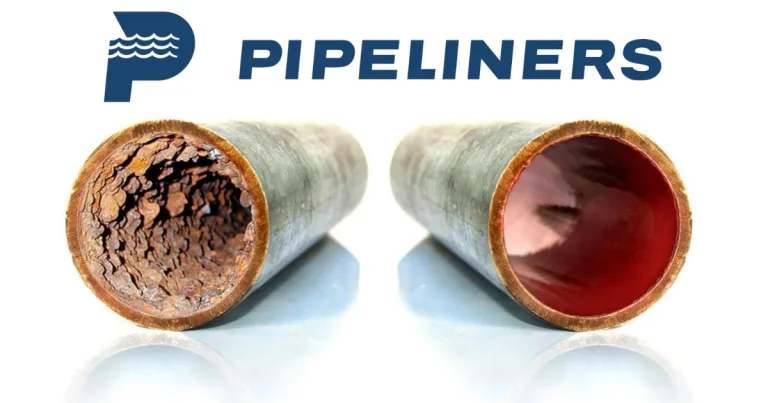
ePIPE restoration treats the system instead of the single failure. The process cleans the inside of the existing water piping and applies an epoxy barrier coating, forming a new surface inside the pipe you already have. The ePIPE FRS barrier material is listed by NSF under NSF/ANSI/CAN 61 for drinking-water system components under its specified conditions of use. Because the work happens inside the line, walls, floors and ceilings generally stay closed, which matters in the slab-foundation homes across Verrado, Sundance, Festival Ranch and Tartesso.
It is not the right answer for every water line. Pipeliners USA considers ePIPE for problems such as recurring pinhole leaks, copper corrosion, slab leaks, low flow, and aging water lines when the system is suitable for internal restoration. A line that has deteriorated too far, or a system that cannot be properly cleaned and coated, points to a whole-house repipe instead. The assessment comes before the recommendation.
Buckeye Trenchless Pipe Repair FAQs
Why does my Buckeye sewer keep clogging even after it has been snaked?
If the same sewer blockage keeps returning, the line may have more than a temporary clog. Recurring problems can be associated with roots, heavy buildup, cracks, deteriorated joints, or other defects that ordinary snaking does not correct.
A sewer camera inspection can help identify the underlying condition rather than repeatedly treating the symptom. NASSCO explains that CCTV assessment of sewer laterals is used to document pipe conditions and determine an appropriate method for long-term rehabilitation.
If the pipe is structurally sound and only contains buildup, cleaning may be enough. If the inspection finds damage, the next step may involve CIPP lining or another repair method.
Where is my sewer cleanout in Buckeye, and why does it matter for trenchless repair?
The City of Buckeye says residential sewer cleanouts are commonly located in the front or back yard, often near a bathroom or kitchen. Homes built within roughly the last 20 years are more likely to have a cleanout, while older homes may not. Remodeling or landscaping can also cover an existing cleanout.
The City also notes that sewer cleanouts are part of the home’s private plumbing system and that the City does not maintain records showing where individual cleanouts are located.
An accessible cleanout can be useful for camera inspection, cleaning, and some trenchless lining methods.
Can a sewer line still be lined if my Buckeye home does not have an accessible cleanout?
Potentially, yes. A missing cleanout does not automatically rule out trenchless rehabilitation.
NASSCO states that lateral CIPP can be installed from the house or cleanout, or from the main sewer. Depending on the liner length and installation method, access may also require a small pit.
The contractor should evaluate the property’s pipe layout and available access before deciding whether a new cleanout or another access method is necessary.
How can I tell whether a sewer problem is in my home's plumbing or the City of Buckeye sewer system?
The location of the problem matters.
The City of Buckeye maintains hundreds of miles of public wastewater collection mains and thousands of sewer manholes. The City separately identifies the sewer cleanout serving a home as part of the property’s private plumbing system.
A camera inspection can help determine how far from the home the obstruction or damage is located. If there is uncertainty about whether a problem involves the public collection system, the City should be contacted before assuming the issue is entirely on private property.
Does Buckeye's mineral-rich water mean my home's water pipes need ePIPE restoration?
No. Mineral-rich or hard water by itself does not mean a home’s water lines need to be restored.
The City of Buckeye says its water supply relies almost entirely on groundwater and naturally contains total dissolved solids such as calcium, sodium, and magnesium. These minerals can affect taste, smell, and hardness, but the City states that TDS at these levels is primarily an aesthetic concern rather than a health risk.
A water-line restoration decision should instead be based on the condition of the plumbing. Pipeliners USA considers ePIPE restoration for problems such as recurring pinhole leaks, copper corrosion, slab leaks, low flow, and aging water lines when the system is suitable for internal restoration.
Can a sewer line be hydro jetted before CIPP lining?
Yes. Thorough cleaning is commonly part of preparing a sewer line for CIPP rehabilitation.
The purpose is to remove material such as debris, deposits, corrosion products, and other obstructions that could interfere with the liner. NASSCO guidance calls for cleaning followed by an inspection of the pipe before the liner is installed.
For Pipeliners USA, hydro jetting may be used for grease, sludge, scale, debris, roots, recurring clogs, and preparation before inspection or lining.
Cleaning the pipe does not automatically mean it needs to be lined. The inspection after cleaning helps determine whether structural rehabilitation is actually necessary.
What sewer conditions could prevent CIPP lining from being the right repair?
CIPP works best when the existing pipe still provides a usable pathway for the liner.
NASSCO describes lateral CIPP as appropriate for pipes with cracks, fractures, or holes that have generally maintained their original shape.
A severely collapsed pipe, missing section, major deformation, or another condition that prevents the liner from being installed correctly may require localized excavation, pipe bursting, or another repair method first.
We work to the same principle. The pipe is inspected before lining is recommended, and a completely collapsed or missing section may not qualify at all.
Does trenchless sewer work in Buckeye require a permit or inspection?
It can, depending on the scope and location of the work.
The City of Buckeye states that inspections are required during construction projects to confirm compliance with applicable codes, and its list of commonly inspected work specifically includes water and sewer lines.
Permit and inspection requirements can vary depending on whether work affects private plumbing, a service connection, the public right-of-way, or other infrastructure.
Before beginning a project, the contractor should determine which City approvals and inspections apply to the specific repair.
Is trenchless pipe lining only useful for older Buckeye homes?
No. The age of the home alone does not determine whether CIPP is appropriate.
A newer sewer line can still develop cracks, root intrusion, joint problems, or localized damage. An older line may still have enough remaining structure to be successfully rehabilitated.
NASSCO bases CIPP suitability on the condition and configuration of the existing pipe rather than simply the age of the property. Lateral CIPP can rehabilitate pipes with cracks, fractures, and holes when the host pipe has generally maintained its shape.
The sewer camera findings should drive the repair recommendation.
Can trenchless lining repair the connection where my sewer lateral meets the main sewer?
In some situations, yes.
The connection between a property’s lateral and the sewer main can itself develop cracks, poor seals, structural defects, or openings that allow root intrusion.
NASSCO describes main-to-lateral connection lining as a trenchless method used to rehabilitate this connection. Depending on the system, the repair may cover only the connection or extend farther into the lateral.
A camera inspection is needed to determine where the defect is located and whether the connection, the lateral, or both require rehabilitation.
What documentation should I ask for after a CIPP sewer repair?
Homeowners should ask how the completed liner will be inspected and documented.
NASSCO’s CIPP specification guidance calls for post-installation CCTV inspection to document the completed liner and identify visible issues such as cracks, bumps, bulges, debris, or problems at reopened connections.
Useful project records can include:
- Before-repair camera footage
- Post-installation camera footage
- The location and length of the repaired pipe
- Details about the lining system used
- Warranty documentation
- Any remaining pipe conditions that were not included in the repair
Pipeliners USA backs its drain lining with a 20-year warranty, and the liner itself is designed for a service life of 50 years or more. Ask for the warranty terms in writing before work starts; any contractor should provide them.
Read our reviews here!
Learn more about our services here!